
Burkina Faso Breaks with Paris — 2026 Exposes the Washington-Moscow Battle in the Sahel
 Marie Dubois
Burkina Faso Breaks with Paris — 2026 Exposes the Washington-Moscow Battle in the Sahel
On June 26, in Ouagadougou, Burkina Faso's national television announced a formula that buries the last institutional remnant of the Franco-Burkinabè relationship: the severing of diplomatic relations with France, effective immediately. The statement from Captain Ibrahim Traoré's regime accuses Paris of harboring "neocolonial ambitions" and supporting subversive networks, an accusation rejected by France as "hostile and unfounded."
This is not just a simple episode of diplomatic anger. In the Sahelian theater, embassies, military cooperants, and liaison officers are never merely symbols. They are cables. When they are cut, information flows more slowly, crises are less well-managed, and the most patient external actors gain ground.
A Break Prepared Since 2023
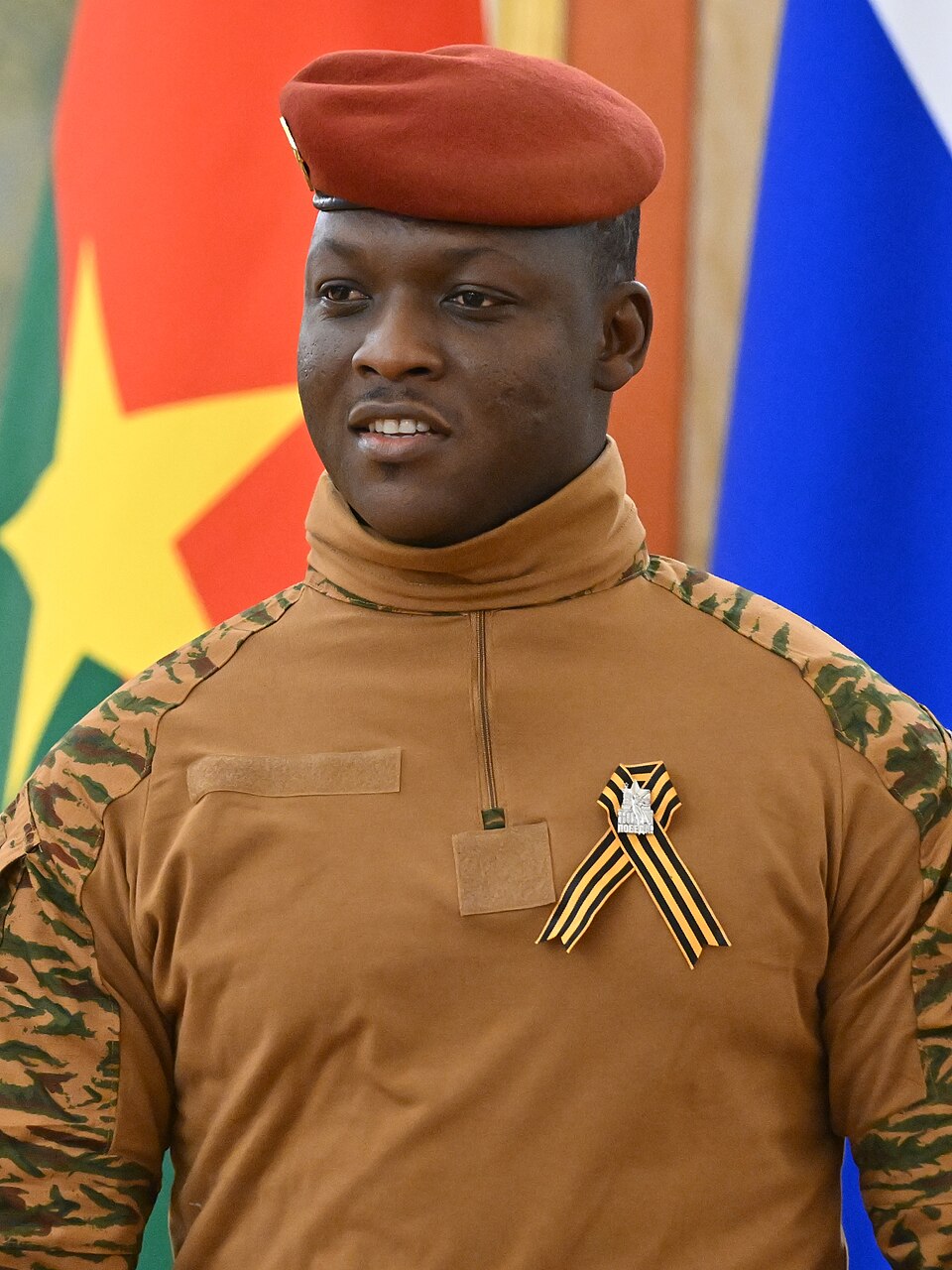
The Burkinabè decision does not come in a vacuum. As early as 2023, Ouagadougou had demanded the departure of the French ambassador and subsequently refused to accredit a new diplomat. French forces had already lost their operational position in the country. Therefore, June 26, 2026, does not mark the beginning of the break; it marks its formalization.
RFI, citing the official announcement and the French reaction, reports that the junta claims to only target the institutional framework between the two states, without calling into question the human and cultural ties between the peoples. This is the usual precautionary phrase. On the ground, it does not protect much. When the diplomatic channel closes, visas, consular evacuations, security contacts, and incident management enter a gray area.
For a country engaged on multiple fronts against groups linked to Al-Qaeda and the Islamic State, this gray area has military value. A lost patrol, an arrested national, a humanitarian convoy blocked in Kaya or Dori: without an established and recognized interlocutor, each case becomes political even before it is practical.
The Message Addressed to Paris Also Speaks to Moscow
The break officially targets France. In reality, it also speaks to Moscow, Washington, and the neighbors of the Sahel States Alliance. Since the successive coups in Mali, Burkina Faso, and Niger, military regimes have built their legitimacy on two pillars: reclaiming sovereignty from former Western powers and promising tougher, more national security, less dependent on Paris.
The first pillar works politically. The second remains much more fragile. The Ouahigouya-Djibo, Kaya-Dori, and Fada N'Gourma-Pama routes cannot be secured with slogans. They require human intelligence, spare parts, fuel, local relays, and units capable of holding a position longer than a television announcement.
This is where external competition becomes concrete. Business Insider Africa reported on June 29 that the United States is once again courting Mali, Niger, and Burkina Faso as Russian influence expands in the Sahel. The phrasing is correct: Washington is not returning to an empty space, but to a room where Moscow has already moved the furniture.
Russia, through the Wagner legacy and then the Africa Corps, offers the juntas a simple political package: security, regime protection, anti-Western communication. This package is appealing because it almost never raises the question of governance. Its flaw is well-known from experience: it can hold a capital, escort a leader, conduct a punitive operation; it struggles much more to rebuild a regular presence in rural communes where power is contested village by village.
Washington Seeks an Entry Without Too Visible a Flag
The United States has an inverse problem. They have more sophisticated intelligence, training, and surveillance capabilities, but their official return to central Sahel risks appearing, in the eyes of local opinions, as a flag replacement rather than a new method. After the forced departure from Agadez in Niger, Washington knows that military access can disappear quickly if the sovereignist discourse turns against it.
The American margin, therefore, lies in discreet offers: sharing intelligence on the movements of the Group for Support of Islam and Muslims (JNIM, or GSIM), border support, training small units, counter-terrorism cooperation from coastal partners like Ghana, Benin, or Côte d'Ivoire. It is not spectacular. That is precisely why it may work.
But cooperation without solid political presence remains fragile. American military personnel can train a company; they cannot, on their own, convince a Burkinabè prefect to return to a sub-prefecture where the state has not been present for months. Washington's return will only have value if it accepts this limit.
The Operational Risk for Burkina Faso
For Ouagadougou, breaking with Paris brings an immediate narrative gain. The junta can present the decision as proof of sovereignty and divert attention from jihadist pressure in the north and east. But each diplomatic break also reduces the number of useful channels when a crisis escalates.
Burkina Faso is fighting a mobile adversary. JNIM does not need to control Ouagadougou to weaken the regime; it only needs to make secondary roads impassable, tax markets, strike telecom relays, and isolate garrisons. In this type of war, capitals can seem calm while control maps change fifty kilometers from the capitals.
It is also necessary to acknowledge what is not yet known. It is unclear what reciprocal measures Paris will take, what minimal consular presence will remain possible, and how far Ouagadougou wants to push the administrative break. The political announcement is clear; its execution is not yet.
A Fault Line for the Entire Sahel
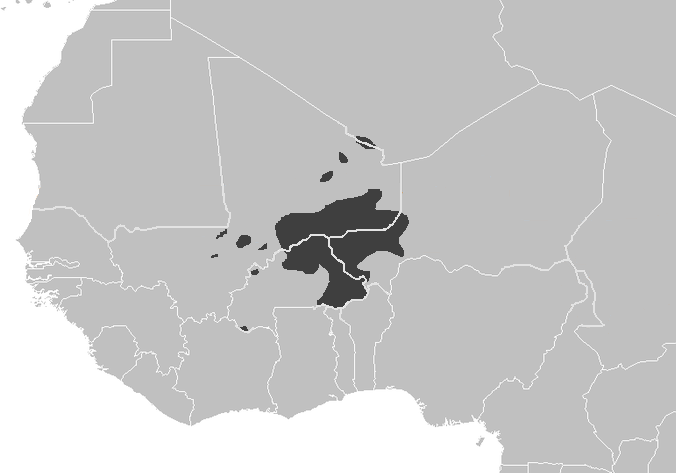
The Burkinabè affair confirms a broader trend: central Sahel is reorganizing around military regimes that want to negotiate with foreign powers on a case-by-case basis, without binding public alliances. France is rejected as a symbol. Russia is used as regime insurance. The United States seeks a technical entry. China remains more cautious but observes the needs for infrastructure, equipment, and political credit.
For jihadists, this recomposition is an opportunity. Each diplomatic transition creates gaps: less intelligence sharing, less cross-border coordination, less trust between services. A group like JNIM thrives on these intervals. It does not need to be stronger everywhere; it only needs to be faster where states communicate less.
The danger is not that Burkina Faso turns its back on Paris. This choice is sovereign. The danger is that Ouagadougou replaces a political dependency with an operational solitude, at the precise moment when its adversaries know how to read maps and calendars very well.
The next area to watch is not the closed embassy, but the routes connecting northern Burkina Faso to Liptako-Gourma and the coastal states. If armed groups take advantage of this diplomatic sequence to intensify pressure on supply routes, the break of June 26 will not remain a chancery event. It will become a marker of military vulnerability.
Burkina Faso formally severed diplomatic relations with France on June 26, 2026, accusing it of neo-colonial ambitions. This decision, led by Captain Ibrahim Traoré, has been in preparation since 2023 and reflects a broader trend of military regimes in the Sahel seeking to negotiate with foreign powers. The junte claims to maintain human and cultural ties with France despite the diplomatic break, which may impact military operations against jihadist groups in the region.
- Burkina Faso severed diplomatic relations with France on June 26, 2026.
- The Burkinabè government accuses France of neo-colonial ambitions.
- This diplomatic break has been in preparation since 2023.
- The junte claims to maintain human and cultural ties with France despite the break.
- The situation reflects a broader trend of military regimes in the Sahel negotiating with foreign powers.