
Calculating the Cost of the "Reckless War" from Multiple Perspectives: CSIS Estimates Initial 100 Hours at Approximately $3.7 Billion
[Global Times Special Correspondent in the U.S. Li Yong, Global Times Reporter Xian Yifan, Pei Ming] On the 5th local time, U.S. Secretary of Defense Hegseth claimed that the U.S. military operations have just begun, stating, "Iran hopes that we will find it difficult to continue, which is a serious miscalculation." However, the issue of "difficulty in continuing" faced by U.S. military operations is a real concern within the United States. Multiple media outlets, including The Washington Post, reported that after the U.S. military launched airstrikes against Iran, precision weapons and advanced air defense missiles were quickly depleted, raising concerns about damage to combat readiness in the U.S. At the same time, different organizations began calculating the cost of the war. For example, a report from the Center for American Progress indicated that the "initial cost" of this military operation has already exceeded $5 billion. The Center for Strategic and International Studies (CSIS) estimated that the cost for the first 100 hours of the conflict is about $3.7 billion. How much will this "unnecessary" conflict, in the eyes of some analysts, cost U.S. taxpayers? CNN reported that this question has raised doubts. On the 6th, this war, which has caused concerns from all sides, entered its 7th day. The Israeli military stated that about 50 Israeli Air Force fighter jets dropped approximately 100 bombs on underground bunkers used by Iran's late Supreme Leader Khamenei. On the same day, Iran launched a new round of drone and missile attacks against Tel Aviv, Israel.
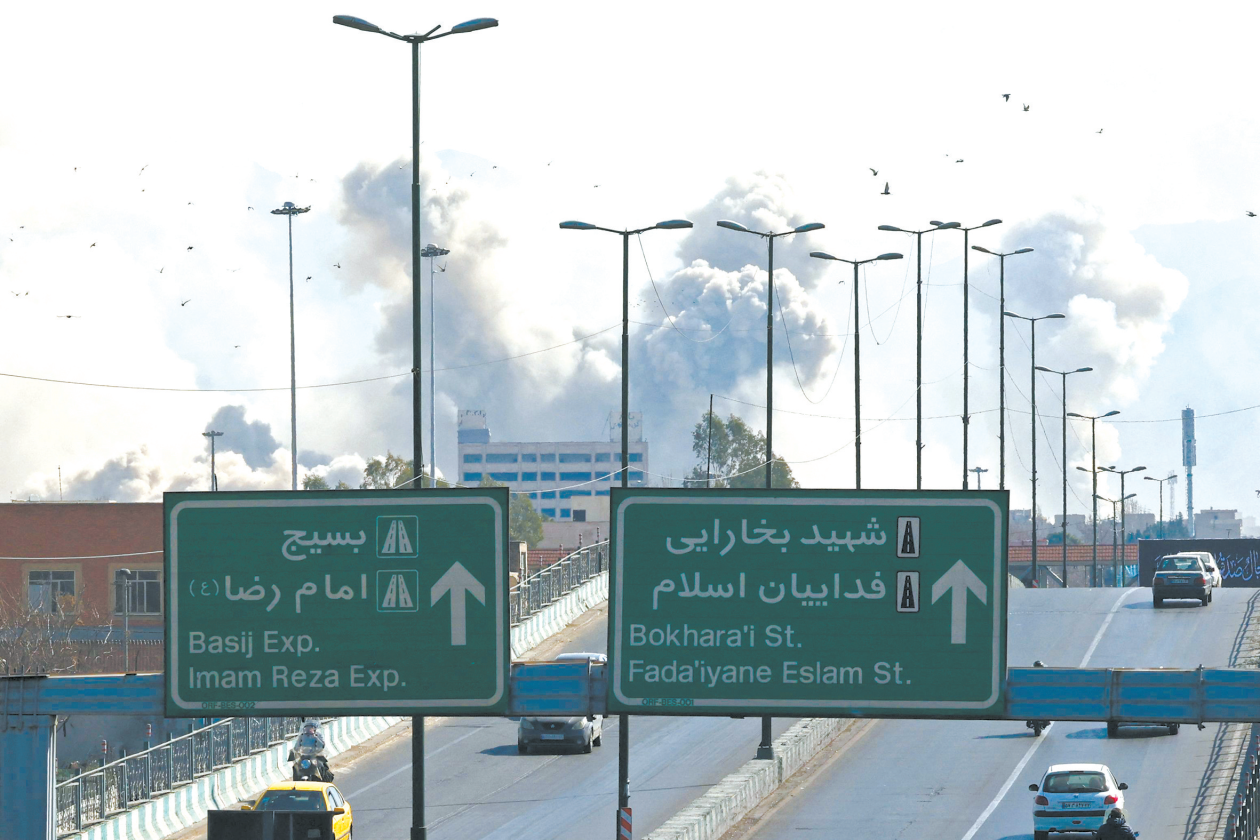
Is the timeline of military operations set by the U.S.?
On the 5th, Hegseth held a joint press conference with General Cooper, the commander of U.S. Central Command. Cooper stated that the U.S. military has sunk or destroyed more than 30 warships and hit an Iranian drone carrier. Compared to the first day of U.S. military operations, Iran's ballistic missile attacks have decreased by 90%, and drone attacks have decreased by 83%. In the next phase of operations, the U.S. military will systematically destroy Iran's future missile production capabilities.
Hegseth claimed that the U.S. military has eliminated most of the Iranian Navy's capabilities. He also mentioned that if Iran hopes that U.S. military operations will be "difficult to continue," that is Iran's "serious miscalculation," adding, "The timeline is set by us."
However, The Washington Post quoted sources on the 5th stating that less than a week after the U.S. launched large-scale airstrikes against Iran, the stock of precision weapons has been "rapidly depleted," and the consumption rate of advanced air defense missiles may force the U.S. military to prioritize which targets to intercept "within days." During a press conference on Wednesday, senior Pentagon officials spent a significant amount of time addressing concerns about the military's excessive use of stockpiles and damage to combat readiness.
The Wall Street Journal reported that Pentagon officials are drafting plans to replenish the U.S. weapons consumed in strikes against Iran. Multiple foreign media outlets reported that the White House is scheduled to convene several U.S. arms giants for a meeting with Trump on the 6th.
U.S. public opinion questions: How much will it cost taxpayers?
Meanwhile, various analysts and institutions within the U.S. have begun calculating the cost of the war. The Center for American Progress published an article stating that as of the 2nd, the "initial cost" of U.S. military operations against Iran has exceeded $5 billion. The organization believes that the U.S. government has initiated a "reckless war." ABC News reported on the 6th that according to estimates from the CSIS, the cost for the first 100 hours of the conflict is about $3.7 billion, of which $3.5 billion has not yet been budgeted. Reports indicate that U.S. military losses may include three F-15 fighter jets mistakenly shot down by "friendly fire" in Kuwait, each valued at about $31 million.
McCaskill, a former audit official at the U.S. Department of Defense, estimated that the cost four days into the conflict has approached $11 billion. This includes the costs of deploying more than ten warships and about a hundred aircraft from the U.S. and Europe to the Middle East since last December.
CNN reported on the 6th that questions about how much this military operation will cost U.S. taxpayers are beginning to arise. Koshgarian from the American Progress Institute believes that this is an "unnecessary" conflict and will divert resources that could otherwise be used for policies aimed at "making life more prosperous for the American people." Koshgarian stated that the Iraq War ultimately cost nearly $3 trillion, and this expenditure could easily reach astronomical figures. CNN quoted a scholar from the University of Pennsylvania stating that a two-month war could cost between $40 billion and $95 billion.
Regarding the possibility of a U.S. ground offensive, Iranian Foreign Minister: We are waiting for them
On the 6th, military operations involving the U.S., Israel, and Iran continued. According to The New York Times, the Israeli side claimed that they struck targets in the southern suburbs of Beirut that morning, including ten high-rise buildings used by Hezbollah and several command centers. From the night of the 5th to the 6th, the Iranian capital Tehran was also subjected to airstrikes. Local residents told The New York Times that there were dozens of intense explosions in the central and eastern parts of the city.
Additionally, several Iranian media outlets reported on the 6th that the Islamic Revolutionary Guard Corps stated that they have used missiles and drones to destroy U.S. "THAAD" missile defense system radars located in three Middle Eastern countries. The Iranian Tasnim News Agency reported on the 6th that the spokesperson for Iran's emergency command, Zolfaghari, stated that in the first 20 rounds of counterattacks during the "Real Commitment 4" operation, more than 600 ballistic missiles and 2,000 suicide drones have been launched at U.S. positions in the neighboring region and Israel.
Iranian Foreign Minister Amir-Abdollahian stated in a video interview with NBC on the 5th in Tehran that despite the U.S. and Israel launching airstrikes across Iran, Iran has not requested a ceasefire. He said that the U.S. has attacked Iran during negotiations last year and this year, so Iran has no reason to engage with "those who lack sincerity in negotiations and do not participate in good faith."
Regarding the possibility of sending ground troops to Iran, Trump stated in a phone interview with NBC on the 5th that considering this issue at the current stage is a "waste of time," and claimed that the pace and intensity of U.S. strikes against Iran "will continue." Amir-Abdollahian mentioned the possibility of a U.S. ground offensive on the 5th, stating, "We are waiting for them because we are confident in confronting them, and that would be a great disaster for them."
The war initiated by the U.S. and Israel against Iran continues to have widespread repercussions. "Gulf countries are dissatisfied with becoming the center of a war that does not belong to them." Bloomberg reported on the 5th that countries like Saudi Arabia, Qatar, and the UAE had promised to invest hundreds of billions of dollars in the U.S. They were originally prepared to invest more, but now their own economies and critical infrastructure have suffered "collateral damage" in the U.S.-Iran conflict, leading to a change in mindset. Some Gulf officials stated that the prevailing sentiment among Gulf countries is that, for the U.S., the goal of protecting Israel is more important than maintaining stability for Arab allies.
The U.S. military commenced operations against Iran on October 5, 2023, with Israeli forces bombing Iranian targets. The Israeli Air Force dropped around 100 bombs on sites used by Iran's former Supreme Leader. Concurrently, Iran retaliated with drone and missile strikes on Tel Aviv. The initial costs of U.S. military actions are estimated at $3.7 billion within the first 100 hours, raising concerns over military readiness and resource allocation.
- U.S. military operations against Iran began on October 5, 2023.
- Israeli Air Force dropped approximately 100 bombs on Iranian targets.
- Iran launched drone and missile attacks on Tel Aviv.
- Initial costs of U.S. military actions estimated at $3.7 billion for the first 100 hours.
- U.S. military has reportedly lost three F-15 aircraft due to friendly fire.