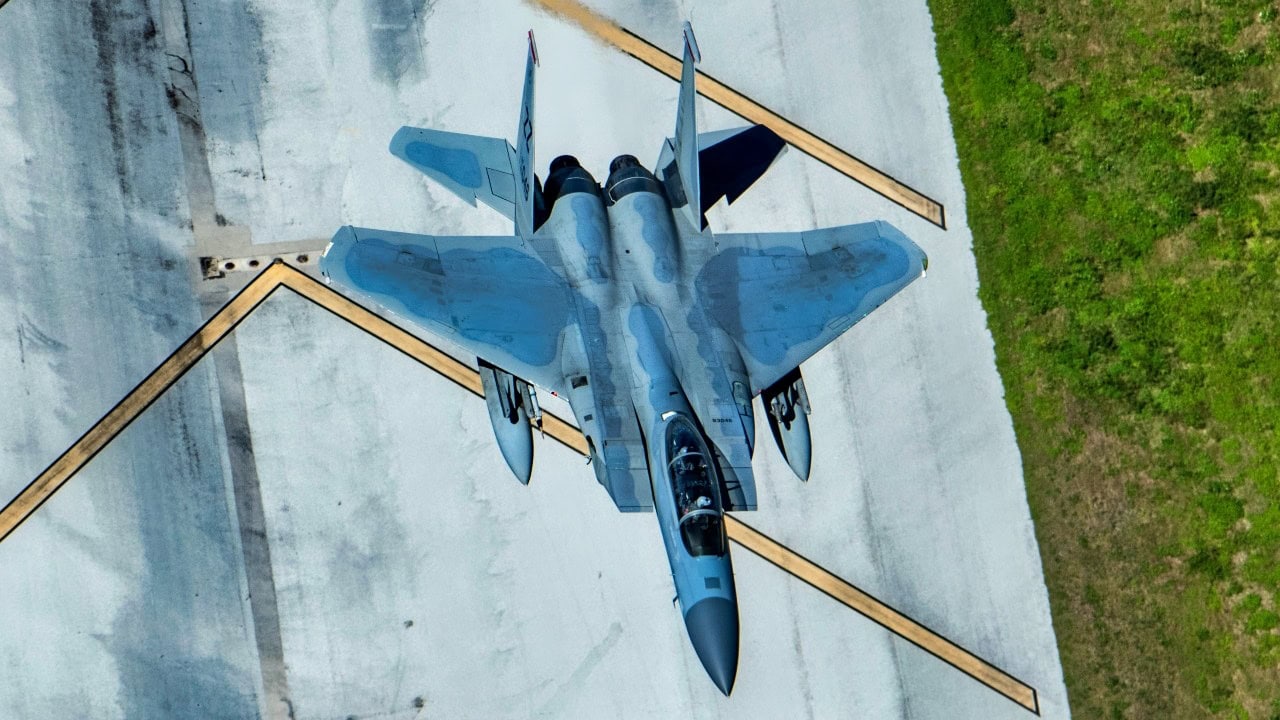
F-15 Eagle

🇺🇸United States
Boeing
1976 – Present
Spotlight

Fifty years of air dominance: 104 aerial victories, no confirmed air-to-air losses

The F-15 | Air Warriors: Full Episode (Smithsonian Channel)

Watch on YouTube
Overview
F-15 Eagle
The F-15 Eagle is a twin-engine, all-weather tactical fighter used by the U.S. Air Force, known for its air superiority and advanced avionics.
Specifications

General

Crew1
Radaradvanced radar
Engines2
StealthNo
Thrust Kn129 kN
Generation4th
Internal Gun20mm M61A1 cannon
Max Speed Kmh3,018 km/h
Ferry Range Km5,600 km
Max Speed Mach2.5 Mach
Service Ceiling M15,240
Air To Air4x AIM-9 Sidewinder, 4x AIM-120 AMRAAM
Air To Groundair-to-ground weapons of all USAF types

Other

Height M5.6
Length M19.4
Powerplant2 x Pratt & Whitney F100 or General Electric F110 afterburning turbofans (variant-dependent)
Wingspan M13
Total Built~1,600+ all variants (est., includes Japanese licence production)
Max Takeoff Weight Kg36,741 (Boeing figure for F-15EX)
Max External Payload Kg13,381 (Boeing figure for F-15EX)
Latest Developments
Aug 28, 2026strong signal
No Enemy Has Ever Shot Down a F/A-18 Super Hornet Fighter. The US Navy Shot One Down Itself

Entity 'F-15 Eagle' mentioned in report

Aug 17, 2026strong signal
Forget the F-35: At 87,000,000,000 Operations Per Second, the Mach 2.5 US Air Force F-15EX Eagle II Is a Real Flying Supercomputer

The F-15EX has an expanded missile carriage capacity of 12 air-to-air missiles, compared to the standard F-15’s capacity of 8 air-to-air missiles.

Jul 25, 2026strong signal
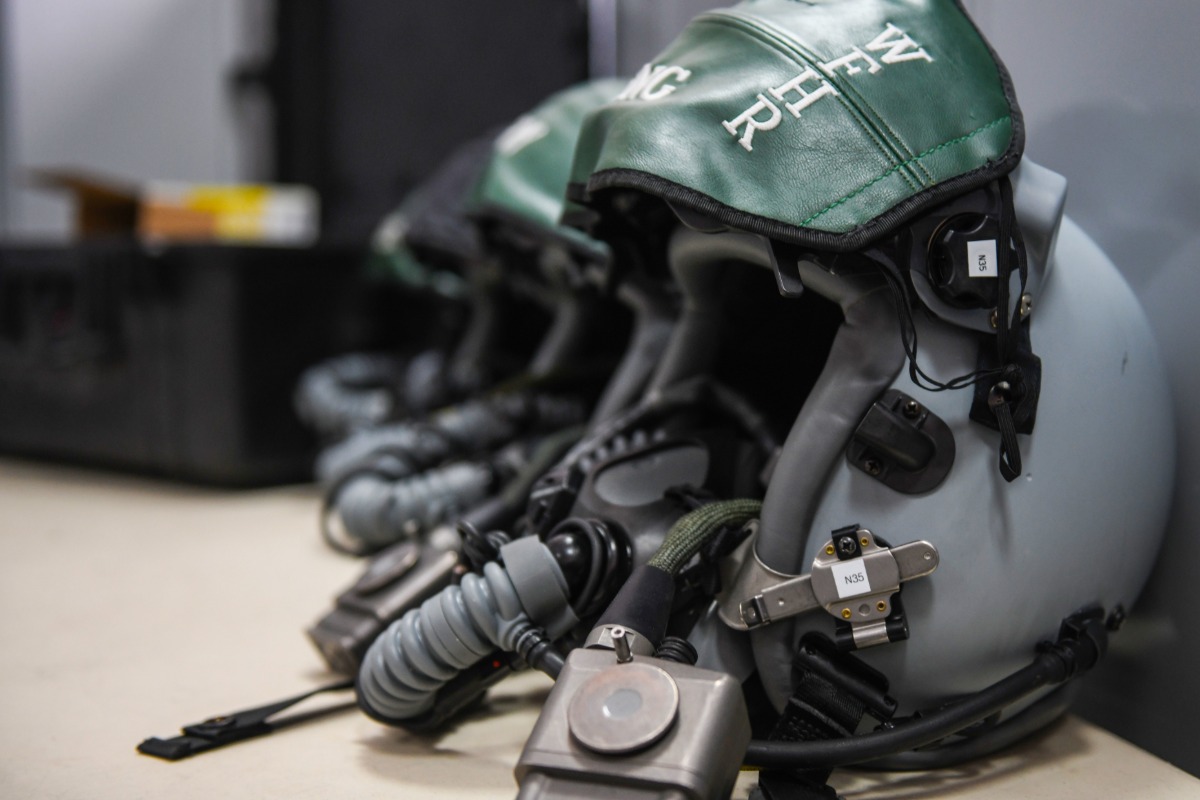
Pentagon spends $333 million to keep fighter pilots’ helmets combat ready

Entity 'F-15 Eagle' mentioned in report

Jul 12, 2026strong signal
The F-15 Eagle Is the Michael Jordan of Fighter Jets: 104 Wins, Zero Air-to-Air Losses

Boeing and the U.S. Air Force count the F-15’s air-to-air ledger at 104 victories and zero defeats.

Jul 7, 2026strong signal
The U.S. Navy Almost Bought an Aircraft Carrier Version of the F-15 Instead of the F-14. One Missile Killed the Idea

A U.S. Air Force F-15E Strike Eagle performs a flare check over the U.S. Central Command area of responsibility, March 9, 2025.

Featured Coverage
Research Notes

Air superiority fighter that grew into a long-lived Eagle family

high

The F-15 began as a dedicated air superiority fighter and became a long-lived family that includes strike and modern payload-heavy variants.

The F-15 Eagle was designed to give the U.S. Air Force a highly maneuverable, all-weather tactical fighter able to gain and maintain air superiority. The official Air Force fact sheet frames the aircraft around battlefield air supremacy, maneuverability, acceleration, and combat radius.

The Eagle family later expanded beyond the original air-to-air role. The F-15E Strike Eagle added a deep-strike and multirole path, while the F-15EX Eagle II represents a modernized payload and survivability path for missions where a large, fast, heavily armed fighter remains useful.

For HiWars, the F-15 parent page should explain the family. Variant records should distinguish F-15A/C air-superiority aircraft, F-15E strike aircraft, export derivatives, and F-15EX modernization rather than treating all Eagles as the same platform.

Speed, altitude, radar, and missile carriage

high

F-15 capability rests on a large twin-engine airframe with strong performance, radar capacity, and room for weapons and upgrades.

The F-15's large twin-engine design gives it high performance, range, altitude, and payload potential. In its air superiority role, this supports patrol, interception, beyond-visual-range missile employment, and the ability to carry a meaningful weapons load without sacrificing all performance.

Later Eagle variants use the same broad design advantages differently. The F-15E uses the airframe for strike missions with a two-person crew and mission equipment, while the F-15EX emphasizes modern avionics, weapons capacity, and rapid integration of new payloads.

The aircraft should not be judged only by stealth comparisons with fifth-generation fighters. In mixed-force operations, an upgraded F-15 can serve as a missile carrier, homeland defense asset, strike platform, or partner to stealth aircraft depending on threat environment and support.

Why the Eagle remains relevant

high

F-15 relevance now comes from modernization, payload capacity, allied fleets, and missions where stealth is not the only requirement.

The Eagle remains relevant because air forces often need capacity as well as exquisite capability. F-15EX and upgraded export Eagles can carry large weapons loads, use modern sensors and networking, and operate in missions where range, payload, speed, and sustainment matter more than low observability alone.

This does not make the F-15 a substitute for stealth aircraft in the most dangerous air-defense environments. It does mean the platform can remain valuable when used with electronic warfare, standoff weapons, airborne warning, tankers, and stealth aircraft that help shape the battlespace.

HiWars should track F-15 records by variant and operator. An older F-15C, a modernized F-15E, an Israeli or Saudi derivative, and a new F-15EX are not equivalent even though they share the Eagle lineage.

Key parameters at a glance

high

Program-level figures for the F-15 family. Dimensions and weights are Boeing-published figures for the current-production Eagle airframe; earlier blocks differ in equipment fit rather than basic geometry.

Role
Twin-engine air superiority fighter, later developed into a dual-role strike family
Prime contractor
McDonnell Douglas, now Boeing; built in St. Louis, Missouri since 1972
First flight
27 July 1972YF-15A, Edwards AFB
USAF service entry
1976F-15A, 1st Tactical Fighter Wing
Air-to-air record
104 credited victories, no confirmed air-to-air losses
Main variant arc
F-15A/B to F-15C/D to F-15E Strike Eagle to F-15EX Eagle II
Operators
United States, Israel, Japan, Saudi Arabia, South Korea, Qatar, Singapore
Max takeoff weight
36,741kg (81,000 lb, F-15EX)
Max external payload
13,381kg (29,500 lb, F-15EX)
Total produced
~1,600+airframes (est., all variants)

Program milestones

high

Publicly reported milestones across five decades of Eagle development, combat use and recapitalisation.

1972-07YF-15A first flight

McDonnell Douglas chief test pilot Irving Burrows flew the first YF-15A at Edwards AFB on 27 July 1972, roughly a month after rollout in St. Louis.

1976USAF service entry

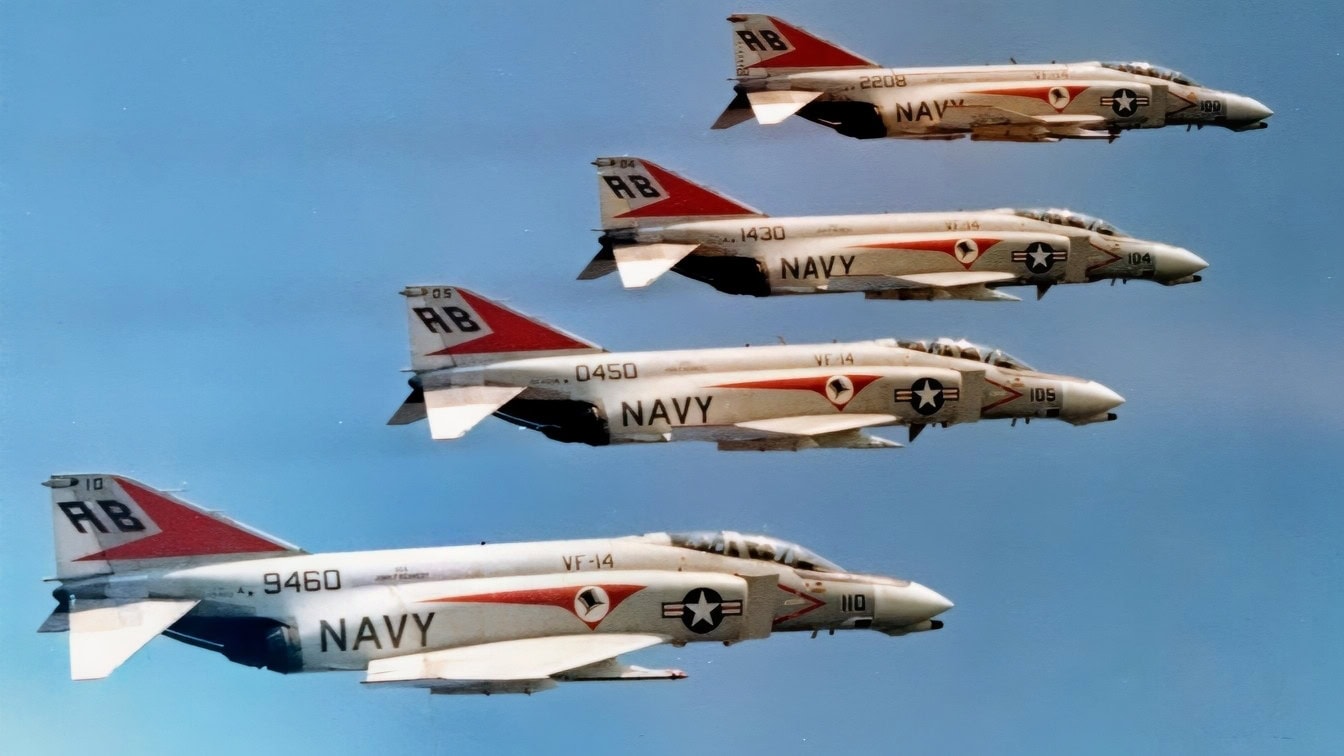
The F-15A entered operational USAF service, replacing the F-4 Phantom II in the dedicated air superiority role.

1979-06First combat victory

Israeli Air Force F-15s scored the type's first air-to-air kills over Lebanon, opening a combat record that no operator has yet seen broken.

1986-12F-15E Strike Eagle first flight

The two-seat dual-role derivative flew in December 1986, extending the airframe from pure air superiority into deep interdiction. Detail on the strike line is covered on the F-15E page.

1991-01Desert Storm

USAF F-15C crews accounted for the large majority of coalition air-to-air victories over Iraq, consolidating the type's reputation for beyond-visual-range engagement.

2021-02F-15EX Eagle II first flight

Boeing flew the first F-15EX from St. Louis on 2 February 2021, introducing fly-by-wire controls, the EPAWSS electronic warfare suite and a 20,000-hour airframe life.

2025-12Israeli F-15IA contract

The Pentagon awarded Boeing an $8.58 billion foreign military sale contract for 25 F-15IA aircraft for Israel, with an option for 25 more; work runs in St. Louis through 2035.

2026-04USAF doubles the F-15EX buy

The FY2027 budget request raised the F-15EX program of record from 129 to 267 aircraft, extending recapitalisation beyond the retired F-15C/D fleet to the F-15E force.

Strategic significance

medium

The F-15's enduring value lies less in any single technical parameter than in a design margin that has absorbed five decades of upgrades. A large wing, high thrust-to-weight ratio and generous internal volume gave the original air superiority airframe room for successive radar, avionics and weapons generations without a redesign. The often-cited record of 104 credited air-to-air victories with no confirmed losses is best read as evidence of that margin combined with training, sensor advantage and favourable engagement conditions across Israeli, American and Saudi service, rather than as a measure of the airframe alone. Adversary loss claims have surfaced periodically but none has been substantiated.

The programme is also unusual in remaining commercially alive long after its intended replacement entered service. The St. Louis line has run continuously since 1972, sustained through the 2010s by Gulf export orders and now by the F-15EX. In April 2026 the USAF more than doubled its F-15EX program of record from 129 to 267 aircraft, a reversal that reflects both the cost of an all-stealth force and the practical value of a high-payload, long-endurance platform for standoff missiles and homeland defence alert. Israel's F-15IA order of December 2025 extends deliveries into the mid-2030s.

For allied air forces the F-15 has become a mid-tier backbone that is being modernised rather than replaced. Japan is upgrading part of its F-15J fleet to a Japan Super Interceptor configuration with new radar, mission computer and standoff missiles; South Korea approved a comparable package for its 59 F-15Ks. The likely pattern through the 2030s is a two-layer force in which stealth aircraft open contested airspace and upgraded Eagles carry mass, with the F-15's relevance tied to the reach of its weapons rather than to its own survivability.

Videos

Boeing F-15EX First Flight (Boeing)

Watch on YouTube

F-15 Streak Eagle Feature (National Museum of the U.S. Air Force)

Watch on YouTube

USAF F-15EX High-Intensity Flight Training (Bilibili)

Watch on Bilibili
Variants (10)
Service YearName
1972 – 2011F-15A/B
1978 –F-15C/D
1989 –F-15E Strike Eagle
1998 –F-15I Ra’am
2005 –F-15K Slam Eagle
2009 –F-15SE Silent Eagle
2009 –F-15SG
2016 – 2020F-15S/SA
2021 –F-15EX Eagle II
2025 – 2035F-15IA (Israel Advanced)
Sources & References
Related Discussions

No discussions about F-15 Eagle yet

Start the first discussion