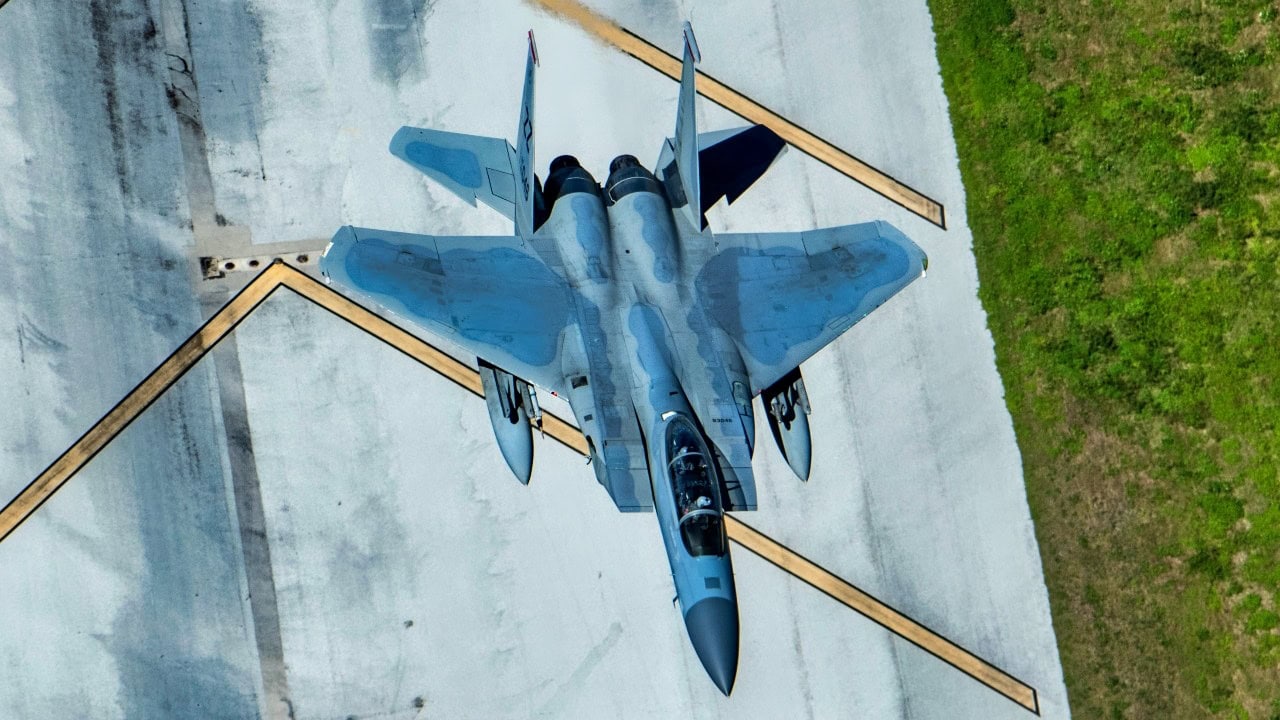
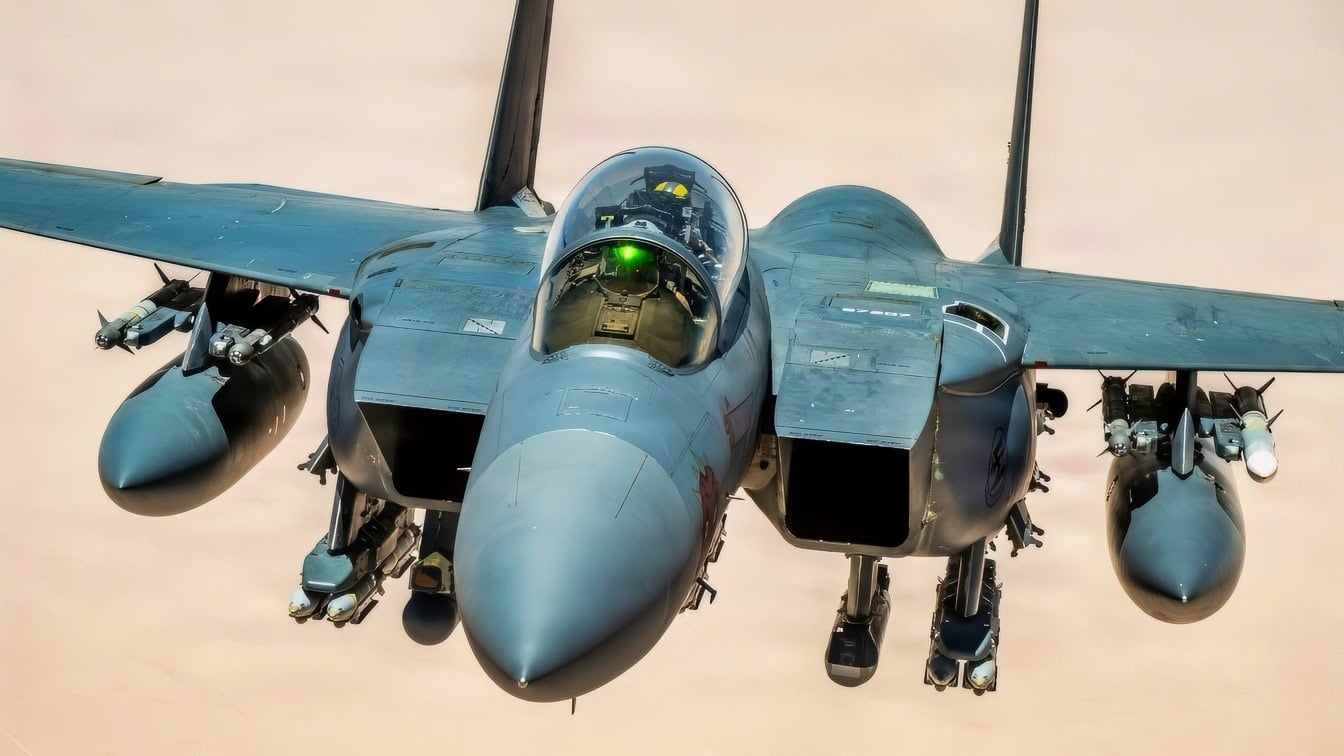
The F-15EX matters less as a new airframe than as a change of role inside the Eagle family. Externally it is still the F-15E planform, but the digital fly-by-wire system, the ADCP II mission computer and the EPAWSS electronic warfare suite reshape what the airframe can do: fly-by-wire damping made wing stations 1 and 9 usable for the first time, lifting the practical air-to-air load from eight missiles to twelve, and the 29,500 lb payload with 20,000-hour airframe life leaves margin for weapons too large for internal carriage on a stealth fighter, including hypersonic and long-range standoff types. Boeing's higher figures of 22 or more air-to-air weapons rest on the proposed AMBER multi-carriage racks and have not been fielded.
That capability set defines the aircraft's place in US force structure rather than making it a competitor to fifth-generation fighters. The F-15EX is not survivable in the way an F-35A or F-47 is intended to be, so its assumed employment is homeland air defence, standoff magazine depth behind stealth penetrators, and missions where sortie generation and load-out matter more than signature. The FY2027 request doubling the program of record from 129 to 267 aircraft reflects that logic: the driver shifted from replacing worn F-15C/D interceptors in Air National Guard units to recapitalising the F-15E fleet, while keeping the St. Louis line warm alongside F-35A production. Basing plans reported so far centre on Portland, Fresno, New Orleans and Kadena; the first permanent Pacific aircraft are not expected until 2027, so the 2026 Kadena visit was familiarisation rather than a posture change.
The export picture is more uneven than the domestic one. Israel's 25-aircraft F-15IA order gives Boeing a second production stream and an Advanced Eagle configuration with distinct national mission systems, but Indonesia's F-15ID campaign closed in early 2026 and the proposed Saudi buy of additional Advanced Eagles has not converted into a contract. The practical question for the type over the next decade is whether an expensive, non-stealthy fighter that now costs roughly as much per aircraft as an F-35A can be sustained politically once F-47 procurement begins competing for the same budget lines.