
Canada’s CH-148 Cyclone fleet gets radar warning software fix
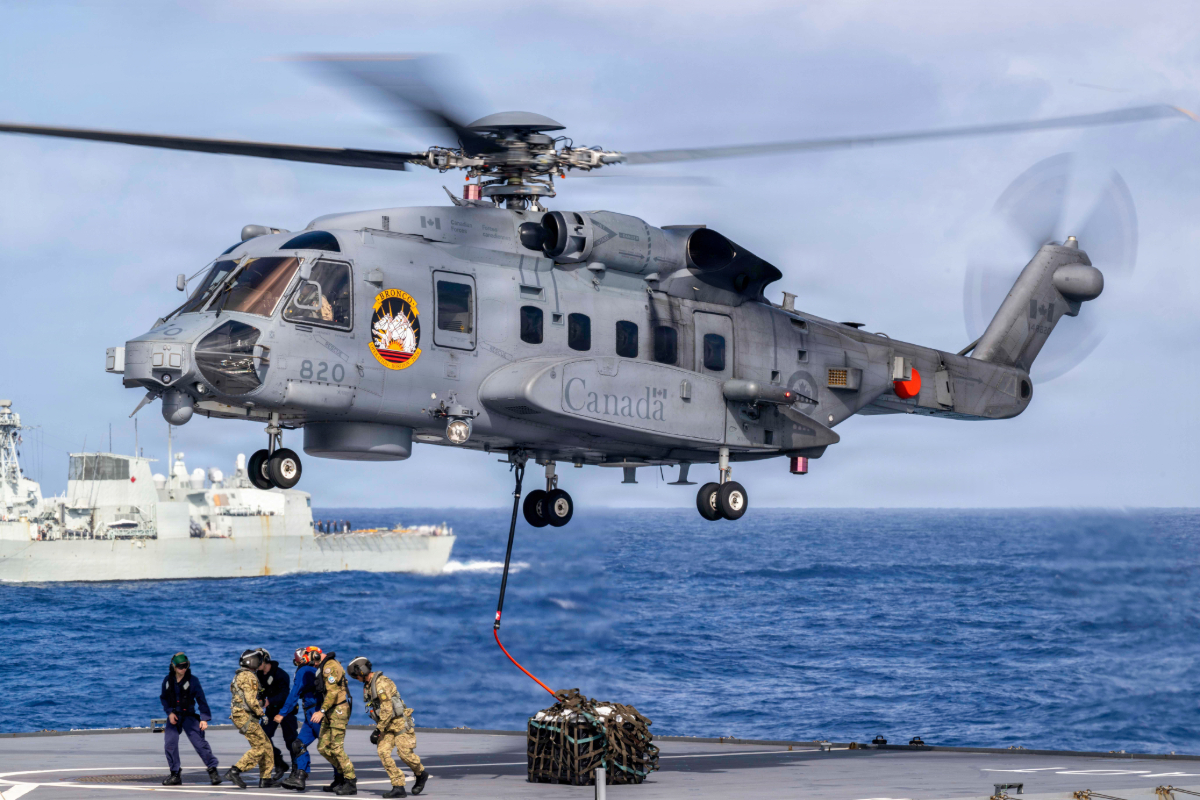
Lockheed Martin will update the radar warning and electronic support software on Canada’s CH-148 Cyclone maritime helicopters under a $9.8 million contract awarded through the U.S. Navy, with work running until October 2030.
Naval Air Systems Command placed the contract with Lockheed’s Owego, New York, operation on behalf of the Canadian government, which is paying the full amount through Foreign Military Sales. It covers a new version of the operational flight program software for the helicopter’s AN/ALQ-230 electronic support measures and radar warning receiver, along with new Canadian Mission Data Load Tool software, and includes development, documentation, testing, installation and training aimed at fixing software and system trouble reports already logged against the equipment. Owego accounts for 97% of the work, with the remaining share split evenly between Ottawa, Halifax and Patuxent River, Maryland, and the contract was not competed.
The AN/ALQ-230 is the Cyclone’s passive electronic warfare sensor, a Lockheed system developed for Canada’s Maritime Helicopter Program that listens for radar emissions from ships, aircraft and air defense sites, identifies them and warns the crew when the helicopter is being tracked. The operational flight program is the software that runs the receiver itself, while the mission data load is the library of emitter signatures the system uses to recognize what it detects. A Canadian tool for building those mission data files lets the Royal Canadian Air Force prepare and update its own threat libraries, which have to change as new radars appear and as crews deploy to different regions.
The contract announcement does not describe the trouble reports or say how many have been recorded, and neither Lockheed nor the Canadian Department of National Defence has said whether the work will add capability or only correct existing faults.
The Cyclone is a militarized, fly-by-wire version of the Sikorsky S-92 built by Sikorsky, which Lockheed Martin owns, and it shares its basic airframe with the U.S. Marine Corps’ VH-92A presidential helicopter, which is also built on the S-92. Canada ordered 28 Cyclones in 2004 to replace the CH-124 Sea King, but development problems delayed deliveries until June 2015, and the helicopter did not reach initial operational capability until June 2018, the same year the last Sea Kings retired. The aircraft flies from Royal Canadian Navy Halifax-class frigates for anti-submarine and anti-surface warfare, search and rescue and utility missions, carrying a multi-mode radar, a HELRAS dipping sonar, two torpedoes and a mission system developed by General Dynamics Mission Systems-Canada in addition to the ESM suite.
National Defence puts the cost of acquiring the Cyclone, including project management, infrastructure and contingency, at C$3.75 billion, and the cost of major in-service support at C$11.17 billion. Its 2025 briefing notes set full operational capability for the fleet in September 2026 and the aircraft’s estimated life expectancy at 2043. One Cyclone was lost on April 29, 2020, while operating from HMCS Fredericton in the Ionian Sea, killing six Canadian Armed Forces members, which leaves 27 airframes from the original order.
The electronic support suite has been linked to an earlier fleet problem. Cracks found on almost all Cyclones in 2021 were caused by structural loads from the ESM and satellite communications antenna mounts in flight, according to National Defence, and Sikorsky repaired the aircraft. In April 2025, the fleet was briefly paused again after questions arose over whether some spare parts were in use beyond their service life.
Keeping the Cyclone’s mission systems current has been a recurring concern in Ottawa. Internal documents reported by CBC News in January 2024 showed the air force was worried about sustaining the helicopter’s weapon system over the medium and long term, partly because Canada is the only country flying the CH-148 and therefore bears the full cost of software and hardware updates unique to the type.
Lockheed’s Owego site also builds the AN/ALQ-210 electronic support system for the U.S. Navy’s MH-60R, and NAVAIR, which manages that work, is buying the Canadian update on Ottawa’s behalf, with part of the testing planned at Patuxent River.
Content preview only. Full article available at source. View Full Article
Lockheed Martin will update the radar warning and electronic support software on Canada’s CH-148 Cyclone helicopters under a $9.8 million contract, with work running until October 2030. The updates aim to address existing software issues and enhance the helicopter's operational capabilities. The contract was placed by Naval Air Systems Command on behalf of the Canadian government, which is funding the project through Foreign Military Sales.
- Lockheed Martin awarded a $9.8 million contract for software updates on CH-148 Cyclone helicopters.
- The contract includes development, documentation, testing, installation, and training.
- The updates aim to fix existing software issues and enhance operational capabilities.
- The CH-148 Cyclone is used by the Royal Canadian Air Force for various missions.
- The fleet is expected to achieve full operational capability by September 2026.