
The PLA's Amphibious Training Aims at Seizing Control of South China Sea Islands: How Type 075 Task Forces Bridge the Last Mile
 Li Minghui
PLA Amphibious Training Aimed at Seizing Control of South China Sea Islands: How the Type 075 Task Force Completes the Last Mile
The Institute for the Study of War (ISW) mentioned in its "China & Taiwan Update" on October 27 that the PLA conducted an unusual amphibious combat training on October 14, likely showcasing its capability to seize and control a maritime feature in the South China Sea currently held by the Philippines. The report did not specify the name of the island or reef, nor did it clarify whether the training involved actual troop landings, but this assessment is more thought-provoking than simply being "another routine exercise."
The Key to This Training Is Not Just the Landing Ships
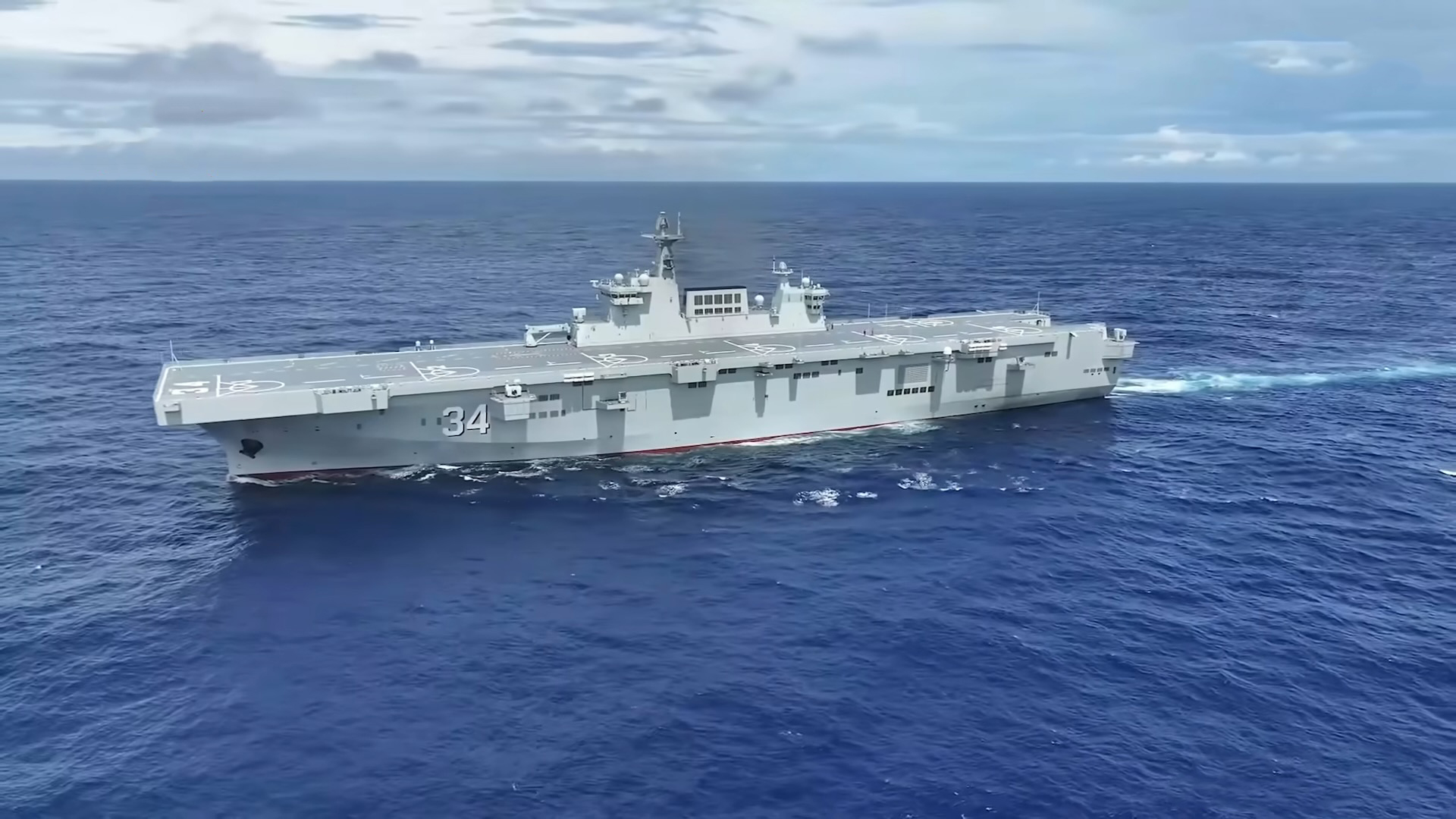
From an equipment perspective, the PLA already possesses the Type 075 amphibious assault ship and the Type 071 landing platform dock. The Type 075 has a full-load displacement of about 40,000 tons and can carry helicopters, air-cushion landing craft, and amphibious armored vehicles; the Type 071 is more suitable for the sustained transport of personnel, vehicles, and supplies. Together, they have the capability to separate the "initial assault" from "subsequent resupply."
However, seizing control of an island or reef does not end with delivering troops to the beach. The real challenge lies in maintaining communication, casualty evacuation, air defense, and ammunition resupply without ports, runways, and stable freshwater supplies. In other words, the Type 075 addresses the issue of maritime mobility but does not automatically resolve the logistical support issues after landing.
The South China Sea Scenario Differs from the Taiwan Strait Assumption
If the training indeed targets maritime features controlled by the Philippines, its scale may be smaller than a large-scale landing in the Taiwan Strait, but it is closer to an operation characterized by "limited objectives, rapid occupation, and controllable political pressure." The small area of the South China Sea islands and the limited number of defending troops allow the PLA to focus on special operations forces, drone reconnaissance, electronic suppression, and helicopter vertical assaults, rather than deploying a complete landing force from the outset.
This also explains why external observers should not focus solely on the deck area of the Type 075. The decisive element of island operations may be small unmanned systems establishing target imagery first, followed by manned aircraft and naval gunfire suppressing key nodes, and finally allowing engineers and logistics units to quickly restore docks, temporary communication stations, and takeoff and landing points. No matter how many pieces of equipment are available, if these elements cannot be connected, the landing ship remains just an expensive transport tool.
The Philippine Factor Gives the Training Real-World Implications
ISW believes that such activities may be demonstrating the PLA's capability to seize control of maritime features held by the Philippines. It is important to maintain a degree of caution: publicly available information is still insufficient to prove that the training target is a specific island or reef, nor can it be inferred that Beijing has decided to take military action. An analysis by Japan's The Japan Times on October 28 regarding the PLA's purges and deterrence in the Taiwan Strait reminds the public from a broader perspective that changes in the command chain of the Chinese military are increasing the risk of regional misjudgments.
For the Philippines, the issue is not just whether a specific island can be defended, but whether the U.S. and the Philippines can complete reconnaissance, reinforcement, and diplomatic responses within hours after a crisis occurs. For the PLA, the question is similarly not "can we land," but whether it can quickly create facts on the ground without escalating the situation into a full-scale conflict.
Production Capacity Advantages Must Be Tested by Logistical Capabilities
China's rapid shipbuilding speed for amphibious vessels is a clear advantage for the PLA; however, the number of ships does not equate to the number of available task forces. The Type 075 requires support from onboard helicopters, landing craft, escort vessels, fuel supplies, and a well-trained Marine Corps. Particularly, the helicopter sortie rates during high-intensity operations, joint operations at night, and sustained resupply after damage have very little publicly available information.
The author believes that the most valuable observation point of this training is not whether a new piece of equipment has appeared, but whether the PLA is advancing amphibious operations from "platform demonstration" to "systematic control." If subsequent satellite imagery or official reports indicate that the training included sustained resupply, casualty evacuation, and engineering support on the island, then its signal strength will be significantly higher than a simple landing demonstration.
Reference: Institute for the Study of War, "China & Taiwan Update, October 27, 2026"; The Japan Times, "Xi's military purges make U.S. deterrence more urgent," October 28, 2026. Public information regarding specific training targets and participating forces is pending confirmation.
The People's Liberation Army (PLA) conducted unusual amphibious operation training on October 14, 2023, likely aimed at demonstrating its capability to seize and control maritime features in the South China Sea. The exercise involved Type 075 and Type 071 vessels, focusing on logistics and support capabilities necessary for sustained operations. This training reflects a strategic shift towards systematic control in amphibious operations.
- PLA conducted unusual amphibious operation training on October 14, 2023.
- Training likely aimed at demonstrating capability to seize maritime features controlled by the Philippines.
- Type 075 and Type 071 vessels are involved in the training exercise.
- The operation emphasizes logistics and support capabilities post-landing.
- The training reflects a shift towards systematic control in amphibious operations.