

Summary and Key Points: Drawing on her expertise in international politics, British journalist Georgia Gilholy highlights the growing crisis surrounding Canada’s paralyzed F-35 fighter jet procurement program.
-Over a year after Prime Minister Mark Carney ordered a review of the decision to purchase 88 F-35s—driven by a desire to reduce reliance on the U.S. amid an ongoing trade row—Ottawa remains completely deadlocked.
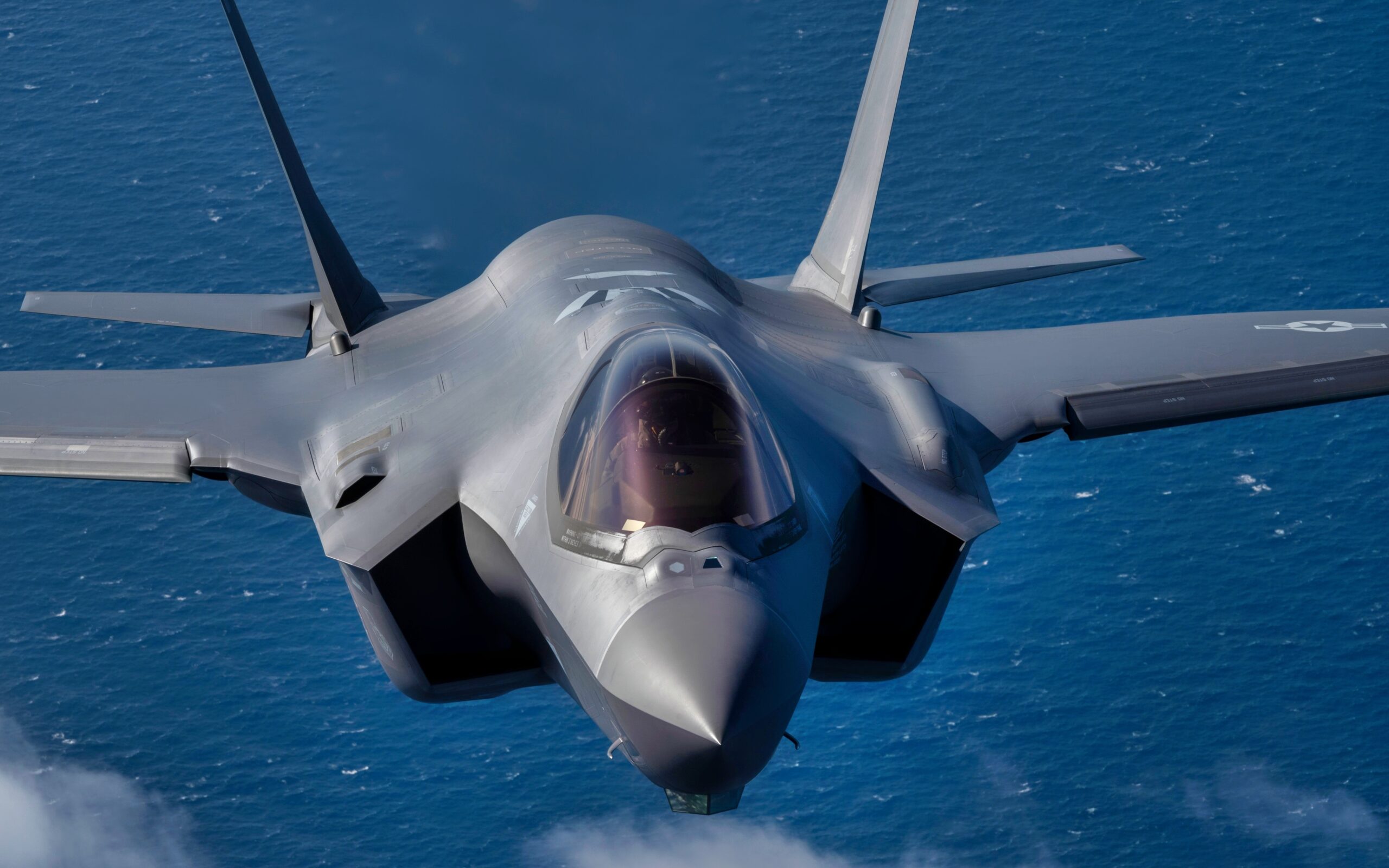
A U.S. Air Force F-35A Lightning II participating in NATO exercise Ramstein Flag 24 flies over the west coast of Greece, Oct. 4, 2024. Over 130 fighter and enabler aircraft from Greece, Canada, France, Hungary, Italy, Poland, Portugal, Romania, Spain, Sweden, United Kingdom and United States are training side by side to improve tactics and foster more robust integration, demonstrating NATO’s resolve, commitment and ability to deter potential adversaries and defend the Alliance. (U.S. Air Force photo by Tech. Sgt. Emili Koonce)
-With Saab aggressively pushing its Gripen fighter as an alternative for a “mixed fleet” and costs ballooning to C$27.7 billion, the Royal Canadian Air Force is left in strategic limbo as its aging CF-18s rapidly approach obsolescence.
Canada’s F-35 Review Remains Mired in Uncertainty
Over a year on from Canada announcing a review into its plans to purchase more American fighter jets, Ottawa appears no closer to finalizing plans for its future air force.
The latest sign of that uncertainty came this week from Saab itself. Speaking in Ottawa, Saab chief executive Micael Johansson said he still does not know when the federal government will finish its review of Canada’s plan to buy 88 Lockheed Martin F-35s, despite months of public assurances from ministers that a decision was coming. According to reporting by The Canadian Press, Johansson said Saab has answered detailed government questions about industrial arrangements, technology transfer, interoperability, and how a mixed fleet might work, but is now waiting for Ottawa to decide what it wants.
That matters because Canada’s fighter replacement saga was supposed to be dealt with a long time ago. In 2023, the federal government selected the F-35under the Future Fighter Capability Project, which requires 88 aircraft to replace the Royal Canadian Air Force’s elderly CF-18s. National Defence says the fleet is intended to meet Canada’s sovereignty, NORAD and NATO obligations, and the first aircraft are expected to begin arriving before the end of the decade.
Upon the outbreak of the continued trade row with the United States and a wider push in Ottawa to reduce reliance on Washington, Prime Minister Mark Carney ordered a review of the F-35 purchase. While Carney said the review would be completed by last summer, that deadline has long since passed, with the issue unresolved.
On one side is Lockheed Martin, whose aircraft won the original competition and remains the Royal Canadian Air Force’s preferred option. Lockheed argues the F-35 offers unmatched stealth, sensor fusion, and interoperability with the United States and other Arctic and NATO allies. The company says Canada’s participation in the programme has already attracted more than 110 Canadian firms, and that the project could generate more than C$15.5 billion in industrial value through 2058.
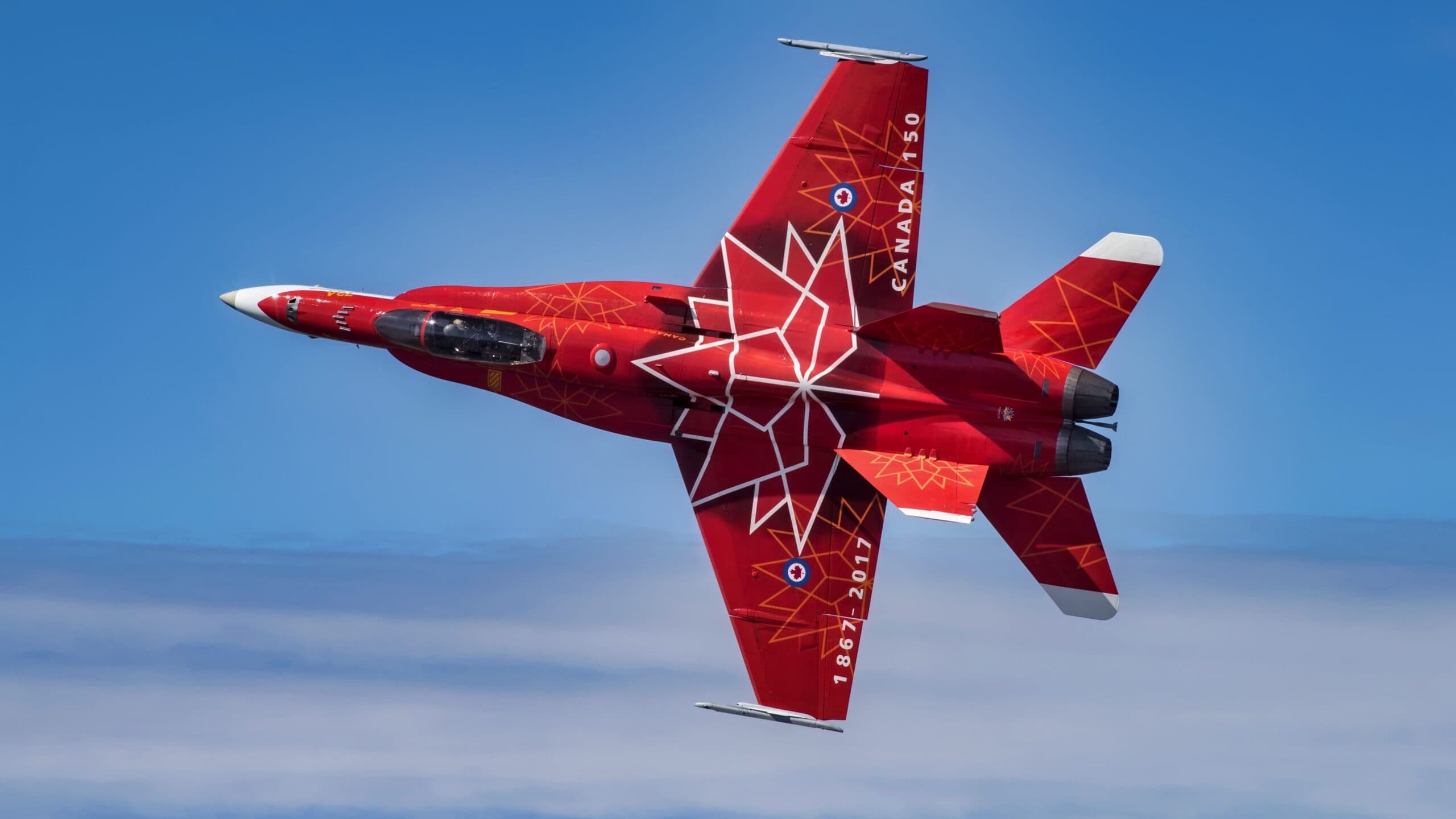
CF-18 Fighter from Canada.
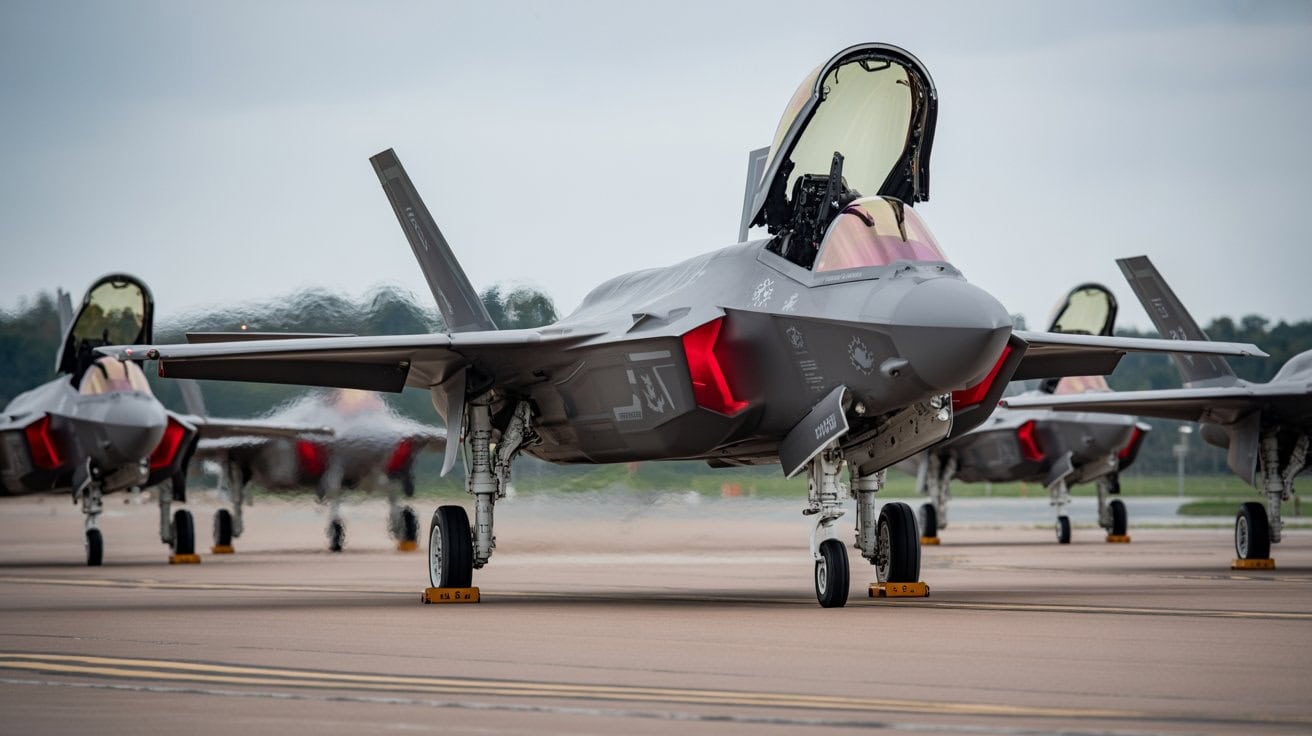
Canada F-35 Fighters. Image Created by Ideogram.
On the other side is Saab, which lost the original contest but has never really gone away. The Swedish company has renewed its Canadian pitch with a familiar offer: local assembly, technology transfer, and deeper domestic industrial involvement than critics say Ottawa can expect from the F-35 programme. Air Data News reported last October that Ottawa had been pressing Lockheed Martin for greater economic offsets and weighing whether a smaller F-35 buy could be paired with Saab Gripens instead.
That mixed-fleet idea has always sounded politically tidier than operationally elegant. Running two fast-jet fleets would mean duplicate training pipelines, maintenance systems, parts inventories, and support structures. It would also complicate infrastructure plans already under construction around the F-35.
A split fleet would be more expensive and more cumbersome to sustain, even if it might offer Ottawa leverage in negotiations or a degree of political diversification away from the United States. Reuters and The Logic have both reported that the government’s deliberations have centered on whether to prioritize industrial and geopolitical flexibility or military simplicity.
There is another wrinkle, too. Even the Gripen option is not wholly free of American leverage. CBC reported this month that one of the key systems enabling Gripens and F-35s to exchange data — the U.S.-controlled Link 16/MIDS architecture would still need American approval. That has fuelled arguments from F-35 supporters that Canada cannot really buy its way out of its dependence on Washington by simply switching airframes. Saab and Swedish officers have pushed back, saying Gripens have already operated effectively alongside NATO F-35s in Europe and that the interoperability question was effectively settled during Canada’s 2021 evaluation process.
Meanwhile, the cost issue has hardly become easier. Canada’s Auditor General reported in 2025 that the estimated cost of the fighter project had grown to C$27.7 billion, covering not only the aircraft themselves but also associated equipment, sustainment and upgraded facilities. Military aviation is not a cheap business anywhere.
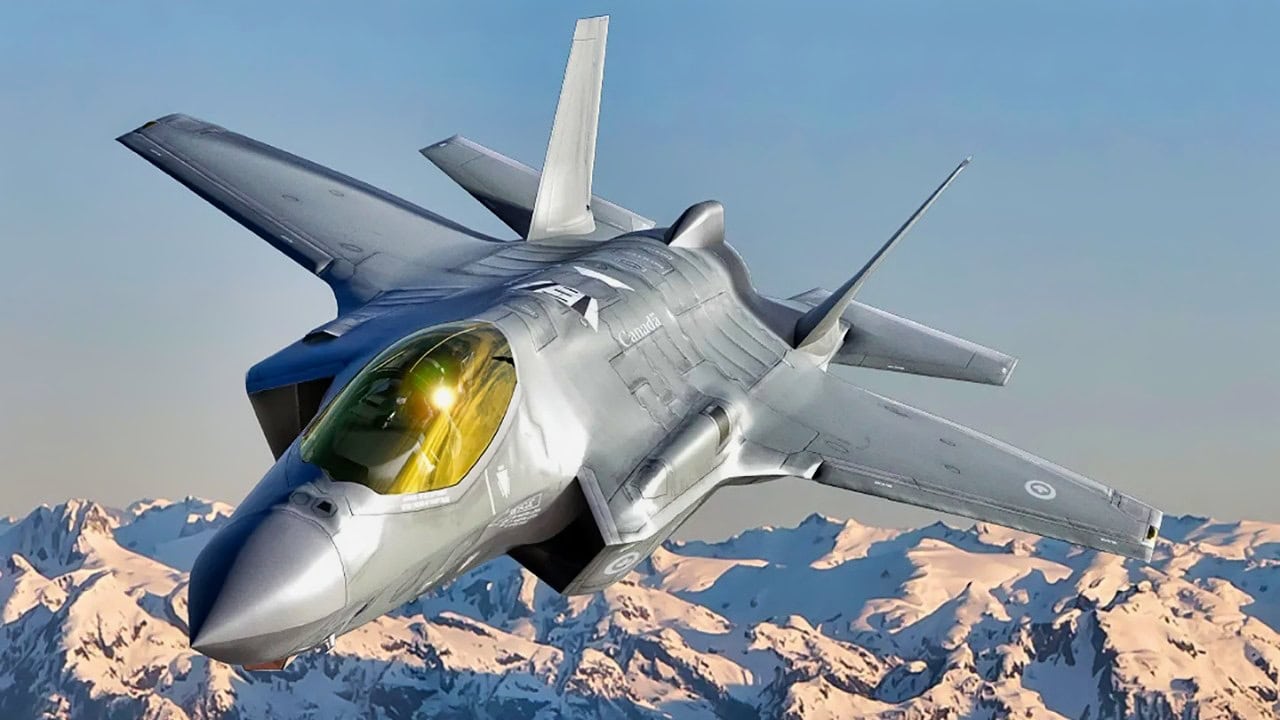
Canada F-35. Image Credit: Creative Commons.
The Logic reported earlier this month that Defence Minister David McGuinty is considering Canada’s admission to the U.K.-Italy-Japan Global Combat Air Programme. That does not answer the immediate fighter question, but it does underline how Ottawa is increasingly thinking beyond a simple binary choice between Lockheed and Saab.
For now, though, Canada still has a near-term problem disguised as a long-term strategy discussion. Ottawa has already sealed the deal on the inaugural 16 F-35s, has made payments tied to further aircraft, and is constructing its forthcoming force around the assumption that CF-18s will soon be phased out.
Yet it has carried on publicly entertained alternatives without confirming a deadline for a firm decision.
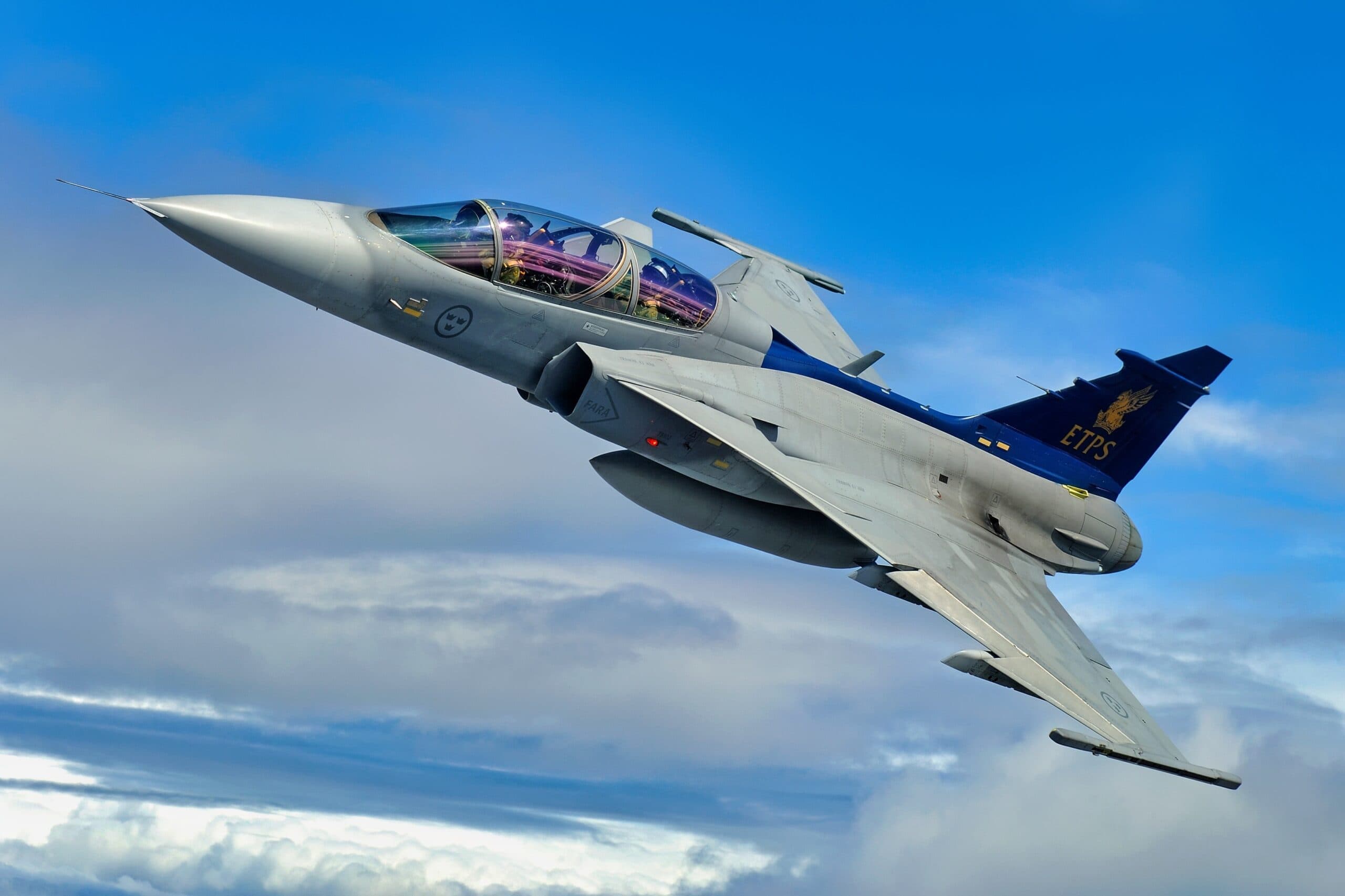
JAS 39 Gripen Fighter from Sweden. Image Credit: Creative Commons.
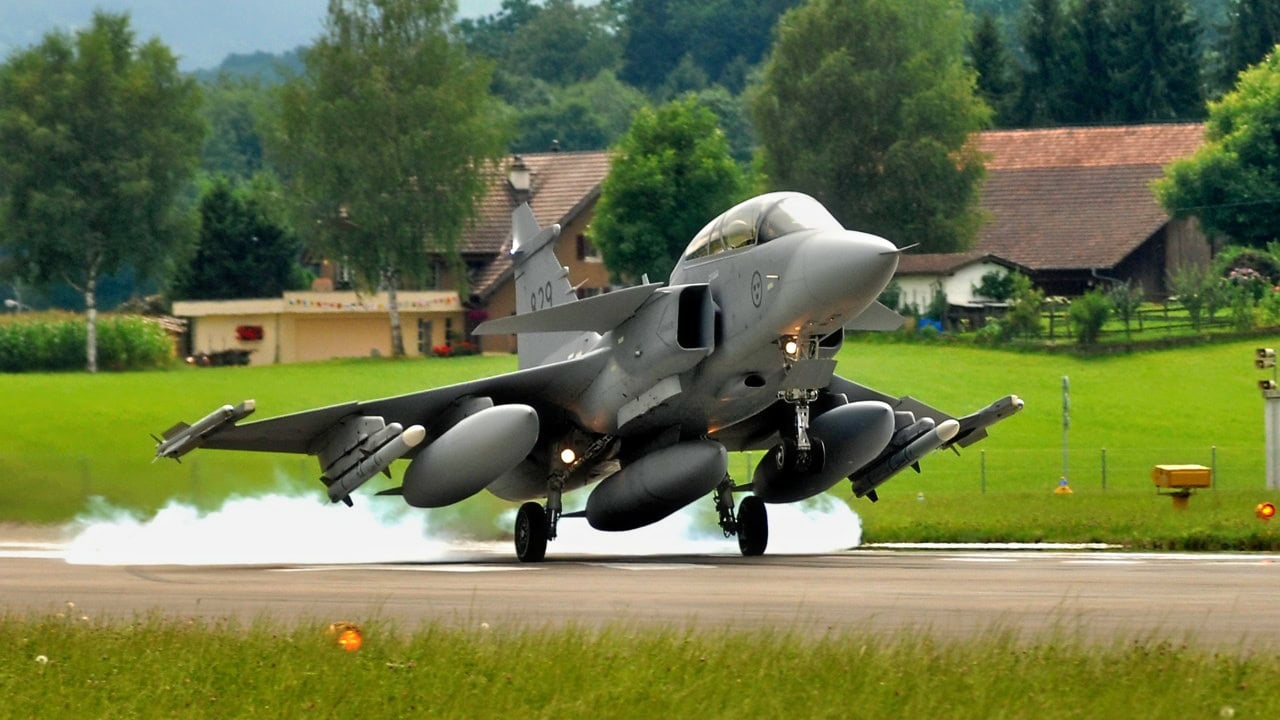
JAS 39 Gripen Fighter. Image Credit: Creative Commons.
At some point, the value of keeping options open begins to collide with the cost of looking indecisive. Ottawa may still decide that the original F-35 plan is the least bad option. It may trim the order and extract more industrial value. It may even keep one eye on Saab while looking ahead to GCAP.
But after a year of review, delay, and strategic ambiguity, the government is running out of room to pretend this is just a matter of taking the time needed to “get it right.” The air force, industry, and Canada’s allies all need to know what “right” now means.
About the Author: Georgia Gilholy
Georgia Gilholy is a journalist based in the United Kingdom who has been published in Newsweek, The Times of Israel, and the Spectator. Gilholy writes about international politics, culture, and education. You can follow her on X: @llggeorgia.