

Summary and Key Points: At RIMPAC 2026, Canada’s Victoria-class submarine HMCS Corner Brook sank the decommissioned Ticonderoga-class cruiser USS Mobile Bay with a single Mark 48 torpedo amidships. The four Victoria-class boats were built for the Royal Navy as the Upholder-class and sold to Canada, where they make up the entire submarine fleet. In July 2026 Ottawa selected Germany’s Type 212CD to replace them with 12 new submarines, the first four due by 2034.
The Victoria-class Is ‘Sinking’ the US Navy
Earlier this year, at the 2026 RIMPAC international maritime exercise, the U.S. and its allies conducted a sinking exercise (SINKEX) against the decommissioned USS Mobile Bay (CG-53).
The decommissioned Ticonderoga-class cruiser was blasted by multiple munitions, including missiles launched from U.S. Army AH-64 Apache attack helicopters and probably more.
However, a Canadian submarine delivered the killing blow. According to reports, the Victoria-class submarine HMCS Corner Brook (SSK 878) struck the cruiser amidships with a Mark 48 torpedo, sinking her immediately.
The exercise allowed Canadian submariners not only to demonstrate their capabilities, but also to gain valuable experience against real-world targets.
From the UK to Canada
The Victoria-class (originally Upholder-class) submarines were designed and developed for the UK Royal Navy.
In the 1970s, the UK sought to replace the aging Oberon-class diesel-electric submarines.
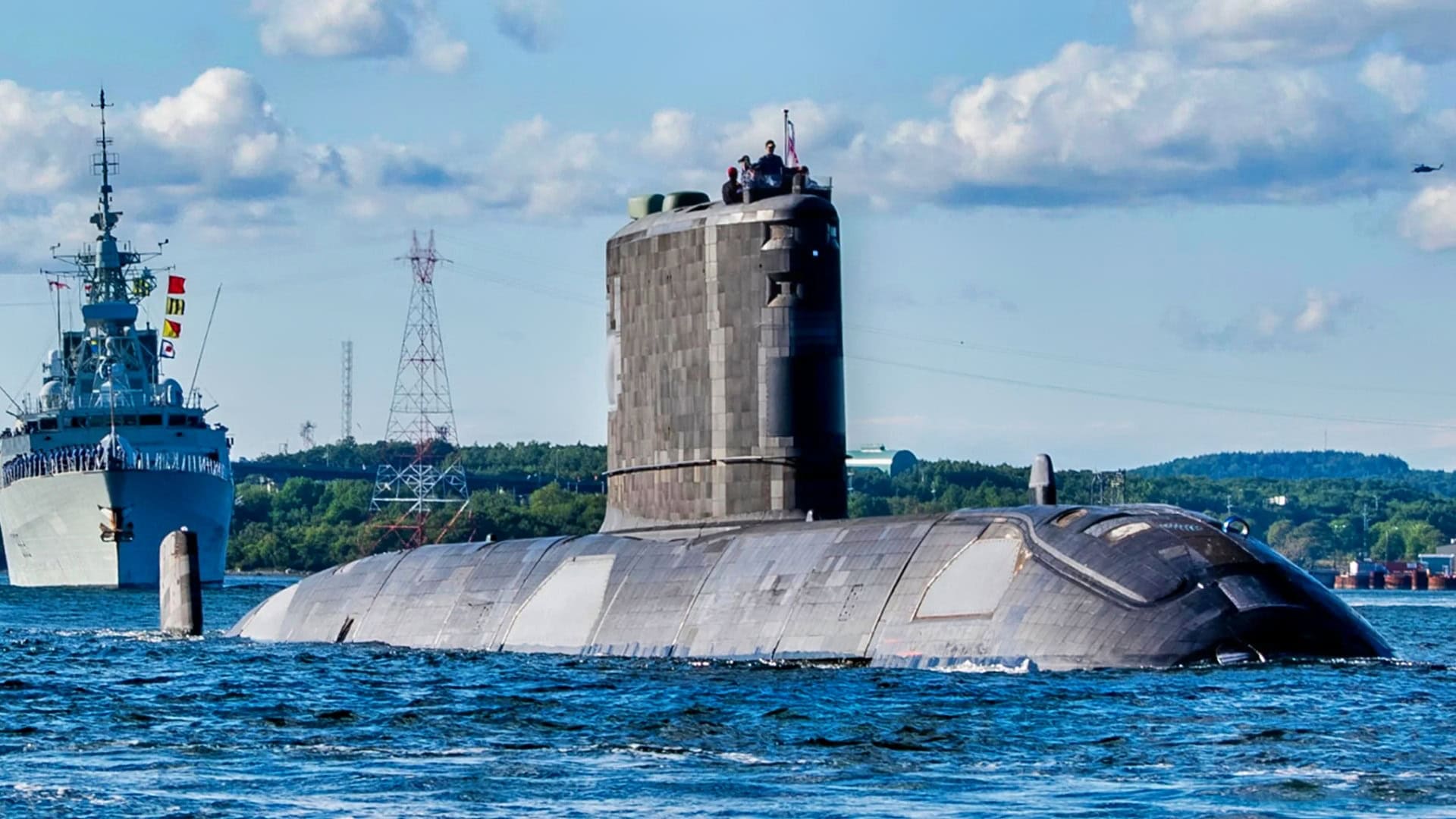
Victoria-Class Submarine Canada.
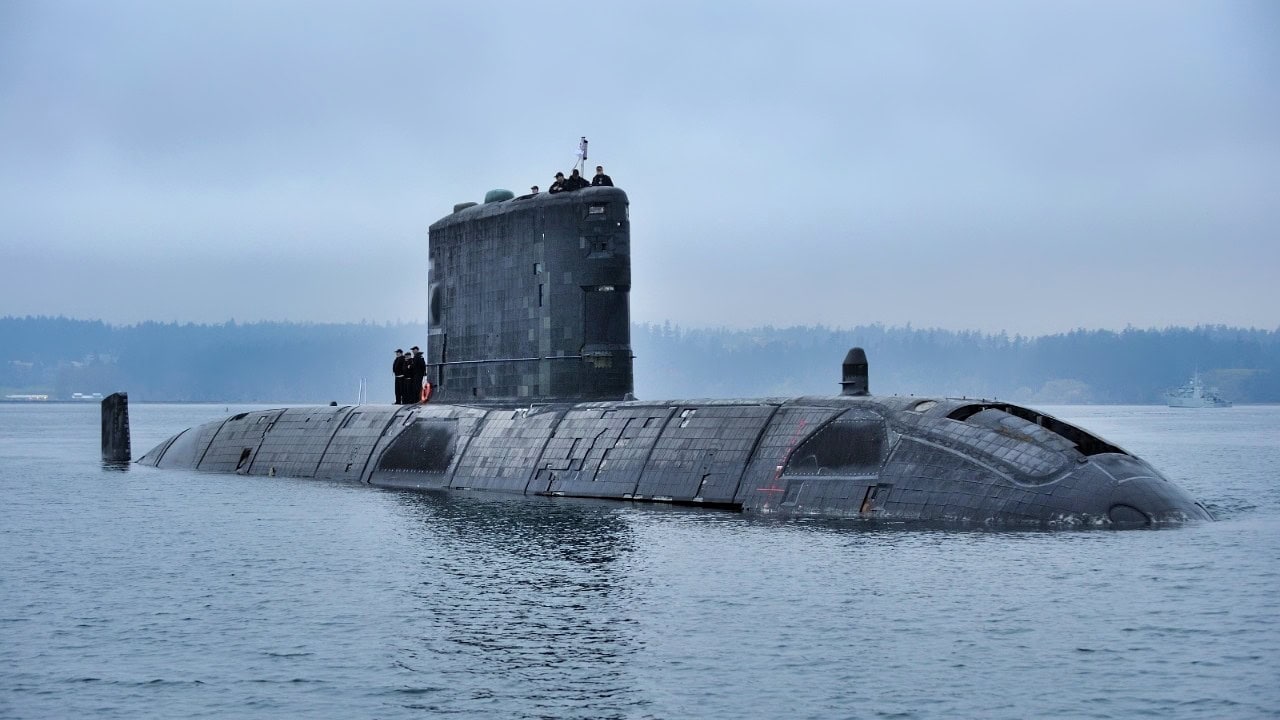
Victoria-Class Submarine from Canada.
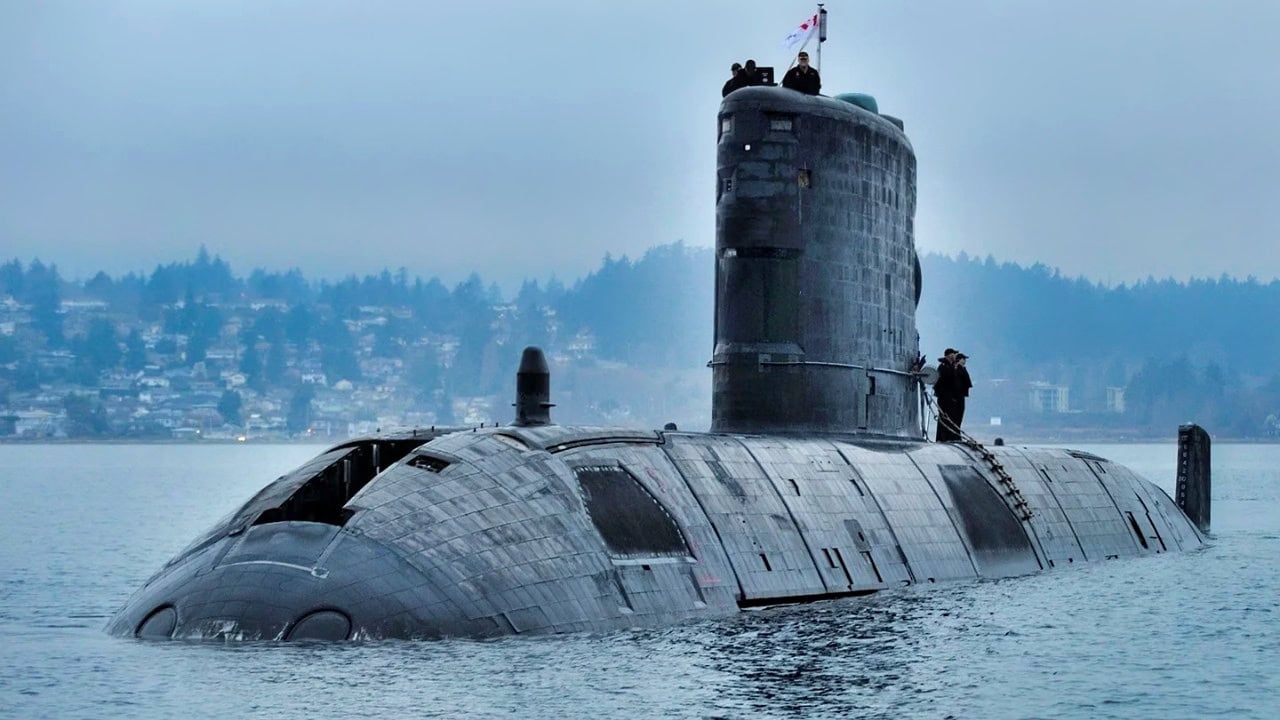
Victoria-Class Submarine Canadian Navy. Image Credit: Government Photo.
Vickers Shipbuilding and Engineering Ltd (VSEL) submitted its Type 2400 proposal to the UK Ministry of Defense, which selected it for further development.
From the outset, the UK hoped that these submarines would attract international attention.
Anticipating potential export orders, the submarines were designed with a 2,400-ton displacement limit.
Additionally, their onboard systems were designed to be easily replaceable if a foreign customer wanted to install its own.
Unfortunately, no foreign customers were interested in the design, and only the UK and Canadian Royal Navies operated the submarines.
Originally, the UK planned to procure a fleet of 12 Upholder-class vessels.
However, in 1981, the UK approved only nine ships.
The fleet was to be built in three stages.
Stage one included the prototype; stage two added the first three production submarines; and stage three added the final five with updated combat systems.
The lead ship of the class, HMS Upholder (later renamed Chicoutimi), was laid down in 1983.
The other three ships, Unseen, Ursula, and Unicorn, were laid down in the following years. By 1992, all four had entered service with the UK Royal Navy.
However, following the collapse of the USSR and the end of the Cold War, the British MoD canceled the remaining five submarines.
It began transitioning to a fully nuclear submarine fleet, leaving the conventionally powered Upholder-class in an awkward position.
The UK initially tried to sell the four submarines to Pakistan, which was in talks with France to procure new submarines.
The bid failed, and the UK ultimately sold the vessels to the Royal Canadian Navy, which redesignated them as the Victoria-class.
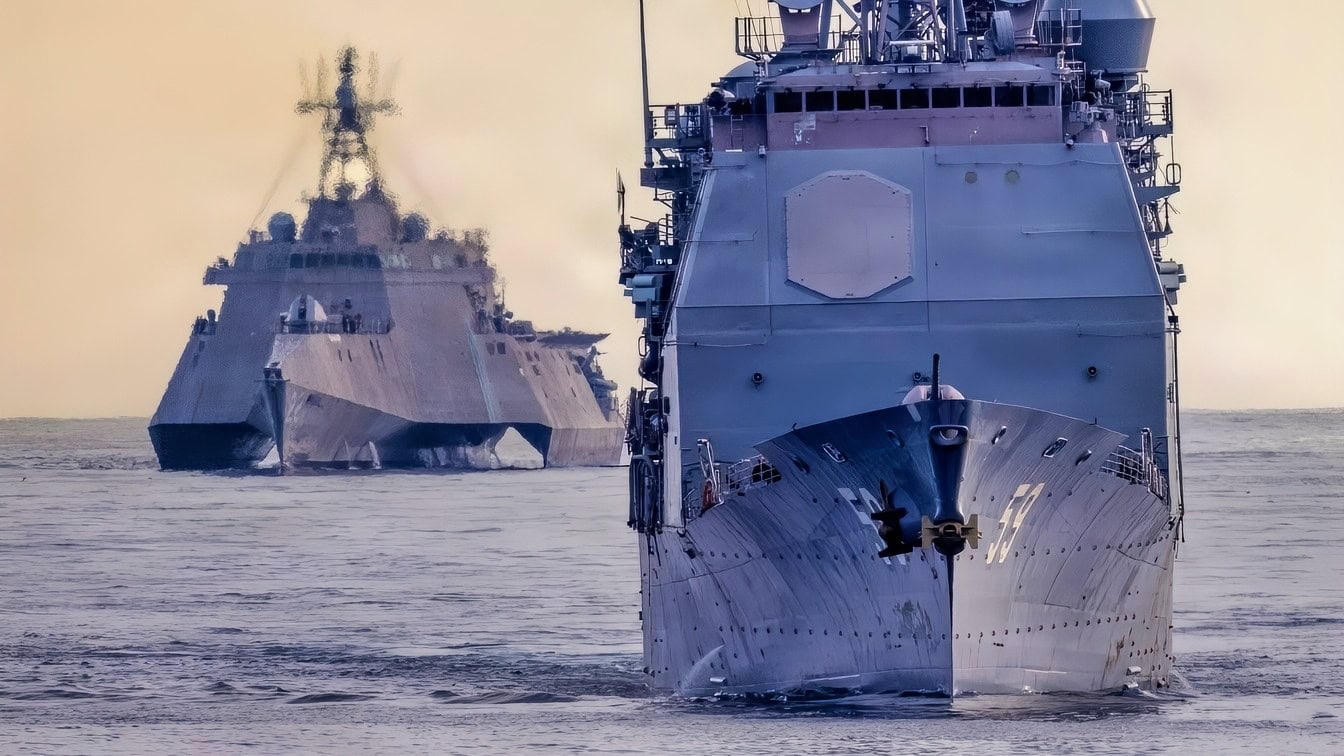
Ticonderoga-class guided missile cruiser USS Princeton (CG 59), front, and Independence-class littoral combat ship USS Kansas City (LCS 22), conduct a simulated strait transit in the Pacific Ocean, Jan. 27, 2026. The simulated strait transit was conducted to refine the 11th MEU’s ability to integrate with the Navy for enhanced force protection. The 11th Marine Expeditionary Unit is currently underway aboard the Boxer Amphibious Ready Group in the U.S. 3rd Fleet area of operations conducting integrated training that enhances lethality and warfighting readiness. (U.S. Marine Corps photo by Sgt. Trent A. Henry)
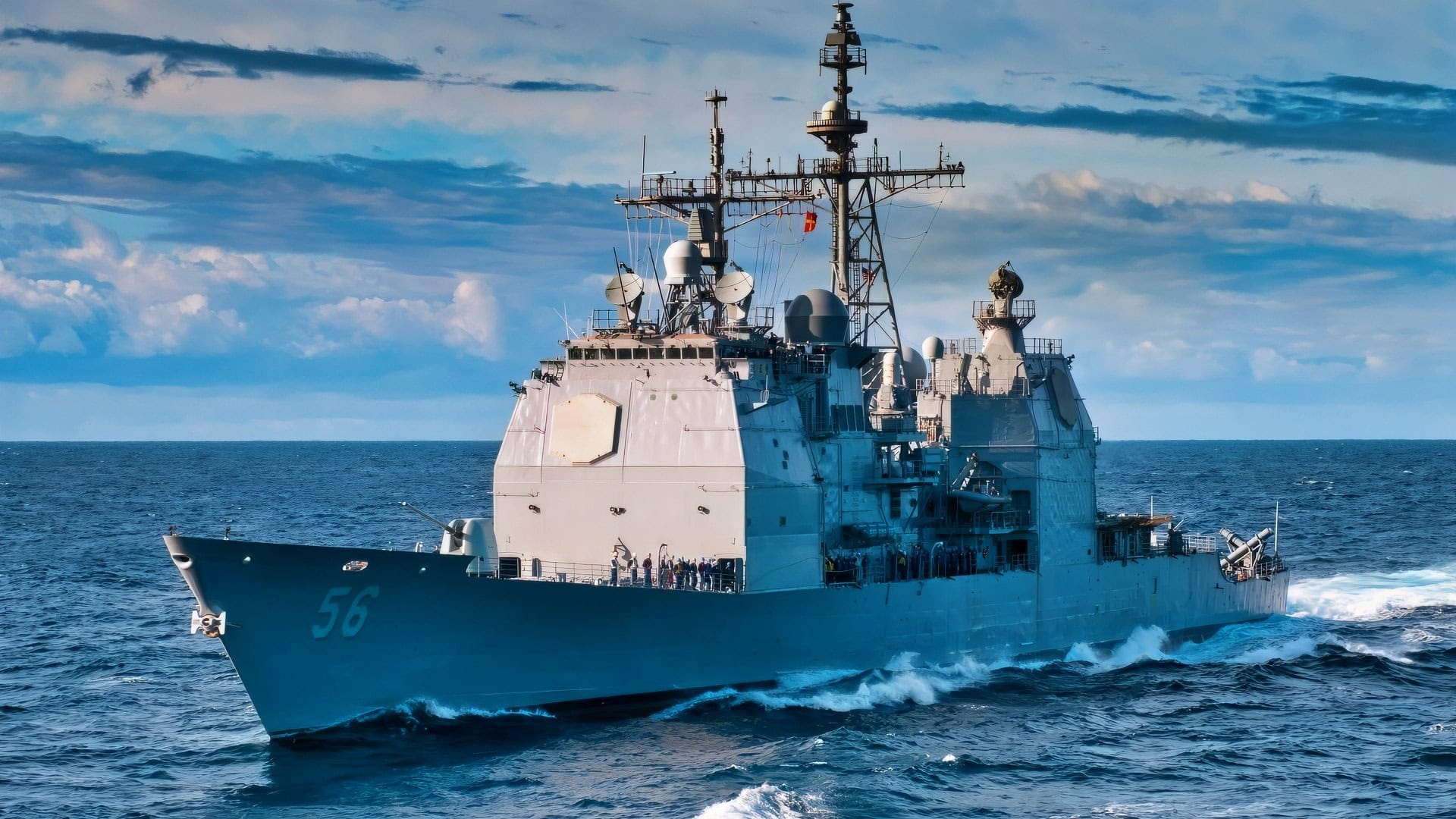
ATLANTIC OCEAN (June 6, 2012) The guided-missile cruiser USS San Jacinto (CG 56) approaches the amphibious assault ship USS Kearsarge (LHD 3) for a fueling at sea. (U.S. Navy photo by Mass Communication Specialist 1st Class Tommy Lamkin/Released)
Specs and Capabilities
The Victoria-class submarines feature a conventional teardrop-shaped hull for better undersea performance.
They are powered by two Paxman Valenta 1600 RPS SZ diesel engines and two 120-cell chloride batteries.
The submarines have a top speed of around 20 knots when submerged, a range of 8,000 to 10,000 nautical miles, and a maximum endurance of 30 days.
Each ship has six 21-inch torpedo tubes. In British service, the submarines carried Mark 24 Tigerfish Mod 2 torpedoes and UGM-84 Harpoon anti-ship missiles.
After their transfer to Canadian service and subsequent refit, their armament changed to complement the Mark 48 Mod 4 torpedo.
When the Victoria-class ships transferred to the Canadian Navy, the Royal Canadian Navy completely overhauled their sensors and onboard systems.
They were fitted with the BAE Type 2007 array, the Type 2046 towed array, and the Type 2040 hull-mounted array, giving them highly capable active and passive sonar systems.
The ships’ communication and electronic support architecture was also replaced with domestic Canadian equipment, enabling better satellite communication.
The combat systems were also changed to accommodate the new armaments.
The ships are equipped with the Lockheed Martin Librascope Torpedo Fire Control System.
Life Extension and Replacement
The four Victoria-class submarines make up Canada’s entire submarine fleet.
Though few in number and less advanced than some international contemporaries, these ships are still highly capable.
In 2017, the government under Justin Trudeau announced that it would extend the service lives of its submarines, keeping them in service until the 2030s.
The main issue facing the RCN is not a technical fault with the Victoria-class, but that it has too few ships to cover its vast Arctic territory.
With Russia actively expanding its Arctic foothold, securing Canada’s northern territory is more important now and requires a constant undersea presence.
In 2024, the RCN began studies to replace its Victoria-class submarines.
The Government officially announced the Canadian Patrol Submarine Project (CPSP), which seeks to procure 12 conventionally powered vessels.
The RCN reportedly considered multiple designs, including the Japanese Taigei-class, the French Barracuda-class, the German KSS III-class, and several others.
By 2025, the Navy had narrowed its options down to the Type 212CD and the KSS III.
In July 2026, the government officially selected the Type 212CD as its newest attack submarine.
The RCN is expected to receive the first four vessels by 2034.
The program’s cost, including lifetime maintenance and sustainment, is expected to reach around $100 billion.
Once the new Type 212CD ships are delivered, the Victoria-class will finally be retired after about 40 years of service.
About the Author: Isaac Seitz
Isaac Seitz, a Defense Columnist, graduated from Patrick Henry College’s Strategic Intelligence and National Security program. He has also studied Russian at Middlebury Language Schools and has worked as an intelligence Analyst in the private sector.