

All signs point to a renewal of war between Iran and the United States after the midterm elections. A recent New York Times article reported that the Trump administration, in conjunction with the Israeli government, is establishing the conditions for a set of new strikes against Iran. This effort includes moving US personnel out of the region due to concerns about Iranian counterattacks.
Political considerations have dictated the timing, as President Trump has reportedly delayed these strikes because a re-ignition of the war would likely have negative economic effects, especially given the tenuous state of the Strait of Hormuz and depleted global oil reserves.
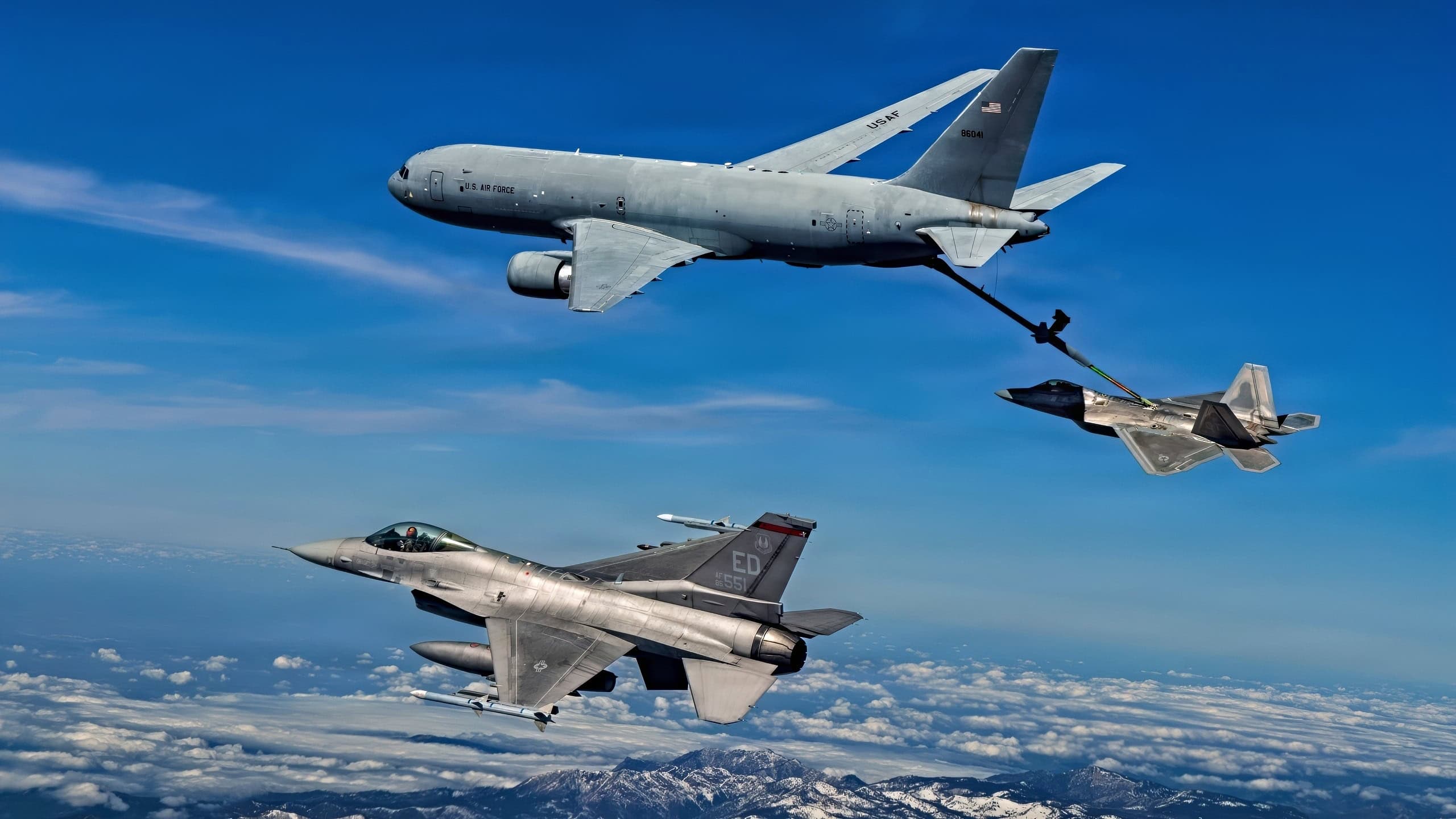
A KC-46 Pegasus assigned to the 418th Flight Test Squadron, Global Reach Combined Test Force, refuels an F-22 Raptor assigned to the 411th Flight Test Squadron, Air Dominance Combined Test Force while an F-16 assigned to the 416th Flight Test Squadron, Airpower Foundations Combined Test Force, awaits a turn over the Mojave Desert on March 3, 2026. Partnerships between the Combined Test Forces at Edwards helps expedite critical capability for the warfighter by leveraging multiple program portfolios in tandem. In this scenario, the F-16 aircraft was operating as a target for key F-22 Raptor test points while the KC-46 was able to collect additional data for aerial refueling efforts. (Courtesy photo)
But with the midterms safely in the rearview mirror, Trump will face few constraints on renewing the war.
Strikes on Iran
Despite the depletion of some long-range precision munitions, both Israel and the United States have many remaining ways to hurt Iran.
There is little reason to believe Iran has rebuilt its already overmatched air-defense capabilities. This means that US and Israeli aircraft can roam freely over Iranian airspace, engaging targets with less sophisticated and less expensive munitions.
If the US decides to resume an anti-regime change campaign, it can target infrastructure serving both military and civilian purposes, inflicting further damage on Iran’s economy and limiting the ability of Iranian security forces to respond to disturbances.
Attacks on energy infrastructure could create longer-term problems for Tehran, though they would also hurt Washington’s efforts to keep oil prices in check.
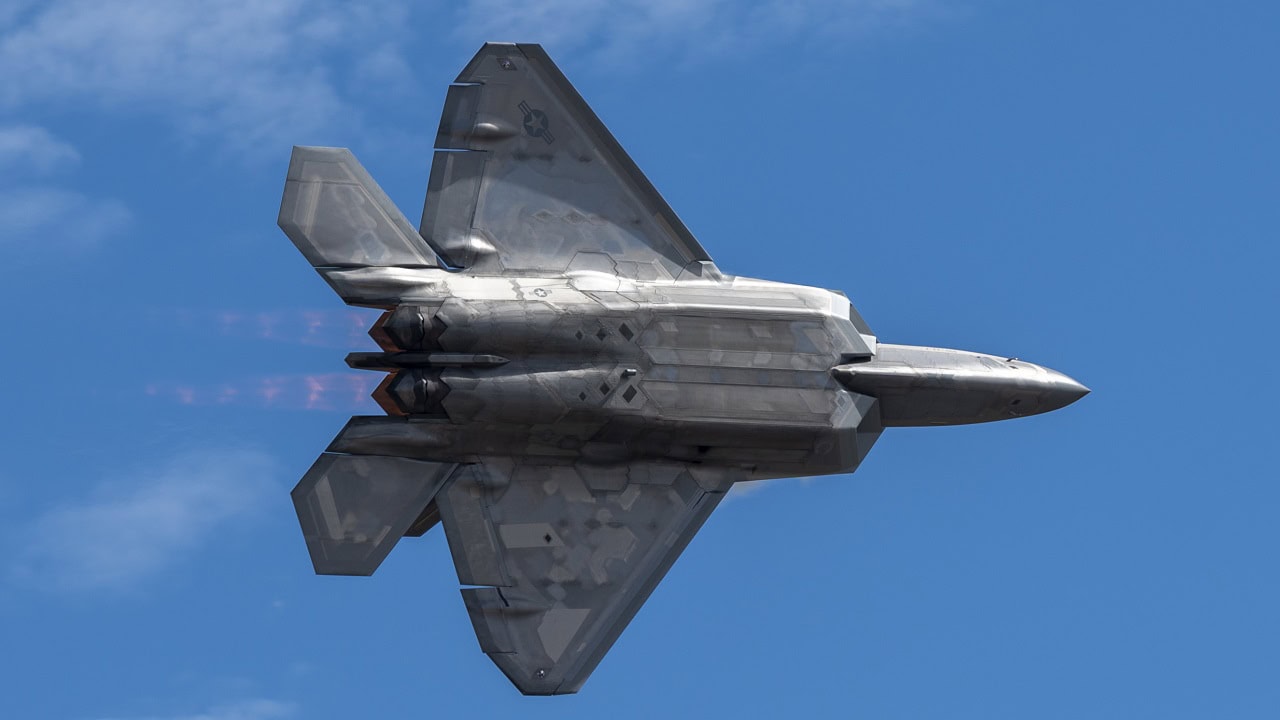
A U.S. Air Force F-22 Raptor conducts a heritage flight during the 2022 Marine Corps Air Station Miramar Air Show at MCAS Miramar, San Diego, California, Sept. 24, 2022. The F-22 Raptor is the Air Force’s fifth-generation fighter aircraft. Its combination of stealth, super-cruise, maneuverability, and integrated avionics, coupled with improved supportability, represents an exponential leap in war-fighting capabilities. The theme for the 2022 MCAS Miramar Air Show, “Marines Fight, Evolve and Win,” reflects the Marine Corps’ ongoing modernization efforts to prepare for future conflicts. (U.S. Air Force photo by Adam Bowles)
Hit the Nuclear Program
We should also expect that what remains of the Iranian nuclear program will come under concerted attack. This includes a possible strike against Pickaxe Mountain, believed to house Iranian centrifuge technology.
While Trump has insisted that Iran’s nuclear capabilities have been fatally damaged, few doubt that Tehran could reconstitute the program if left unmolested for sufficient time.
Moreover, the war itself has undoubtedly given ammunition to the arguments of Iranian hawks that a nuclear weapon is necessary for long-term security.
Retaliation
But Iran has the means to retaliate.
Tehran retains substantial stockpiles of drones and has reportedly reconstituted portions of its ballistic missile force. The latter pose a particularly acute problem because interceptors are scarce, making it hard to defend targets across the Middle East.
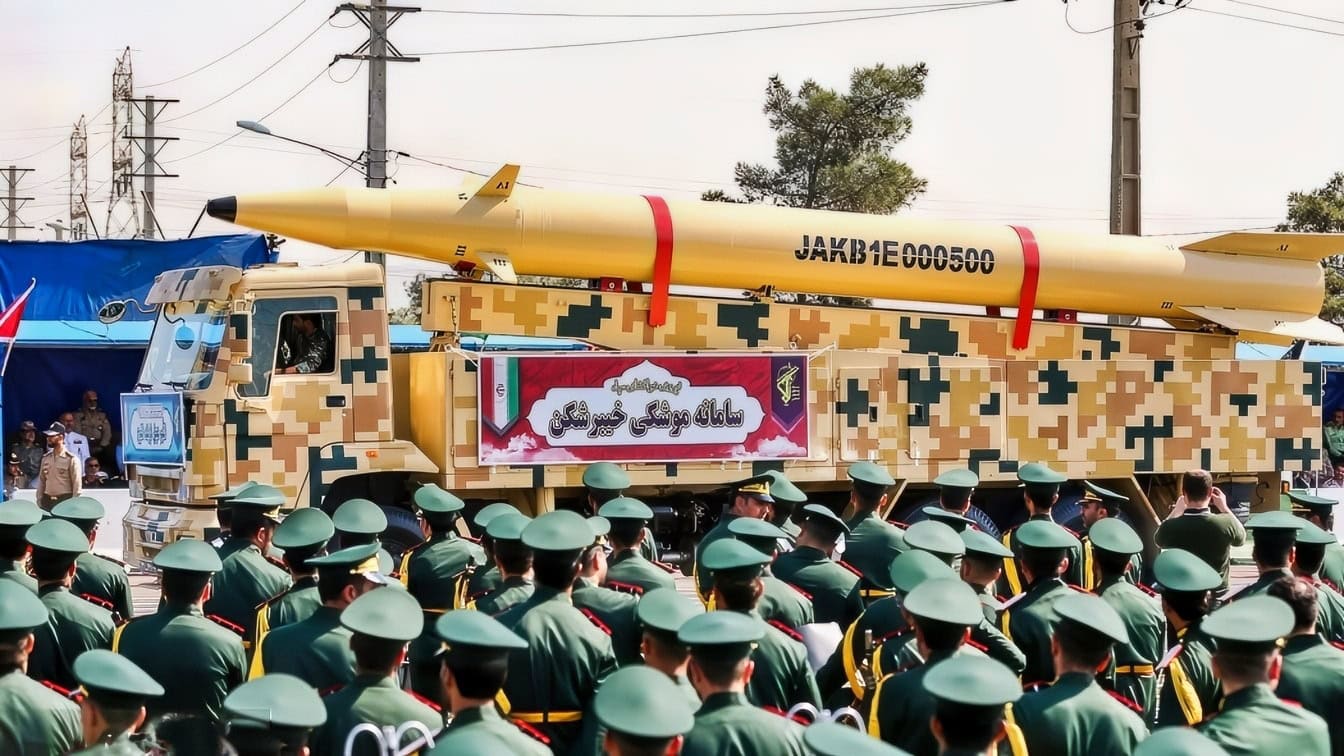
Iranian Kheibar Shekan “Fortress Buster” Ballistic Missile Creative Commons Image
Drone and ballistic missile strikes could inflict severe damage on oil infrastructure across the region. Iran can also step up its efforts to close the Strait of Hormuz, striking tankers and re-mining the passages.
With the Houthis already engaged against Saudi Arabia, such attacks could strain the defenses of the Gulf monarchies. Moreover, additional US strikes will reinforce the sense of existential crisis in Iran, removing any reasons for moderating a forceful response.
Effects of a New Iran War
The immediate effect of the war will be additional death and destruction across the Middle East. There are indications that the Trump administration believes that the Iranian regime is on the verge of collapse.
An additional wave of strikes, signaling a continued commitment to the blockade, might be enough to topple the regime or at least convince the IRGC leadership that further resistance is pointless. Israeli Prime Minister Bibi Netanyahu seems to have embraced this logic.
Anything is possible, but it’s worth noting that precisely this thinking characterized Trump’s decision to join Israel’s war against Iran in the first place. A renewed set of attacks will drive up energy prices, causing further economic dislocation in Europe, Asia, and North America. China and the United States strained mightily to keep oil prices under control during the first phase of the war, but the policies undertaken are at their limit; the next wave of damage is likely to be much more severe. Moreover, although the Strait of Hormuz has opened somewhat, exporting oil is far more expensive now than ten months ago because of the complex logistics needed to move it safely.
The US will avoid the worst effects, but American consumers will pay more for energy and other goods.
What Happens Next?
We appear to have moved beyond any semblance of ends-ways-means reasoning in the Trump administration. Trump is allowing the political calendar to dictate the tempo of operations against Iran, and appears to have completely given up on any coherent set of demands to end the war.
There is little concrete reason to believe that another round of airstrikes will accomplish the goals of either Israel or the United States. The power of positive thinking seems to have overtaken sober, critical thinking on American security policy.
About the Author: Dr. Robert Farley, University of Kentucky
Dr. Robert Farley has taught security and diplomacy courses at the Patterson School since 2005. He received his BS from the University of Oregon in 1997 and his Ph.D. from the University of Washington in 2004. Dr. Farley is the author of Grounded: The Case for Abolishing the United States Air Force (University Press of Kentucky, 2014), the Battleship Book (Wildside, 2016), Patents for Power: Intellectual Property Law and the Diffusion of Military Technology (University of Chicago, 2020), and most recently Waging War with Gold: National Security and the Finance Domain Across the Ages (Lynne Rienner, 2023). He has contributed extensively to journals and magazines, including The National Interest, The Diplomat: APAC, World Politics Review, and The American Prospect. Dr. Farley is also a founder and senior editor of Lawyers, Guns and Money.