
Caught between the U.S. and Iran, Saudi Arabia is "in a dilemma" as it cannot escape Houthi attacks and cannot seek U.S. intervention.
[Global Times Special Correspondent Chen Qi] According to Turkey's Anadolu Agency, on the 14th local time, the Houthi armed group in Yemen claimed to have carried out a large-scale missile and drone attack on an air force base in Khamis Mushait, southern Saudi Arabia. The New York Times reported on the 14th that as the conflict between the U.S. and Iran spirals out of control, Saudi Arabia increasingly finds itself caught in the middle. The Saudi leadership is now assessing its increasingly limited options for response. Additionally, according to the latest reports, on the 15th local time, Iran firmly rejected U.S. President Trump's request to restart dialogue.
The Houthi spokesperson Yahya Saree stated in a statement that the organization used dozens of ballistic missiles and drones to attack the King Khalid Air Base in Saudi Arabia. Saree claimed on the 14th that the targets of the operation included fighter jet hangars, radar systems, runways, and ammunition depots, and that the attacks were "precise and direct, causing significant damage." Saree stated that this operation was aimed at retaliating against Saudi Arabia's ongoing airstrikes on Yemen. The Saudi side has not yet confirmed the Houthi claims regarding damage to the air force base.
Saree also stated that in the past 24 hours, Saudi Arabia launched 58 airstrikes on six provinces in Yemen, affecting most areas of the country. F-15 fighter jets carried out these airstrikes after taking off from the King Khalid Air Base.
The New York Times reported that in recent weeks, the Houthi armed group allied with Iran has repeatedly attacked Saudi Arabia, threatening to cut off the country's oil export capacity, putting continued pressure on the global economy. However, U.S. President Trump has been reluctant to take confrontational action against the Houthis, which has left Saudi Arabia feeling frustrated and disappointed. Saudi efforts to engage in diplomatic contact with Iran have yielded little success. A meeting scheduled for this Monday between officials from Iran, Saudi Arabia, and other Gulf countries was also suddenly postponed, with significant differences remaining among the parties.
"The Saudis are indeed very frustrated right now," said former U.S. Ambassador to Saudi Arabia Michael Ratney. "In a sense, this is the situation they least want to see." The New York Times reported on the 14th that this predicament facing Saudi Arabia highlights the heavy costs that a U.S.-Israeli war against Iran brings to the entire Middle East, including countries that oppose the war or repeatedly seek to end the conflict.
In the initial months of the U.S.-Iran conflict, Saudi Arabia faced little retaliatory strikes from Iran compared to its neighbors. Now, with no end in sight for hostilities, Iran is attempting to gain more leverage against the U.S.—Saudi Arabia, the world's largest oil exporter before the outbreak of war, has become Iran's primary target for attacks. In just the past two weeks, Saudi Arabia has faced attacks from Iranian-backed forces from the east, south, and north. Last week, Saudi officials announced that a key oil pipeline was forced to shut down due to a drone attack by Iranian-backed Iraqi militia. After Iran's blockade of the Strait of Hormuz, this pipeline was originally a core alternative export route for Saudi oil to the Red Sea.
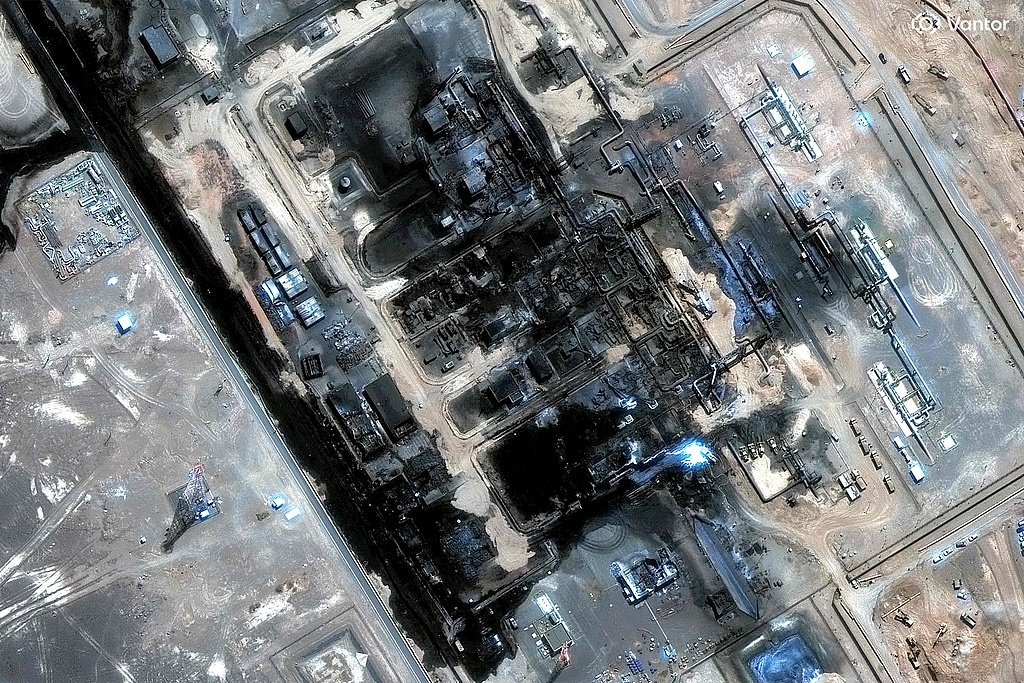
However, Trump seems unwilling to get involved. A senior Pentagon official for Middle East policy during the Biden administration, Shapiro, stated: "The U.S. is already deeply entrenched in a conflict with Iran that has no clear endpoint, and it is not surprising that they do not want to open new fronts as naval forces and ammunition reserves continue to dwindle. But this has left Saudi Arabia deeply disappointed." Retired U.S. Navy Vice Admiral John W. Miller stated that whether the U.S. will intervene in the situation in Yemen is still under discussion, and Washington continues to provide intelligence support to Saudi Arabia. Former Assistant Secretary of State for Near Eastern Affairs Barbara Leaf believes that Saudi Arabia is likely to turn to diplomatic means next. She stated that despite years of bombing the Houthis by Saudi Arabia, the U.S., and Israel, "no one has found a military solution to the Houthi problem."
Additionally, reports indicate that on the 14th, the Iranian Islamic Revolutionary Guard Corps stated that a tanker named "Al-Ghaya" exploded and caught fire after hitting a mine while attempting to pass through the "no-sail zone" in the southern Strait of Hormuz, claiming that the tanker had been engulfed in flames. In response, the U.S. Central Command later stated on the X platform that the claims made by the Iranian Islamic Revolutionary Guard Corps were false. The "Al-Ghaya" tanker had already been attacked by Iranian missiles in August, losing its navigational capability, and Iran launched another drone attack on this tanker, which was docked in waters off the coast of Oman, last weekend. Currently, the "Al-Ghaya" tanker is being towed by U.S. regional partners.
As conflicts expand in various parts of the Middle East and threaten global oil supplies, Trump claimed that Iran "desperately wants" to reach an agreement with Washington, suggesting that diplomatic contacts may see a breakthrough. On the 14th local time, Trump posted several messages on his social media platform defending his Iran policy. Trump stated that he is open to negotiating with Iran and mentioned that the U.S. is helping with oil transportation in the Strait of Hormuz, and countries should provide "escort compensation" to the U.S. Trump wrote on the social media platform "Truth Social": "A collapsing Iran desperately wants to reach an agreement quickly. Whether the U.S. engages with them will be decided by me—we are open to it."
However, the Secretary of Iran's Supreme National Security Council, Rezaei, stated that they refuse to negotiate with the U.S. AFP reported that on the 15th local time, Rezaei posted on social media saying: "Do not be fooled by the contradictory signals from the U.S. president, who one moment says 'no negotiations' and the next says 'we are ready to talk'." Rezaei also stated: "The situation surrounding oil and the Strait has changed. Taking remedial measures cannot stop what is about to happen. No negotiations will take place until Iran's conditions are met. That's final!"
Houthi forces launched a large-scale missile and drone attack on the King Khalid Air Base in Khamis Mushait, Saudi Arabia, on the 14th of the month, targeting critical military infrastructure. In retaliation, Saudi Arabia conducted 58 airstrikes across six provinces in Yemen. The U.S. continues to provide intelligence support to Saudi Arabia but remains hesitant to intervene directly in the conflict.
- Houthi forces attacked the King Khalid Air Base in Khamis Mushait, Saudi Arabia, using dozens of ballistic missiles and drones.
- The attack targeted aircraft hangars, radar systems, runways, and ammunition depots, causing significant damage.
- Saudi Arabia conducted 58 airstrikes on six provinces in Yemen in response to Houthi attacks.
- The U.S. is providing intelligence support to Saudi Arabia but is reluctant to engage directly in the conflict.
- Iran has rejected U.S. offers for dialogue amid escalating tensions.