
Caution! The Japan-U.S.-Australia "Eastern Shield" Joint Exercise Sends Dangerous Signals
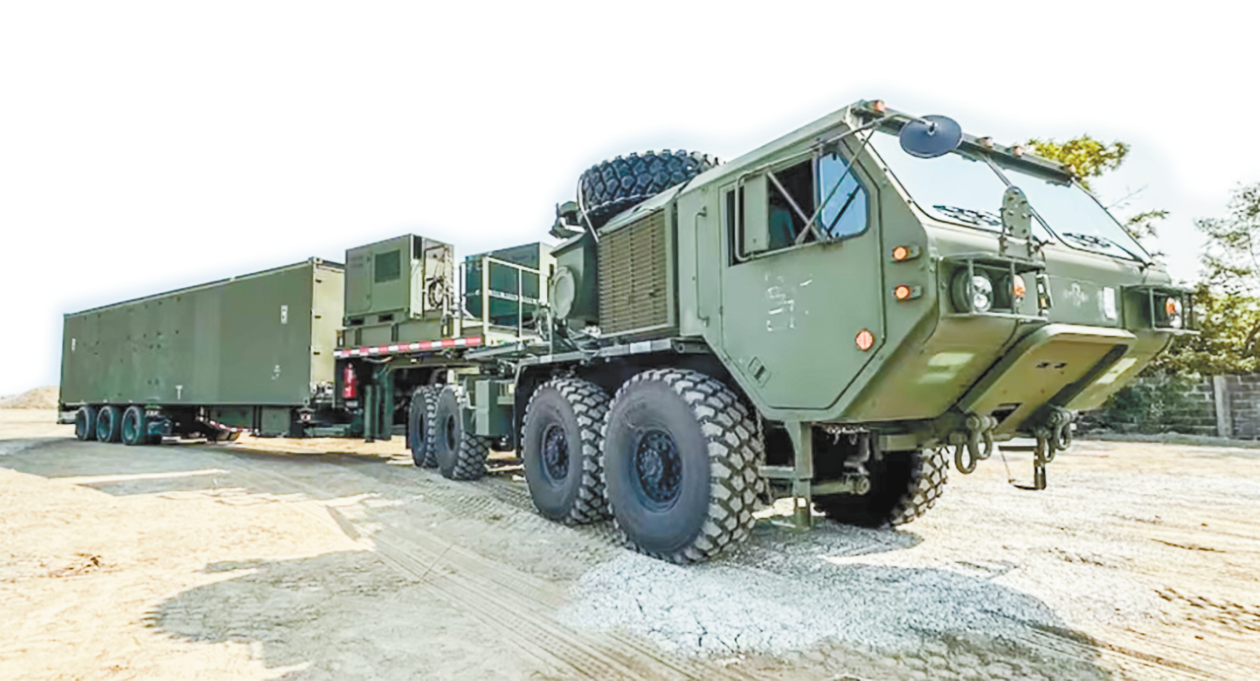
[Global Times Report, Reporter Guo Yuandan] The U.S. military's Pacific Command recently announced that the "Oriental Shield 2026" exercise, in which the U.S., Japan, and Australia are participating, has held its opening ceremony, with approximately 3,700 personnel from the three countries taking part, marking the largest scale in the history of the exercise. The exercise also includes two "firsts": the U.S. and Japan conducted their first-ever joint airborne operation in the history of the exercise, and the U.S. Army's "Typhoon" medium-range missile system will participate in the exercise for the first time. Military experts interviewed by the Global Times stated that this exercise fully exposes the evolving trend of deepening offensive military cooperation between the U.S. and Japan, posing a serious threat to the strategic balance and regional peace and stability in East Asia.
The scale of the exercise sets a new record
The U.S. military's Pacific Command reported that the U.S. participating forces come from the Pacific Army, while the Japanese forces are from the Japan Ground Self-Defense Force Northern Army Group. The Australian participating troops are from the headquarters of the Australian 1st Division and its associated combat brigades, the 17th Support Brigade, and the 10th Firepower Brigade. This marks the second consecutive year that the Australian Army has participated in the "Oriental Shield" exercise.
The information released by the U.S. military's Pacific Command indicates that this exercise integrates field training subjects, multinational maneuver operations, and live-fire drills with the "HIMARS" rocket artillery/Guided Multiple Launch Rocket System, aiming to integrate firepower, mobility, logistics support, and command and control capabilities in a complex combat environment.
"This year's 'Oriental Shield' exercise has set a record for its scale, with approximately 3,700 troops participating, reaching a campaign-level exercise scale," military expert Zhang Junsha told the Global Times on the 20th. He stated that this exercise conducts cross-regional, cross-service live-fire confrontation drills, intending to deepen the integration of the command systems of the U.S., Japan, and Australia.
"The main subjects of this exercise cover high-intensity combat content such as island seizure, long-range fire strikes, air defense and missile defense, and airborne assaults. This indicates that the exercise has become a large-scale, highly targeted, and offensive live-fire training activity conducted by the U.S. in conjunction with its allies on the northern and southern flanks of the Asia-Pacific," Zhang Junsha stated, noting that the exercise has repeatedly focused on the southwestern island direction, conducting emergency intervention and situational intervention drills in the airspace of the Ryukyu Islands and the Diaoyu Islands, reflecting a distinct geopolitical competitive nature.
"The exercise fully exposes the evolving trend of deepening offensive military cooperation between the U.S. and Japan, and clearly reflects Japan's tendency to break through its pacifist constitution, escape the principle of exclusively defensive posture, and take the opportunity to promote a new form of militarism with forward military expansion," Zhang Junsha said.
Two "firsts" send negative signals
Before the opening ceremony, on September 15, the U.S. 11th Airborne Division and the Japan Ground Self-Defense Force airborne troops jointly conducted an airborne operation, completing the first-ever joint airborne operation in the history of the "Oriental Shield" exercise at the Kikyohara Airborne Field in Hokkaido, Japan.
It is noteworthy that Japan's Kyodo News reported that starting in June this year, the U.S. "Typhoon" medium-range missile system, temporarily deployed in Japan and capable of launching "Tomahawk" cruise missiles, will participate in the exercise for the first time.
The U.S. Army's "Typhoon" system was previously deployed to Kanoya Base to support the "Valiant Shield" exercise held from June to July. The Japanese Ministry of Defense stated that after the conclusion of the "Oriental Shield" exercise, the missile system will withdraw from Kanoya Base but will not leave Japan; instead, it will be "stored" at U.S. military bases in Japan.
Chinese Ministry of Defense spokesperson Jiang Bin recently stated at a press conference that the exercise, packaged under the name "shield," is in fact promoting the forward deployment of strategic offensive weapons, harming the normal security interests of other countries, escalating regional arms races and military confrontation risks, and seriously threatening regional security and stability, to which we firmly oppose.
"Compared to previous exercises that focused on defensive operations, this year's exercise presents significant dangerous characteristics of being combat-oriented, offensive, and forward-deployed," Zhang Junsha stated, adding that the two "firsts" send extremely strong negative signals.
According to Zhang Junsha, on one hand, the U.S. and Japan conducted joint airborne combat drills for the first time under the framework of this exercise. Airborne operations have a strong offensive attribute, completely breaking the previous purely defensive positioning of U.S.-Japan exercises, marking a transformation of military cooperation from passive defense to active offense and defense integration, attempting to accumulate key combat experience for the Japan Self-Defense Forces' proactive offensive combat mode. On the other hand, the U.S. "Typhoon" medium-range missile system made its debut in the exercise, becoming the most threatening core variable of this exercise. This system can carry "Tomahawk" cruise missiles and "Standard-6" missiles, representing a typical long-range offensive weapon, and its participation completely overturns the defensive attribute of the "Oriental Shield" exercise, pushing the nature of the exercise to a comprehensive shift towards offensive deterrence.
"What is even more concerning is that the U.S. is taking advantage of the military exercise to complete the forward deployment of this weapon system in Japan, and after the exercise ends, it will not withdraw but will only store it on-site, achieving a normalized stationed deployment, effectively turning the Japanese archipelago into a forward fire strike node for the U.S. medium-range missile system in the Asia-Pacific," Zhang Junsha said.
Be wary of Japan's frequent and extensive participation in military exercises
Recently, several joint military exercises led by the U.S. and Japan have been held in the East Asia region, frequently creating regional tensions. The U.S. military's Pacific Command specifically mentioned that following the conclusion of the "Sakura" exercise, the "Oriental Shield" exercise continued the cooperative trend between the U.S. and Japan.
The U.S.-Japan-Australia "Sakura" joint exercise took place from August 29 to September 10. Approximately 700 U.S. troops, 5,200 Japan Ground Self-Defense Force personnel, and 280 Australian Army soldiers participated in this exercise, which was conducted in multiple locations across Japan and the U.S. This was a trilateral command post exercise focusing on combat readiness levels and collaborative operational capabilities, simulating command staff operations and troop reinforcements in the context of regional conflict.
From September 7 to 11, the U.S., Japan, and South Korea held a joint military exercise named "Freedom's Blade" in the East China Sea, deploying multiple Aegis-equipped warships for the exercise. This joint exercise is part of a mechanized joint exercise framework that the three countries will conduct starting in 2024.
Zhang Junsha stated that the frequent large-scale, high-intensity, and highly targeted offensive joint military exercises held by the U.S. and Japan in the Asia-Pacific region pose a significant threat to peace and stability in the region.
The U.S., Japan, and Australia conducted the largest 'Orient Shield 2026' military exercise in Hokkaido, Japan, involving approximately 3700 personnel. This exercise featured the first joint air assault operation between U.S. and Japanese forces and the participation of the U.S. 'Typhoon' missile system. Experts indicate that this marks a significant shift towards offensive military cooperation, posing a threat to regional stability.
- The 'Orient Shield 2026' exercise is the largest to date with approximately 3700 personnel involved.
- This exercise includes the first-ever joint air assault operation between U.S. and Japanese forces.
- The U.S. Army's 'Typhoon' medium-range missile system will participate for the first time, raising concerns about regional security.
- The exercise aims to enhance interoperability among U.S., Japanese, and Australian forces in a complex operational environment.
- Experts warn that the exercise reflects a trend towards more aggressive military cooperation between the U.S. and Japan.