

11 decades after being first blooded in battle in World War I, and eight decades after replacing battleships as the predominant “capital ships” of naval warfare and maritime power projection in World War II, aircraft carriers, AKA “flattops,” face more threats than ever before. Indeed, some pundits even claim that the carrier is being rendered obsolete, or at least obsolescent, by such threats. The merits of such claims are a debate for another time. For now, this writer will discuss the Top 5 Greatest Threats to aircraft carriers today, and with that, clearly we are focusing on threats to the US Navy Ford-class and Nimitz-class supercarriers.
Threat Vector #1: Torpedoes
Might as well start right off the bat with the oldest and longest-standing threat to carriers. Back in WWII, a total of 18 carriers were sunk by submarine torpedoes, starting with the sinking of the HMS Courageous by the U-29 on 17 September 1939 and concluding with the sinking of the IJN Shinano—the world’s first “supercarrier”—by the USS Archerfish.
Today’s torpedoes are deadlier than ever. Russian examples include: (1) the Futlyar, an advanced variant of the Russkies’ Fyzik class of torpedoes, likely purpose-built for Russia’s newer Yasen-class and Borei-class subs; (2) the VA-111 Shkval supercavitation torpedo that may have been exported to Iran as the “Hoot”; and (3) the Poseidon nuclear torpedo.
Threat Vector #2: Drones
This, along with the next category on this list, is arguably the biggest attention-getter amongst anti-carrier threats nowadays.
Like it or not, drone warfare is here to stay. As noted by Alex Hively of Boy Genius Report (BGR), “At the center of this change is the potential for swarm attacks, in which adversaries launch masses of drones to overwhelm an opponent’s defenses…While experts largely debate whether true swarm capabilities are within reach, militaries continue to seek ways to counter drone swarms.
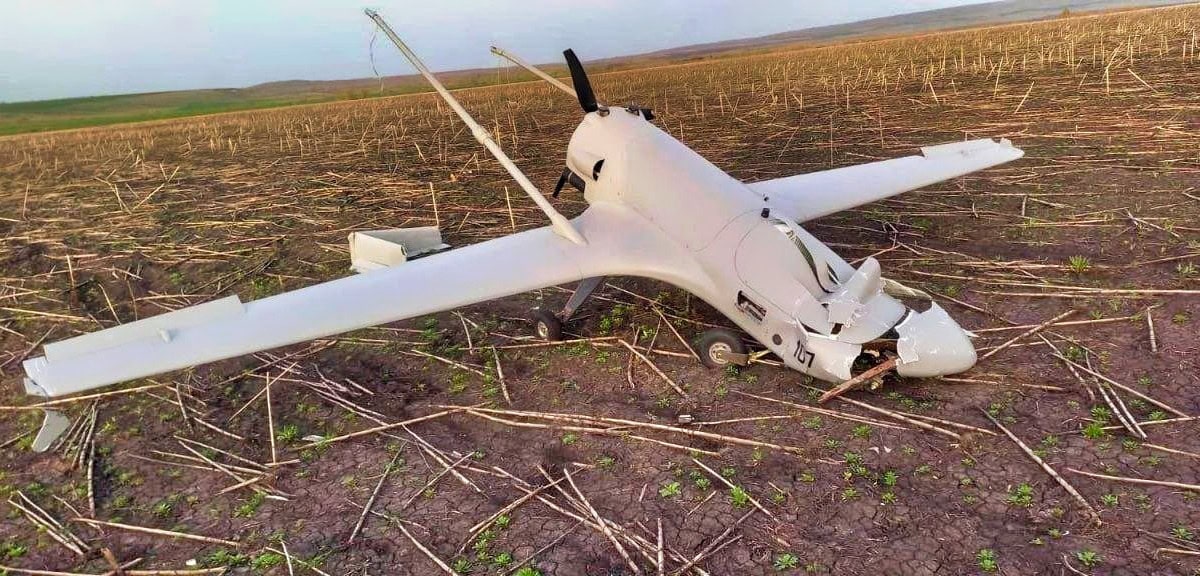
Lyutyi Drone from Ukraine Social Media.
As these technologies develop, aircraft carriers will need to adjust their defense strategies to mitigate the potential threat.”
A particularly prominent example is Russia’s Iranian-manufactured Shahed attack drones, which cost a mere $35,000 USD per unit, peanuts compared to the interceptor missiles traditionally employed by American carriers, which typically range from $1.5 million to $4.3 million a pop.
Threat Vector #3: Ship-Killing Missiles
The other big attention-getter on this list. As noted by Riki Ellison’s Missile Defense Advocacy Alliance (MDAA), “The aggregated threats of Chinese, Russian, North Korean, and Iranian offensive missiles demand that we achieve incontrovertible relative-competitive advantage for integrated Missile Defense of common systems, rapidly.”
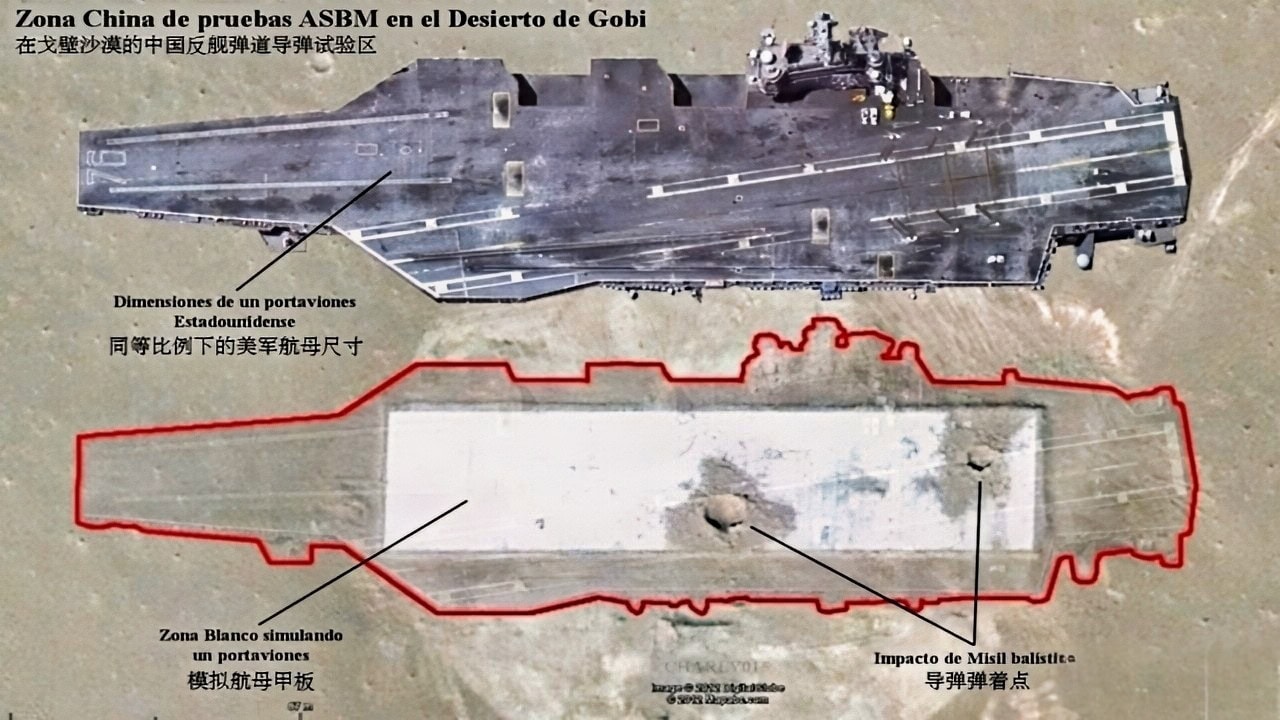
DF-21D image. Creative Commons.
Specific examples include the Iranian-made Jask-2, the Chinese-made C-704 that the Jask-2 copies, nd the Russian-made P-800 Oniks (NATO reporting name “SS-N-26 Strobile”) and Kh-22 “Storm” (NATO reporting name AS-4 “Kitchen”).
Threat Vector #4: System/Cyber Hack
Whilst all of the aforementioned kinetic threats are attention-getters due to the physical death & destruction they can cause, that’s no reason to forget *non-kinetic*
threats—falling firmly within the category of irregular warfare—that may not cause the dramatic explosions that torpedoes, drones, and missiles do, but have the potential to leave a flattop dead in the water and/or render its aircraft unflyable.
The European Union Aviation Safety Agency (EASA) documented a whopping 600% spike in aviation cyberattacks between 2024 and 2025, which equates to roughly 1,000 attacks hitting airports worldwide every single month.
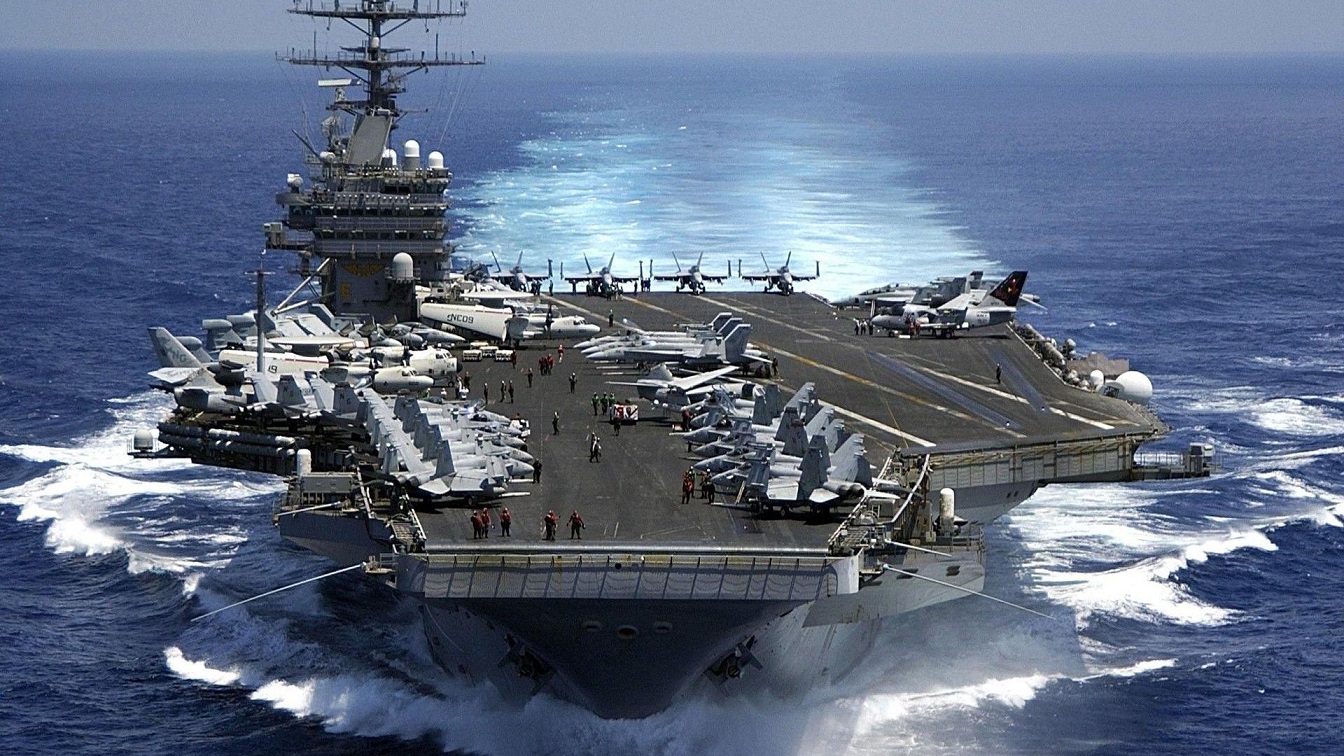
Image of U.S. Navy Nimitz-class Aircraft Carrier.
Whilst the EASA-furnished data includes no publicized carrier-specific incidents, aircraft carriers are literally floating airports, and it wouldn’t take much of a stretch of imagination to envision an adversary launching cyberattacks against them.
If this adversary succeeded, the result would be a “mission kill,” i.e., damage inflicted by a weapon that does not destroy a military vehicle but renders it incapable of performing its intended operational role; a carrier with nothing but inoperable warbirds would totally lose its raison d’être.
Threat Vector #5: Overuse
“You are your own worst enemy,” as the saying goes, or to quote the famous “Pogo” cartoonist Walt Kelley, “We Have Met the Enemy, and He Is Us.”
In other words, for all of the external threats to carriers, one must not overlook a major *internal* threat.
Not deliberate sabotage per se, mind you—though the threat of sabotage certainly must never be discounted—but rather wear & tear from (1) an increasingly accelerated and taxing ops tempo and (2) a shortage of ships available to fulfill that ops tempo thanks to extremely complex and time-consuming maintenance procedures.
The Nimitz-class supercarriers and the Gerald R. Ford-class supercarriers that are slowly but surely replacing them are true powerhouses and modern technological marvels.
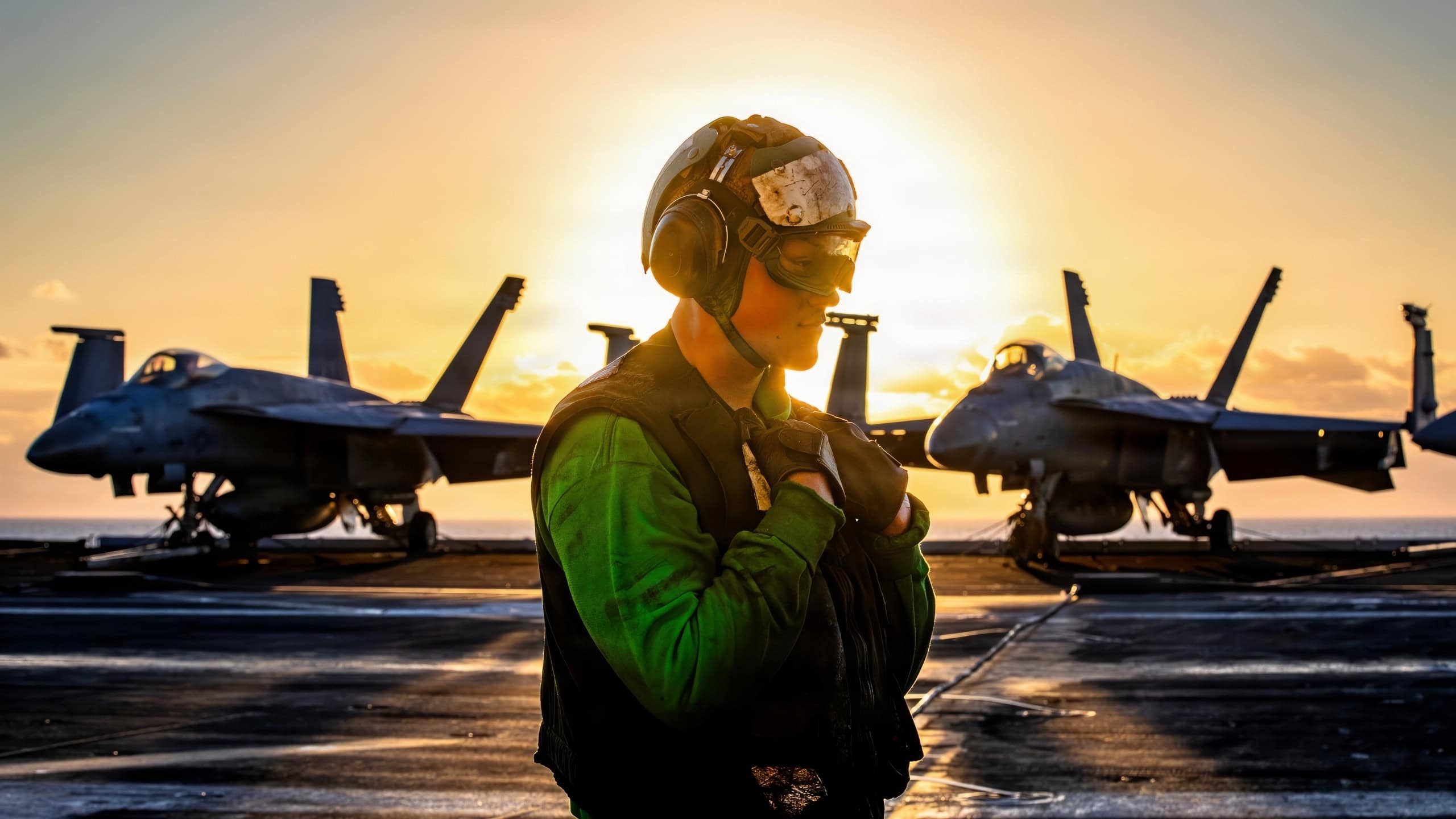
A U.S. Sailor observes flight deck operations on the flight deck of the world’s largest aircraft carrier, USS Gerald R. Ford (CVN 78), during Operation Epic Fury, Feb. 28, 2026. (U.S. Navy photo)
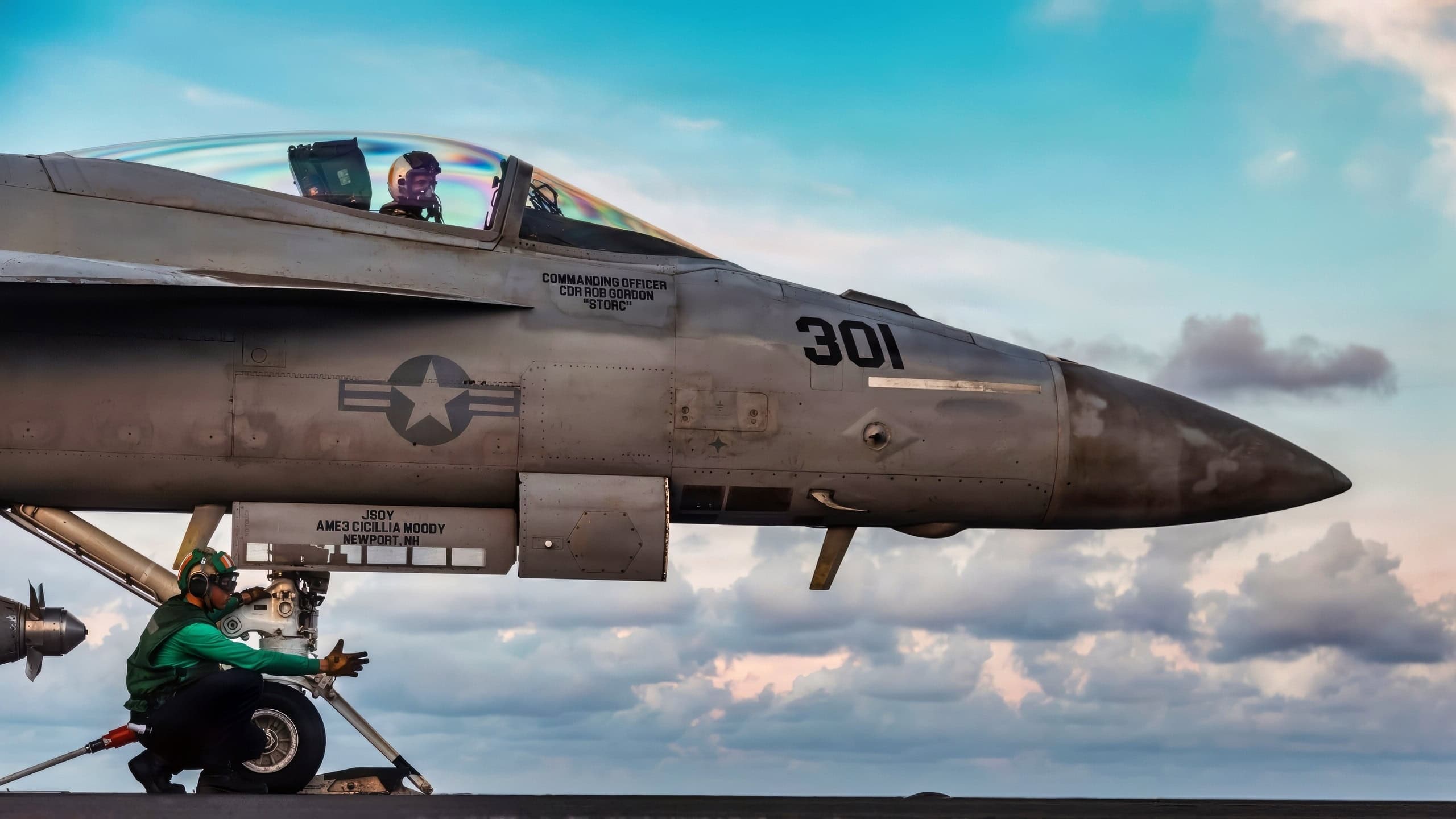
A U.S. Sailor performs a safety scan of the catapult track as an F/A-18E Super Hornet aircraft positions for launch from the flight deck while underway in the Caribbean Sea, Nov. 25, 2025. U.S. military forces are deployed to the Caribbean in support of Operation Southern Spear, the U.S. Southern Command mission, Department of War-directed operations, and the president’s priorities to disrupt illicit drug trafficking and protect the homeland. (U.S. Navy photo)
But even the most powerful and high-tech manmade machines can only perform as well as the men & women operating them.
For example, much ado has been made about the record-breaking 286-day deployment of the USS Abraham Lincoln (CVN-72) and its resultant negative impact on the morale and mental health of her officers and enlisted sailors.
Meanwhile, the saga of the USS Gerald R. Ford (CVN-78) has been a considerable source of embarrassment for U.S. Navy public relations, between the shipboard laundry room fire and horror stories of sewage problems and long waits for working toilets.
Regarding the maintenance challenges, they can be summed up in two words: RCOH rigamarole. “RCOH,” as in “refueling and complex overhaul,” is a procedure that involves cutting a massive hole in the hull and replacing everything from catapult systems to water purifiers.
CVNs must undergo RCOH every 25 years, and to give you, dear readers, an idea of the agonizing slowness of the RCOH process, the USS George Washington (CVN-73) was out of action for a whopping 2,100 days.
RCOH, in turn, compels USN logisticians to apply a “rule of thirds” to carriers: at any given time, one-third are deployed, one-third are preparing for deployment, and one-third are undergoing maintenance.
With 11 carriers in the fleet, only three to four are typically at sea, leaving deployed sailors with far more commitments than they handle.
About the Author: Christian D. Orr
Christian D. Orr is a Senior Defense Editor. He is a former Air Force Security Forces officer, Federal law enforcement officer, and private military contractor (with assignments worked in Iraq, the United Arab Emirates, Kosovo, Japan, Germany, and the Pentagon). Chris holds a B.A. in International Relations from the University of Southern California (USC) and an M.A. in Intelligence Studies (with a concentration in Terrorism Studies) from American Military University (AMU). He is also the author of “Five Decades of a Fabulous Firearm: Celebrating the 50th Anniversary of the Beretta 92 Pistol Series,” whose second edition of which was recently published.