

Last month marked five years since the last NATO (North Atlantic Treaty Organization) conflict ended. The fall of Kabul to the Taliban was the conclusion of a conflict that lasted 20 years.
Since then, the defensive alliance has largely been occupied with advisory missions in Iraq – withdrawn at the start of the Iran war – or localized security missions in connection with Russia’s full-scale invasion of Ukraine.
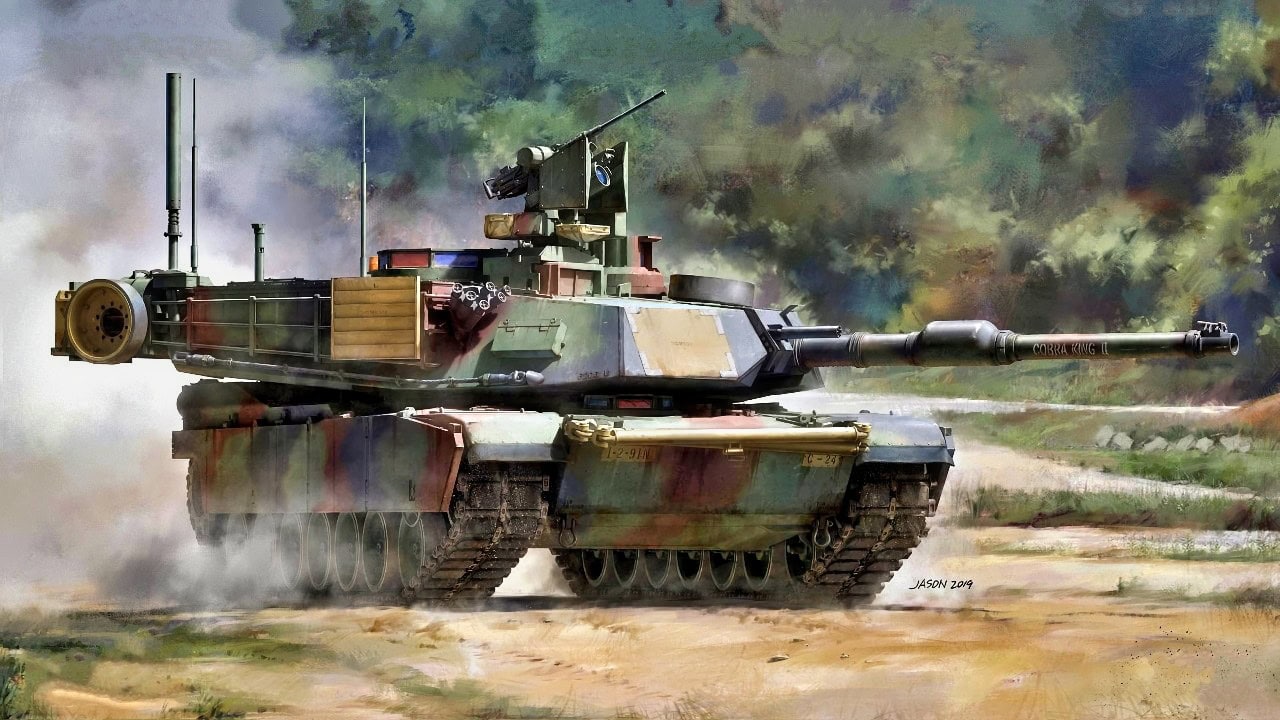
M1 Abrams Tank. Image Credit: Creative Commons.
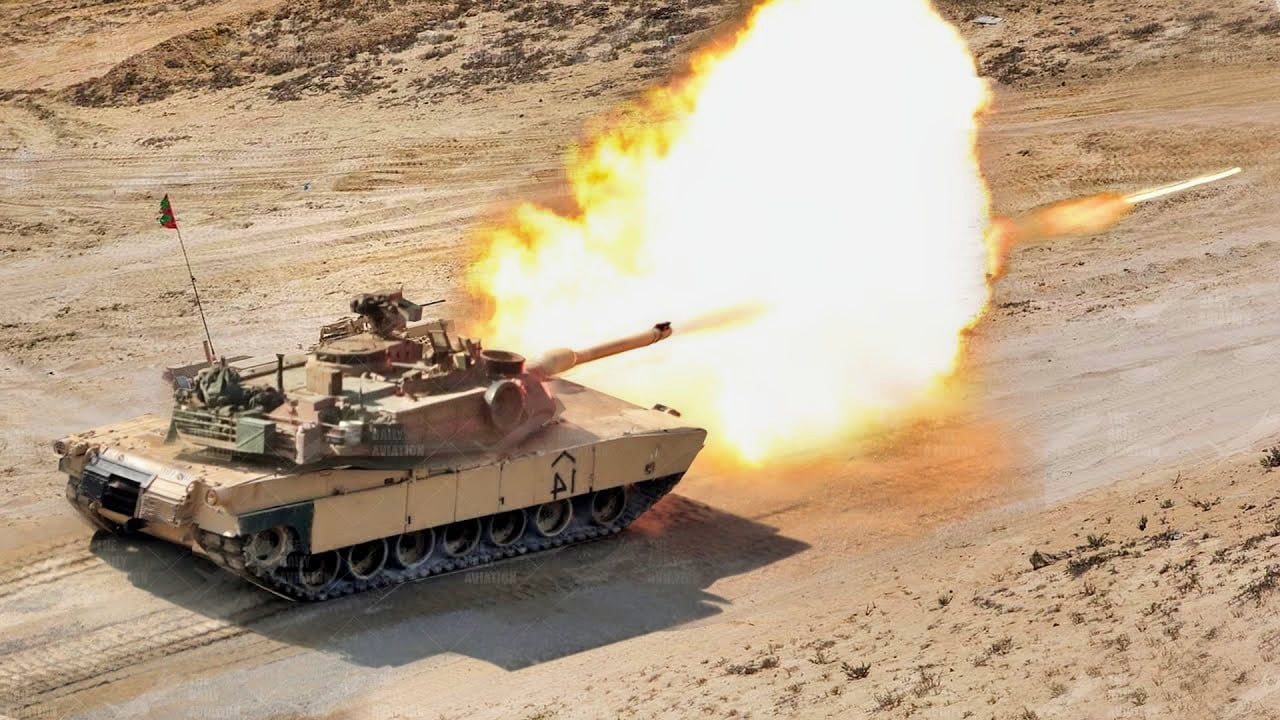
M1 Abrams Firing. Image Credit: Creative Commons.
The Russo-Ukrainian war began not long after the last NATO soldiers left Afghanistan; six months, in fact, from when the Taliban regained control of Kabul to when Russian President Vladimir Putin announced his “special military operation.”
Russia and Ukraine have become well versed in modern warfare; NATO, some analysts argue, has not.
New Systems
Increasingly over the past four and a half years, drones have been used by both Russia and Ukraine to attack one another’s forces and critical infrastructure.
Simply put, they are cheap and easily replaceable through mass production, meaning both sides can launch hundreds of drones toward enemy territory and replenish stocks within days.
So important have they become that drones are one of the most used weapons in the conflict, despite their relative infancy in warfare.
Their loss rate is tremendous, given their purpose is a one-way strike, but the low-cost production and effectiveness mean the financial loss is of little concern to commanders and generals on both sides of the frontline.
Drones and Air Defenses
Ukraine excelled at domestic production as the nation adapted to life during warfare.
In 2024, the country produced close to 2 million drones a year; NATO, meanwhile, supplied Ukraine with half that amount.
Russia has also ramped up drone production after initial purchases from Tehran for Shahed drones.
The country produced 400-500 Shahed drones a month in 2024; it’s now manufacturing 3,000 jet-powered UAVs a month two years on.
The sheer rise in jet-powered drones has forced Ukraine to boost production of new air defenses capable of intercepting these UAVs, which are three times faster than their predecessors.
There’s also the matter of how drones are used. In a tactic exploited by Russia, fast drones can be launched in small numbers and often, rather than in large swarms.
This disrupts daily life for Ukrainians, who have been forced to swap night-time trips to the bomb shelters for long, enduring stints underground throughout the day.
NATO’s Problem
NATO is only now beginning to realize the growing importance of drones in warfare, and a race is on to ensure combat readiness in the event of war.
Most members are dramatically increasing their defense budgets, while U.S. President Donald Trump – a long-time critic of the alliance – is reportedly reviewing the U.S. military presence in Europe.
Strategy itself is now changing.
NATO has spent heavily on tanks in recent years – something deemed “worthless” by co-owner and chief designer of Fire Point – a Ukrainian munitions manufacturer – Denys Shtilerman.
Moreover, drones have forced a rethink in how troops assemble, with large groups or convoys far easier targets than before, according to Commander of the National Guard of Ukraine Oleksandr Pivnenko.
“If there’s a drone overhead and you don’t even look up, what do you think will happen to your squad?” he told Reuters.
NATO Plays Catch-Up
Ukrainian officials told Reuters Ukraine was playing a growing role in providing insight into modern warfare.
Equally, some were critical of NATO bureaucracy, including one officer who had completed NATO training and criticized the use of training materials featuring case studies from the Second World War.
Nevertheless, Ukraine’s ongoing battle with jet-powered UAVs has prompted a refocus of efforts by NATO.
The ongoing shortage of U.S.-made Patriot air defenses – in part due to their use in the war with Iran – has led nine European allies to join Ukraine in a new air defense coalition.
Known as Freyja, the objective is to create a cheaper, faster-to-produce alternative to the Patriot missiles, reducing reliance on an ever-agitated U.S. through manufacturing in Europe.
The Patriot shortage remains a concern for Ukraine – a country which is already low on ballistic missile interceptor systems.
The French and Italian governments have promised a new Franco-Italian SAMP/T-NG air defense system, with reports that deployment is being accelerated.
Production may also need to be ramped up if supplies remain low.
MORE – 5 Ways a Navy Aircraft Carrier Could Be Destroyed
About the Author: Shay Bottomley
Shay Bottomley is a British journalist. He has written for the Western Standard, Business Insider, Maidenhead Advertiser, Slough Express, Windsor Express, Berkshire Live and Southend Echo.