

Summary and Key Points: Reuben F. Johnson — Director of Research at the Casimir Pulaski Foundation, 36-year foreign weapons systems analyst, DoD consultant, and survivor of Russia’s 2022 Ukraine invasion — investigates China’s near-finalized sale of the CM-302 supersonic anti-ship missile to Iran, despite Beijing’s categorical denial.
-The CM-302, the export variant of the People’s Liberation Army’s YJ-12 carrier killer, achieves Mach 4 speeds across a 180-mile range with a 440-pound warhead capable of skimming sea surfaces to evade Phalanx Close-in Weapon Systems on U.S. Navy vessels.
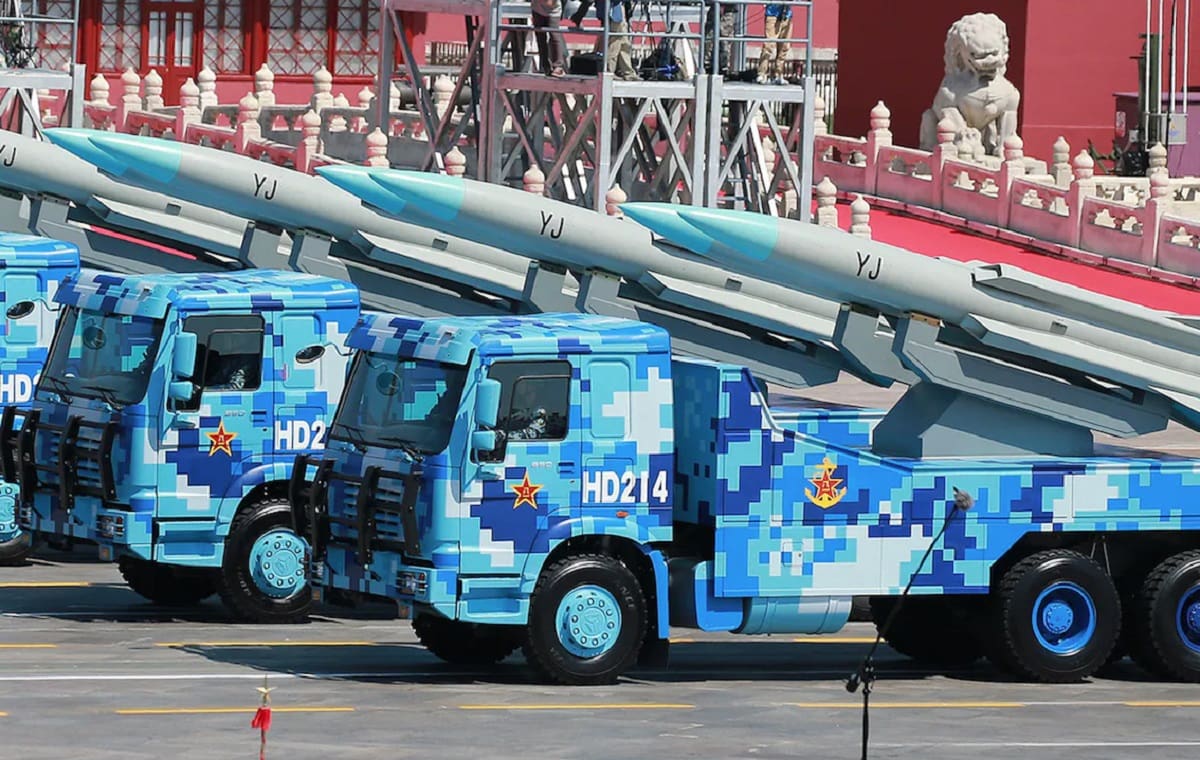
YF-12. Image: Chinese Internet.
-Johnson traces the missile’s lineage from the Soviet Zvezda-Strela Kh-31P through China’s YJ-91 to the scaled-up YJ-12 — already deployed on Pakistani Type 054A/P Tughril-class frigates and Algerian coastal batteries — and warns that CM-302 deployment along Iran’s coastline would threaten every U.S. naval asset operating in the Persian Gulf and Strait of Hormuz.
The Supersonic Missile China Tried to Sell Iran That Could Sink U.S. Aircraft Carriers
In the days just before the February 28 onset of U.S.-Israel air strikes on Iran, news reports suggested China was close to concluding a sale of advanced supersonic anti-ship missiles (ASMs) to Iran. The missiles could dramatically advance the Islamic Republic’s ability to attack and potentially sink U.S. aircraft carriers.
The Chinese Communist Party in Beijing quickly denied the report, which Reuters published on February 24. The version of the weapon supposedly proposed for sale to Iran is designed as an ASM and is based on the design of a Russian supersonic missile of similar configuration sold to China in the 1990s.
The original Russian weapon was the Zvezda-Strela Kh-31P, which is designated the YJ-91 in People’s Liberation Army (PLA) service. That weapon was originally produced in the Soviet Union, and later Russia, and deployed with three different seeker heads to cover the entire spectrum of frequency bands.
The Chinese variant is closest to the anti-radiation version of the Kh-31, which can be employed for the Suppression of Enemy Air Defense mission and also as an ASM. The YJ-91 is used by both PLA Navy (PLAN) and Air Force (PLAAF) fighters such as the carrier-capable Shenyang J-15.
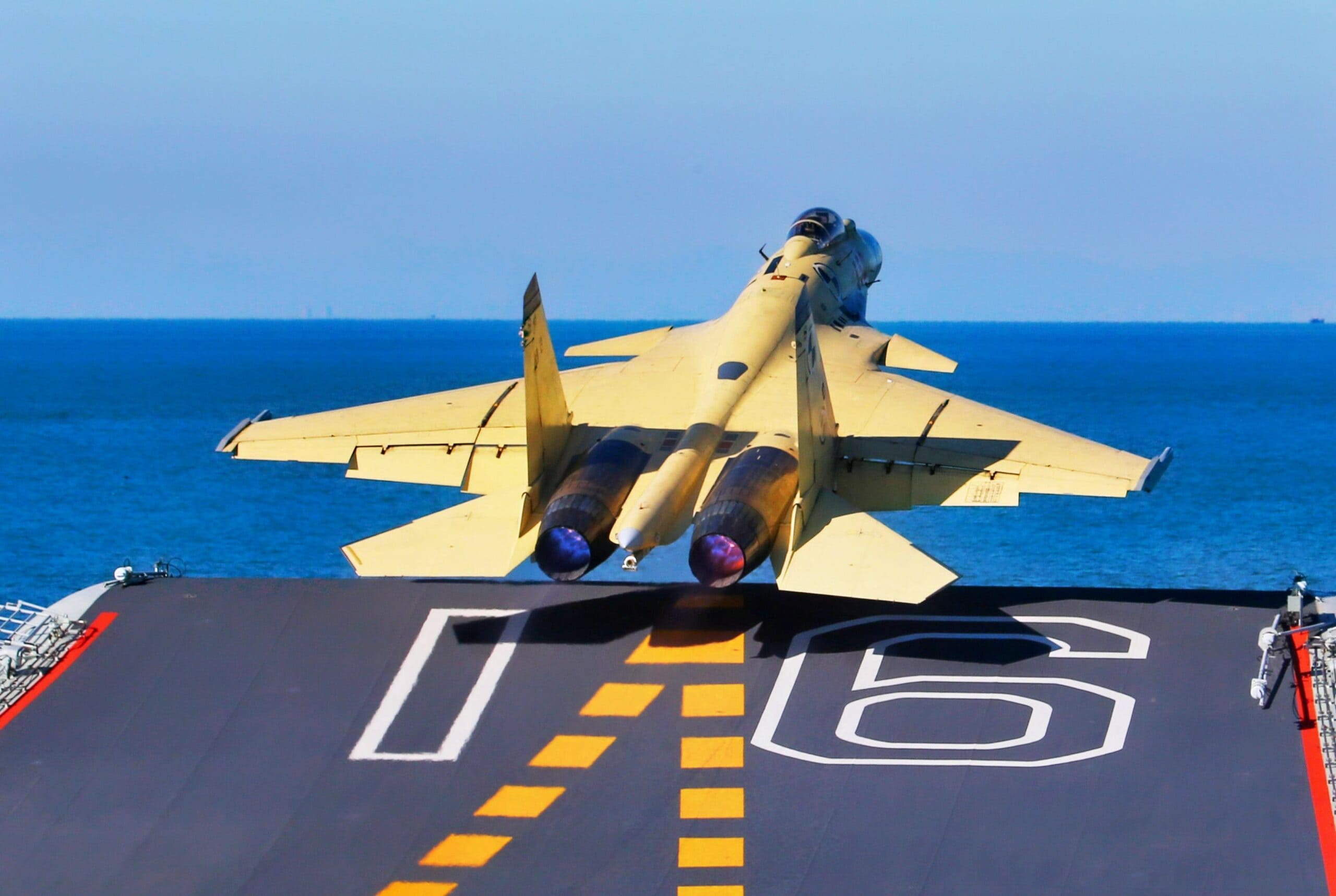
J-15 Fighter from China. Image Credit: Creative Commons.
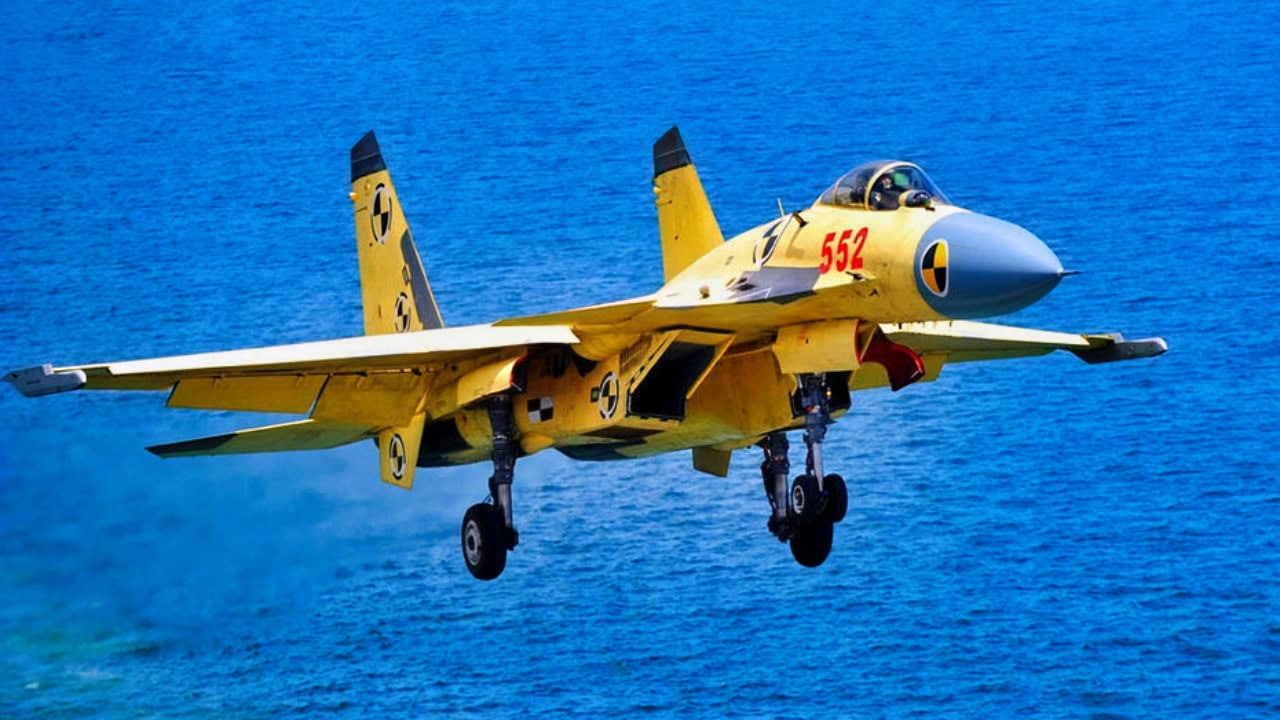
J-15 Flying Shark Fighter from China.
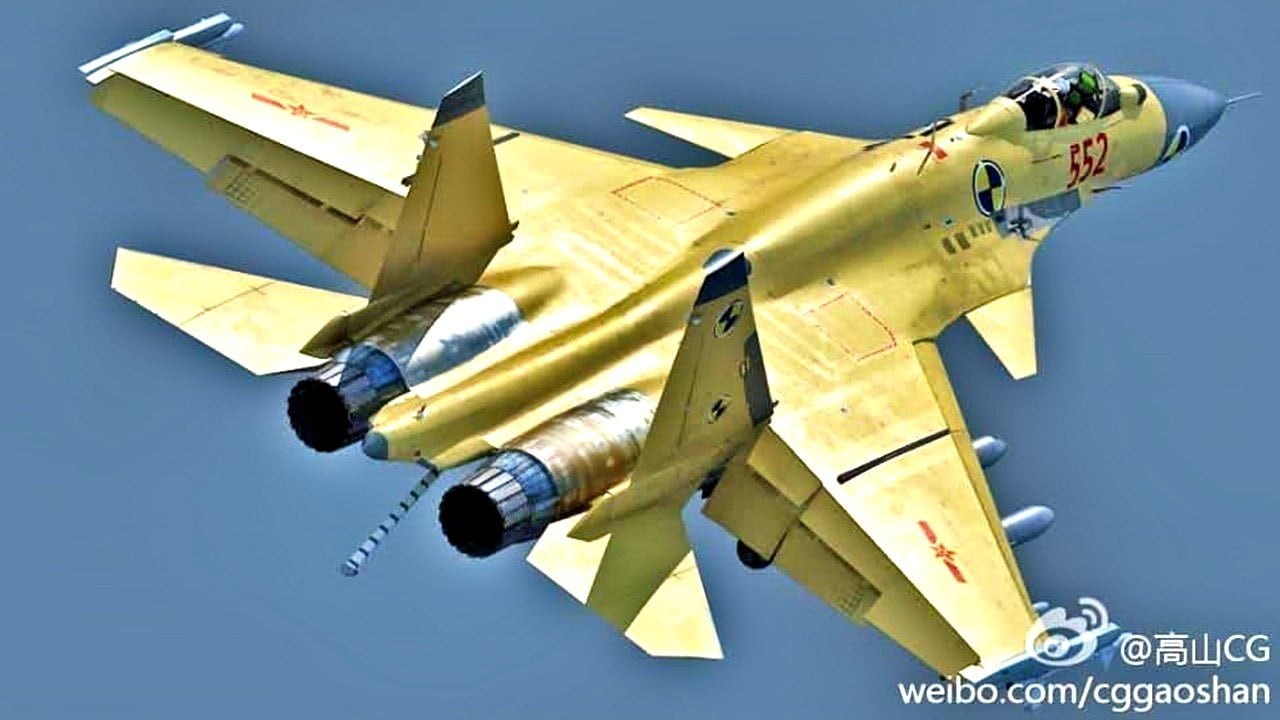
J-15 Fighter. Image Credit: Creative Commons.
The YJ-12 appears to be a considerably scaled-up version of the Kh-31/YJ-91. It is powered by ramjet engines, and the configuration of the inlets is almost identical to the Russian missile’s design.
Although it appears to have been derived from the Kh-31 design, the YJ-12 has several performance parameters superior to that of its predecessor.
The Kh-31 has a maximum range of 65 miles and a top speed of just over Mach 2, while the YJ-12 boasts a range of up to 250 miles and a maximum velocity of up to Mach 4.
The YJ-12 also carries a 500-kilogram warhead, although this can be reduced depending on the variant being used. It utilizes an advanced inertial navigation system to enable a high level of precision.
Suspicious Denials
Beijing’s denial that it was prepared to sell this missile to Iran remains somewhat suspect, as six sources told Reuters that a contract for the CM-302, the export version of the YJ-12, was “near completion.” China’s Foreign Ministry categorically denied the accusations, saying last Monday that the report was “not true”.
The CM-302 is less capable than the PLA YJ-12 variant. The export missile’s range is reported to be limited to 180 miles, and its warhead is reportedly less than half the size of the PLA-only variant, at only 440 lbs.
But even in this export version, the weapon can maintain multiple flight profiles and adjust altitude as it approaches its target, skimming just above the surface of the sea to avoid detection or interception.
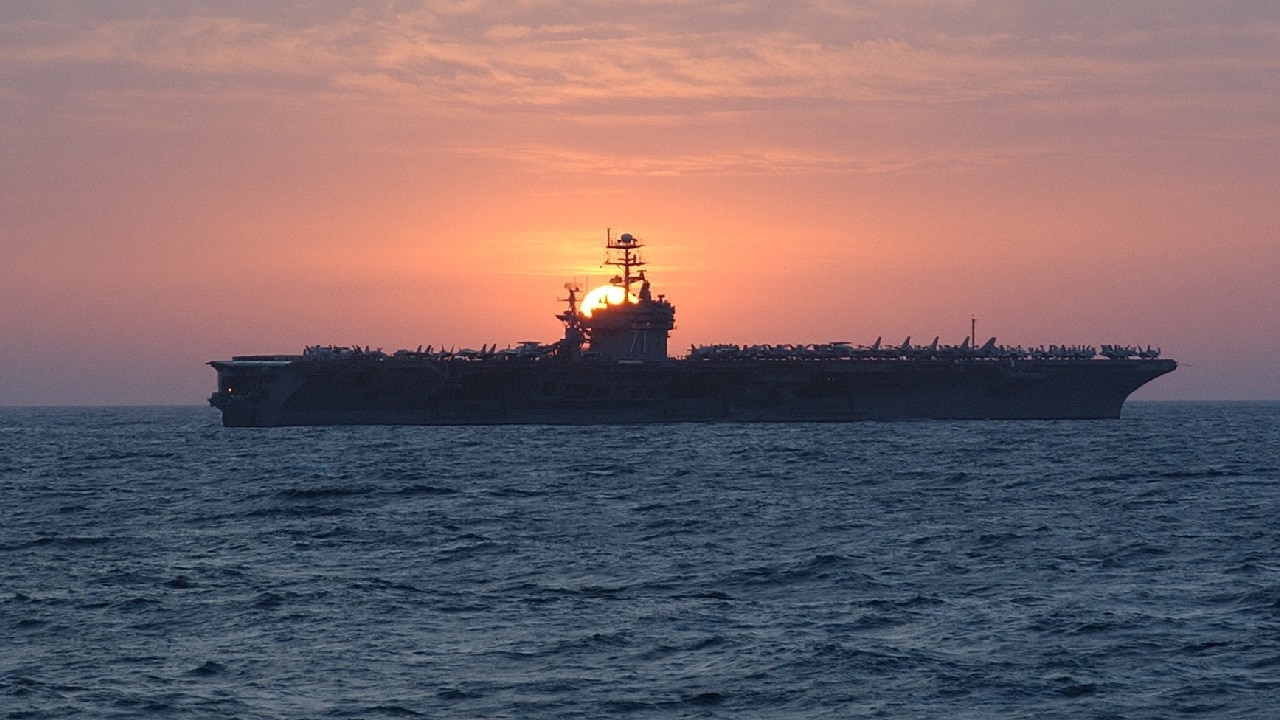
At sea aboard USS John F. Kennedy (CV 67) Mar. 6, 2002 — The sun rises behind USS Theodore Roosevelt (CVN 71), as it prepares to turn over operations to the John F. Kennedy Battle Group. The Kennedy and her embarked Carrier Air Wing (CVW) are relieving the Roosevelt to conduct missions in support of Operation Enduring Freedom. U.S. Navy photo by PhotographerÕs Mate 1st Class Jim Hampshire. (RELEASED)
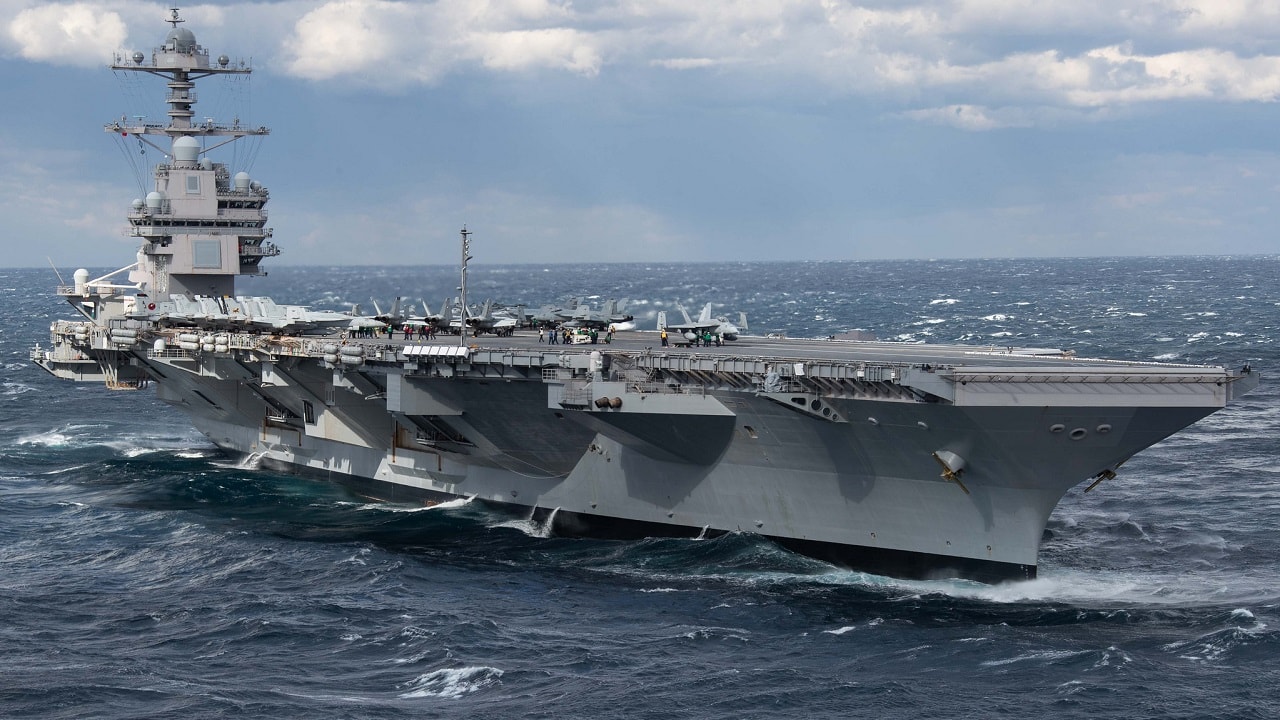
The aircraft carrier USS Gerald R. Ford (CVN 78) transits the Atlantic Ocean, March 26, 2022. Gerald R. Ford is underway in the Atlantic Ocean conducting flight deck certification and air wing carrier qualifications during the ship’s tailored basic phase before operational deployment.
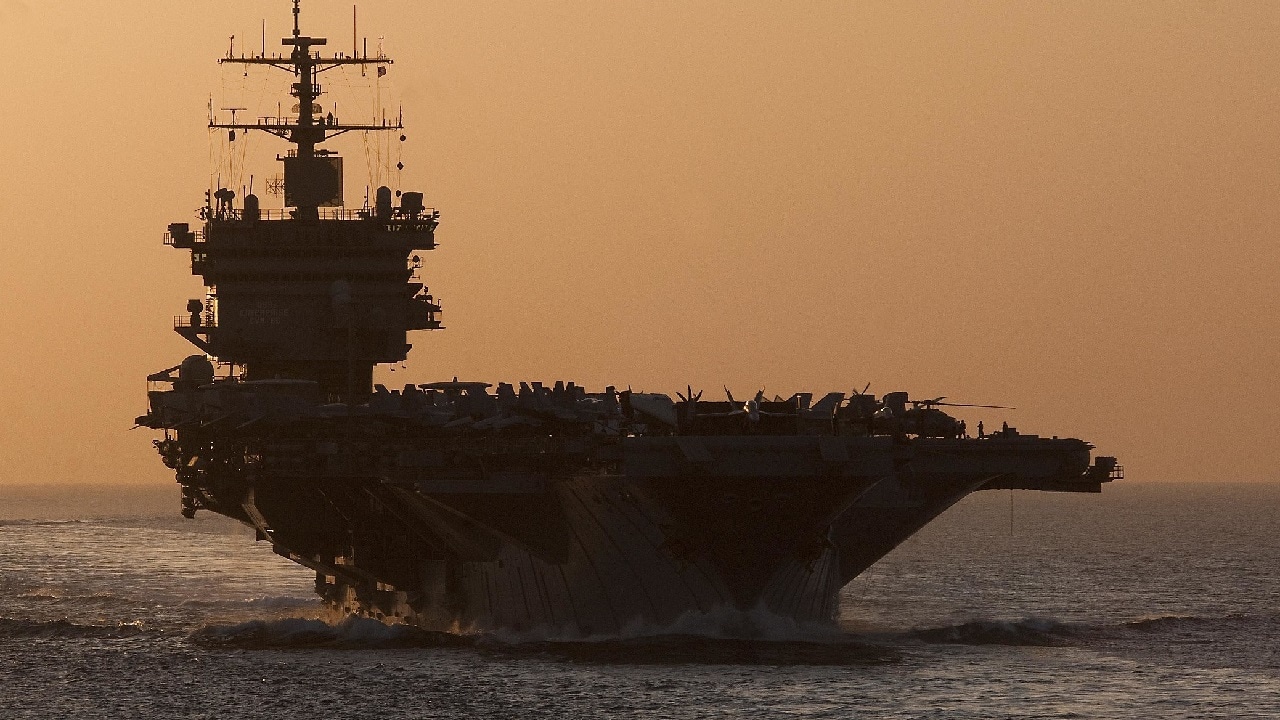
The aircraft carrier USS Enterprise, right, the guided-missile destroyer USS Porter (DDG 78) and the guided-missile cruiser USS Vicksburg (CG 69) transit back to their homeport of Norfolk, Va. Enterprise, Porter and Vicksburg are returning from a deployment to the U.S. 5th Fleet area of responsibility, where the ship conducting maritime security operations, theater security cooperation efforts and support missions for Operation Enduring Freedom.
Because of its ability to maneuver during the terminal phase of its flight path, even the shorter-range CM-302 is described as a weapon that offers “exceptional” penetration against modern air and missile defense systems, as well as against the Phalanx Close-in Weapon System U.S. naval vessels employ against this class of missile.
Importance To the Iran Conflict
The CM-302 has a significantly reduced range compared to the YJ-12, in order to remain in compliance with the range limitations imposed on export sales of such weapons.
Nonetheless, if the CM-302 were deployed along the Iranian coastline, it could hit almost any target anywhere in the Persian Gulf, in the Strait of Hormuz, and most of the Gulf of Oman.
Not surprisingly, the YJ-12 is defined as an “aircraft-carrier killer” by the PLA.
Although its existence had been known for some years, there was initially very little information about the system or any photos of an operational version—a sign that the PLA wanted to hide its performance parameters and maintain technological surprise.
The weapon was first shown publicly in 2015, by which time it had been in service for several years. It featured during the 70th anniversary parade commemorating the allied victory in World War II and China’s victory over Japan.
During the parade, a commentator from state-controlled China Central Television network said the supersonic missile had a strong ability to penetrate the multilayered defenses equipped on modern U.S. warships.
“It is mainly tasked with striking large and medium-sized surface warships and their formations, serving as a critical means to seize and maintain maritime dominance,” said the CCTV report.
“In anti-ship warfare, if a YJ-12 lowers its altitude and performs a stealthy penetration at such a speed in the final stage of its flight, the enemy would have difficulty responding in such a limited time,” the CCTV report added.
Pakistan became the first foreign user of the CM-302 and has already deployed the missiles on its four Chinese-built Type 054A/P Tughril-class frigates, which were commissioned between 2021 and 2023. In 2024, Algeria confirmed it was deploying land-based CM-302 missiles.
The missile has also been identified as one of the air-launched weapons equipped by the Chinese-designed Chengdu JF-17 fighter aircraft that is produced locally in Kamra, Pakistan. The missile is designated as CM-400AKG in this variant and was recently sold to Serbia to be carried by that nation’s Mikoyan MiG-29 aircraft.
About the Author: Reuben F. Johnson
Reuben F. Johnson has thirty-six years of experience analyzing and reporting on foreign weapons systems, defense technologies, and international arms export policy. Johnson is the Director of Research at the Casimir Pulaski Foundation. He is also a survivor of the Russian invasion of Ukraine in February 2022. He worked for years in the American defense industry as a foreign technology analyst and later as a consultant for the U.S. Department of Defense, the Departments of the Navy and Air Force, and the governments of the United Kingdom and Australia. In 2022-2023, he won two awards in a row for his defense reporting. He holds a bachelor’s degree from DePauw University and a master’s degree from Miami University in Ohio, specializing in Soviet and Russian studies. He lives in Warsaw.