
China Coast Guard's July 20 Clash and the Imminent Submarine-Launched Ballistic Missile Test Prompt a Reassessment of Japan's Southwest Defense
 Tanaka Takashi
Japan's Southwest Defense Reassessment as China's Coast Guard Clashes and Submarine-Launched Ballistic Missile Tests Approach on July 20
On July 20, a small vessel from the Philippines came into close contact with a unit of the China Coast Guard at Second Thomas Shoal in the South China Sea. According to reports, one Philippine Navy personnel was injured in the head, and the United States condemned China's actions as "dangerous and aggressive." At first glance, this incident appears to be in the South China Sea rather than the East China Sea. However, from the perspective of the Japan Maritime Self-Defense Force, the issue lies more in the method than the location.
China sent a strategic signal to distant regions with its submarine-launched ballistic missile test on July 6, and on July 20, it demonstrated low-intensity pressure through its coast guard. The close timing of these two actions suggests that Beijing is attempting to simultaneously use the "nuclear shadow" and the "gray zone" of law enforcement vessels to slow down the decision-making processes of neighboring countries.
Coast Guard Vessels and Submarine-Launched Missiles Are Not Separate Issues
Defense News reported on July 15 that China is testing long-term measures to keep competitors at bay in Asia through both coast guard actions and ballistic missile tests. The same outlet also noted on July 7 that China's ballistic missile tests could shake the non-nuclear zone in the South Pacific. There are limitations to the publicly available information regarding the specific types of missiles and their launch platforms, and excessive conclusions should be avoided.
Nevertheless, the operational implications are clear. Coast guard vessels erode the political patience of adversaries, while submarine-launched ballistic missiles introduce nuclear-level caution into the broad cooperation among the U.S., Australia, Japan, and the Philippines. In other words, China is advancing a design that narrows the options for the allied side before combat begins. This is not merely news from the South China Sea for Japan, which is tasked with protecting sea lines of communication (SLOC).
What Is Closer to Japan Is the Timeline Rather Than the Range
Japan's defense policy is rapidly enhancing long-range capabilities through the improved Type 12 surface-to-ship guided missile, acquisition of Tomahawks, and troop deployments to the southwestern islands. ABC News reported on July 15 that Japan is advancing one of its largest defense transformations since World War II due to concerns over China's military activities. The direction taken by Japan is reasonable. However, what concerns me more than the lack of range is the lack of response time.
When a clash involving coast guard vessels, the deployment of militia boats, the approach of drones, and demonstrations of submarine-launched missiles overlap in the same week, which of these will Tokyo treat as a "crisis"? Can the Japan Coast Guard, the Japan Maritime Self-Defense Force, the Ministry of Foreign Affairs, the Ministry of Defense, and the U.S. military share a unified picture within a matter of hours? This remains a realistic weakness in southwest defense.
Pressure on Anti-Submarine Capabilities of the Maritime Self-Defense Force
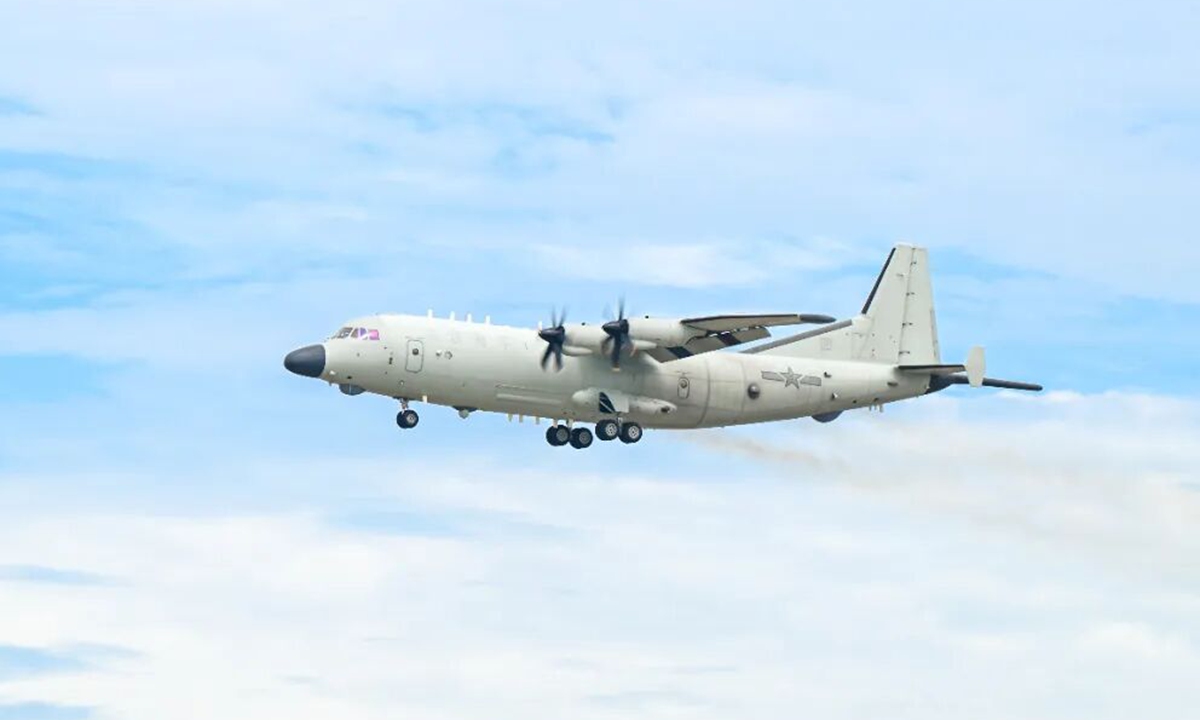
The Chinese military's Y-9 patrol aircraft, naval vessels, and submarine forces are creating a continuous operational space extending from the South China Sea to the East China Sea and the Western Pacific. The Japan Maritime Self-Defense Force possesses P-1 patrol aircraft, P-3C, helicopters mounted on escort ships, and fixed and mobile underwater surveillance networks. However, as the number of peacetime surveillance targets increases, the training time and maintenance capacity required during wartime are reduced.
During the Cold War, the Japan Maritime Self-Defense Force had a relatively clear mission to capture Soviet submarines in the Tsugaru, Soya, and Tsushima straits. The situation is different now. Chinese pressure extends beyond straits to ports, remote islands, supply routes, communication infrastructure, and public opinion space. Judging "capability" solely by the number of escort ships and patrol aircraft is somewhat overly optimistic.
Implications for the U.S.-Japan Alliance
In the clash on July 20, the U.S. commitment to its alliance with the Philippines immediately drew attention. This is not just a matter for Japan. If similar contacts occur around the Senkaku Islands while China conducts missile tests at a distance, Washington will consider escalation management for the entire region. Tokyo will demand a prompt response to localized sovereignty violations. This difference in sense of timing could lead to small cracks in the alliance.
The sticks and water cannons of the coast guard vessels may appear low-intensity. However, when signals from submarine-launched ballistic missiles are placed behind them, low intensity no longer means low risk.
What Japan should hasten is not merely to line up larger equipment names. It should streamline the processes for supply, casualty evacuation, civilian port usage, information sharing with the U.S. military, and the division of roles between the Japan Coast Guard and the Japan Maritime Self-Defense Force from gray zones to high-intensity situations. The true challenge lies not in how to assess China's capabilities, but in how quickly Japan can make political decisions within the ambiguous timeline created by China.
Key Reference Information
- Defense News, 15 July 2026, First the coast guard, then an ICBM
- Defense News, 7 July 2026, Chinese ballistic missile test and South Pacific nuclear-weapons-free zone
- ABC News, 21 July 2026, China and Philippines blame each other over South China Sea clash
- ABC News, 15 July 2026, Japan ramps up defenses amid concerns about China's military activities
On July 20, 2026, a clash occurred between a Philippine small boat and the Chinese Coast Guard at Second Thomas Shoal in the South China Sea, resulting in one Philippine Navy personnel being injured. The U.S. condemned China's actions as 'dangerous and aggressive', while the incident coincided with China's recent submarine-launched ballistic missile test on July 6, indicating a broader strategic pressure on regional allies.
- A Philippine Navy personnel was injured during a clash with the Chinese Coast Guard on July 20, 2026.
- The U.S. condemned China's actions as 'dangerous and aggressive'.
- China conducted a submarine-launched ballistic missile test on July 6, 2026.
- Japan is increasing its defense capabilities in response to China's military activities.
- The incident highlights the strategic implications for Japan and U.S. alliances in the region.