
China's 2026 SLBM Test Proves Deterrence Still Needs Patrols
 Marcus Chen
China's 2026 SLBM Test Proves Deterrence Still Needs Patrols
China released footage of a submarine-launched strategic missile test on July 6. That matters. It does not, by itself, prove that Beijing has solved the hard part of sea-based nuclear deterrence.
The distinction is not academic. A missile test is a controlled event. A credible ballistic-missile submarine force is a schedule, a maintenance system, a protected communications network, trained crews, quiet patrol areas, and enough boats at sea that an adversary cannot assume the force is tied to port. The launch tells us China can demonstrate the weapon. It does not yet tell us how often the People's Liberation Army Navy can hide the launcher.
The Test Is A Door Opening Not A Fleet
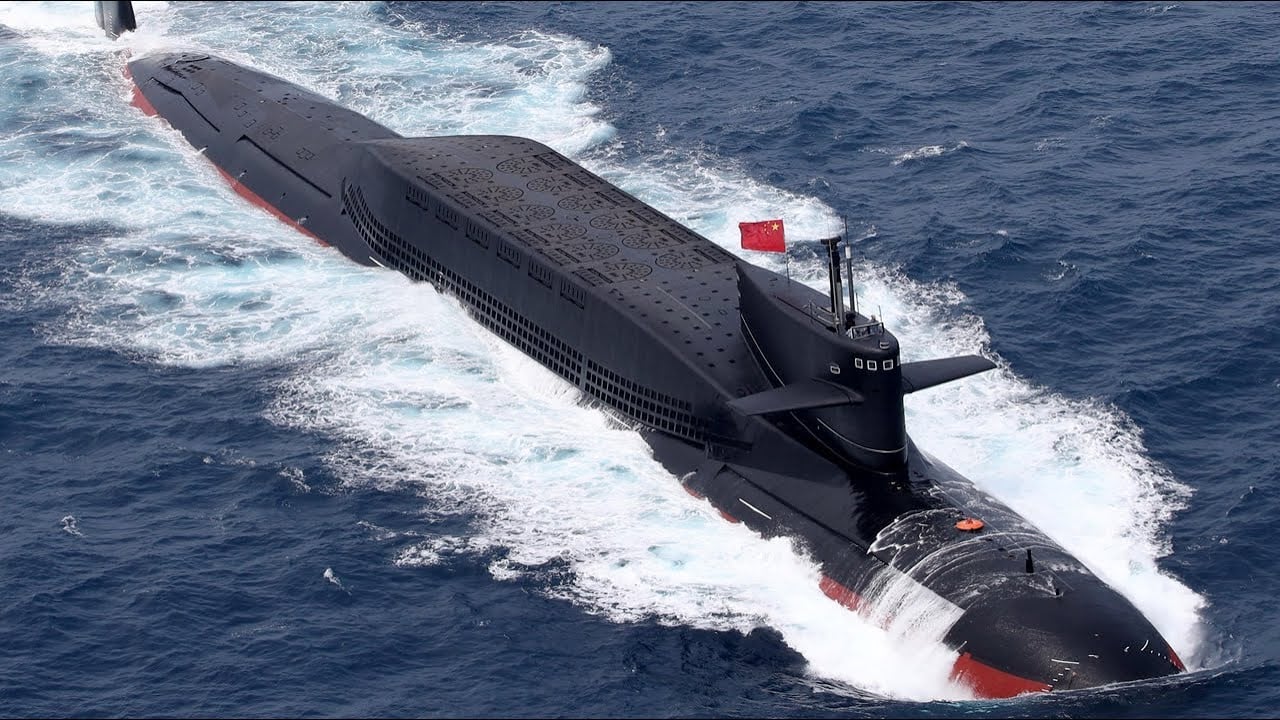
Huanqiu reported that the Chinese navy had successfully organized a submarine-launched strategic missile test and released launch footage. A related Chinese report quoted experts saying the missile had intercontinental range and marked another upgrade to China's nuclear triad. Beijing did not need to name the missile for the message to be clear: the sea leg is being shown, not merely described.
The likely audience is larger than Washington. Taiwan watches this because nuclear confidence can make conventional coercion feel less risky to Beijing. Japan watches it because the best patrol routes for Chinese ballistic-missile submarines run through seas that Japanese and U.S. anti-submarine forces already monitor. Australia watches because a longer-range sea-based missile reduces the need for Chinese submarines to break deep into the Pacific before holding distant targets at risk.
But the operational question is narrower. Can China keep an SSBN alive, connected to command authority, and hard to find while it is on patrol? That is the test that matters.
Range Gets Headlines While Patrol Rates Win Deterrence
A sea-based nuclear force needs three things before it changes the military balance: range, survivability, and repetition. Range is the easiest one to advertise. Survivability and repetition are harder because they require years of unglamorous work.
Public Pentagon China Military Power reports have long described China's sea-based nuclear force as centered on Jin-class Type 094 ballistic-missile submarines, with newer missiles intended to improve reach. Open-source estimates generally put the Type 094 fleet at roughly a half-dozen boats. That sounds like a lot until you do the patrol math. One boat may be in deep maintenance. One may be in training. One may be preparing to sail. One may be returning. The number actually available for continuous hidden patrols can shrink fast.
Anyone who has served around destroyers knows the calendar is merciless. Ships do not exist as PowerPoint icons. They break, certify, refuel, reload, train, and wait on weather, crew rest, parts, and escort plans. Submarines are worse. They are useful because they disappear, and disappearing on schedule is one of the most demanding things a navy can do.
A missile can be intercontinental and the patrol system can still be fragile. That is the gap between a launch event and a deterrent force.
The First Island Chain Still Shapes The Problem
China's geography does not disappear because a missile flies farther. Ballistic-missile submarines based around Hainan or operating through the South China Sea still have to deal with a crowded undersea environment, U.S. and allied surveillance, chokepoints, and the noise penalty of moving from protected bastions into wider patrol areas.
That is why the test fits a larger pattern. CSIS reported in February that China's military activity rose across the Taiwan Strait, South China Sea, near Japan, and beyond the First Island Chain in 2025. Its figures included 3,764 Chinese air incursions into Taiwan's de facto air defense identification zone, 163 recorded PLA operations in the South China Sea, and more far-seas activity beyond the First Island Chain, including carrier operations and training near Australia and New Zealand.
Those numbers matter because conventional pressure creates the operating environment in which nuclear submarines either hide or fail to hide. More surface patrols, more coast guard pressure, more naval aviation, and more exercises in the Philippine Sea are not separate from the SSBN question. They stretch allied sensors, normalize Chinese presence, and complicate the pattern-recognition work that anti-submarine forces depend on.
The U.S. Response Is Not Another Speech
The useful response is not rhetorical. It is anti-submarine warfare capacity: P-8A patrol aircraft hours, undersea sensors, quiet attack submarines, destroyers with trained sonar teams, and access agreements that let allied forces operate from the places where Chinese submarines must pass.
Japan is central because the Miyako Strait, Bashi Channel, and waters around the Ryukyus sit near the routes that matter. The Philippines is central because northern Luzon points at the Bashi Channel and southern Taiwan approaches. Australia is central because a Chinese SSBN force with longer reach makes the second island chain and southern Pacific monitoring problem more important, not less.
This is also where Washington's industrial problem comes back into view. The U.S. Navy cannot talk its way into more attack-submarine availability. If Virginia-class deliveries remain late and maintenance backlogs keep boats pier-side, then the United States is asking fewer submarines to cover more Chinese patrol possibilities. A Chinese SLBM test does not create that problem, but it makes the bill harder to ignore.
What To Watch Next
- Whether Chinese sources identify the missile as JL-3 or keep the designation ambiguous.
- Whether future notices, splashdown areas, or imagery point to longer-range Pacific test profiles.
- Whether Type 094 patrol cycles become more regular or a Type 096 successor appears in credible imagery.
- Whether U.S., Japanese, Australian, and Philippine anti-submarine activity increases around the Bashi Channel and Philippine Sea.
The launch is a signal. The patrol pattern will be the evidence. If this remains an occasional demonstration, it is a political message wrapped in a missile plume. If it becomes part of routine, survivable SSBN operations, then Indo-Pacific planners have a different problem: not a single Chinese test, but a Chinese nuclear force that can stay hidden long enough to matter.
That is the threshold to watch. Beijing has shown the missile can leave the water. Now it has to show the submarine can disappear.
China conducted a submarine-launched strategic missile test on July 6, 2026, demonstrating its capabilities in sea-based nuclear deterrence. The missile reportedly has intercontinental range, marking an upgrade to China's nuclear triad. However, the effectiveness of the People's Liberation Army Navy's ballistic-missile submarines in maintaining stealth during patrols remains uncertain. The test has implications for regional security, particularly concerning U.S. and allied monitoring efforts in the South China Sea and surrounding areas.
- China conducted a submarine-launched strategic missile test on July 6, 2026.
- The missile is reported to have intercontinental range.
- The test is part of China's efforts to enhance its nuclear triad.
- The operational effectiveness of China's SSBNs remains uncertain due to maintenance and patrol challenges.
- The U.S. and allied forces are monitoring Chinese military activities closely.