
China's 7,300 Kilometer SLBM Test Makes Pacific Deterrence Less Stable
 Marcus Chen
China's 7,300 Kilometer SLBM Test Makes Pacific Deterrence Less Stable
7,300 kilometers is the number that matters. On July 6, 2026, China fired a submarine-launched ballistic missile from the South China Sea toward the South Pacific, carrying a simulated warhead across a flight path long enough to prove that Beijing's sea-based nuclear force is no longer a coastal talking point. It can now make a public shot into open ocean and force every navy in the Western Pacific to update its assumptions.
CSIS analysts Joseph Rodgers, Bonny Lin, and Leon Li assess that the missile was likely a JL-2 or JL-3 launched at 4:01 UTC, with debris landing in the South Pacific Nuclear Free Zone. The People's Liberation Army called it routine annual training and said relevant countries had been notified. That line is technically useful and operationally evasive. A routine event does not normally overfly parts of the Philippines, land near Pacific island states, arrive with only hours of warning to Washington and Tokyo, and coincide with a China-Russia naval exercise beginning at Qingdao.
The Shot Was About Reach
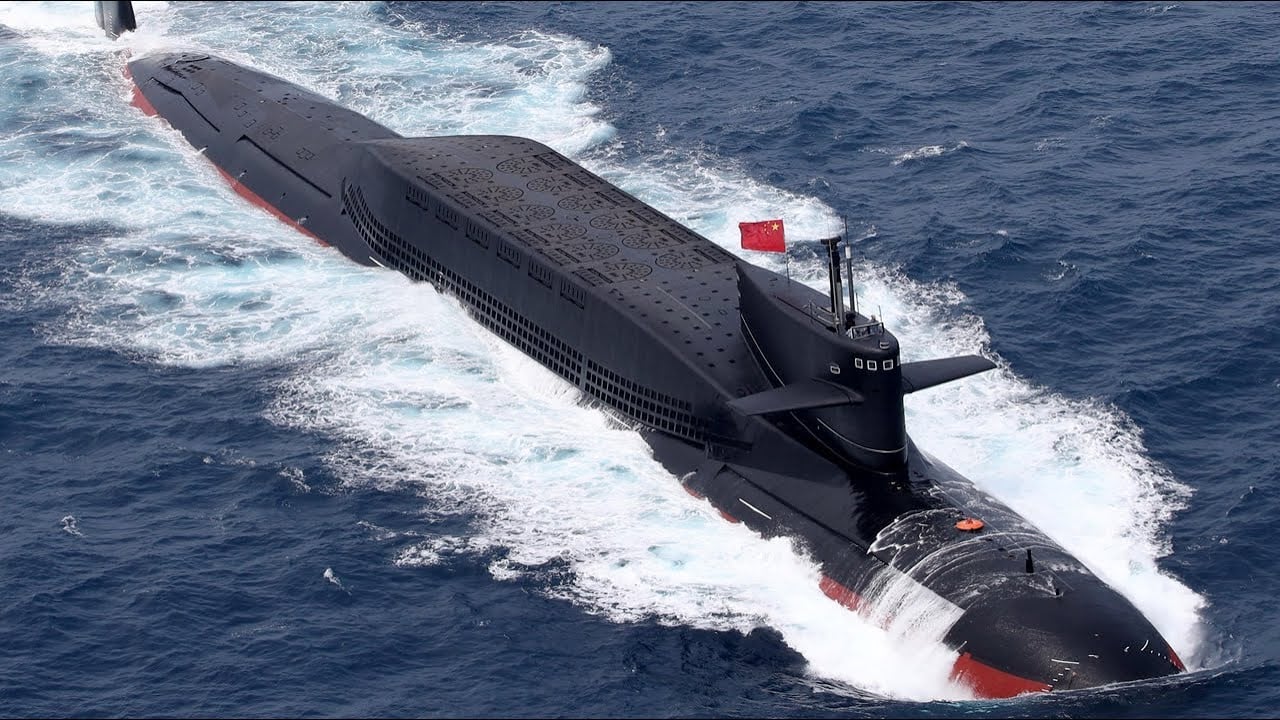
The missile type remains unconfirmed. That matters less than the geometry. A JL-2 can reach roughly 7,000 to 8,000 kilometers, depending on payload and launch conditions. A JL-3 is generally assessed at more than 10,000 kilometers. A 7,300 kilometer flight could therefore be a near-full-range JL-2 demonstration or a partial-range JL-3 validation. Either way, the PLA Navy just tested the part of the system that matters in a crisis: a ballistic missile submarine in or near its South China Sea bastion, firing into the Pacific on a realistic trajectory.
That is a different problem from parade missiles. A DF-31 on a transporter is visible, trackable, and tied to known launch areas. A Jin-class Type 094 ballistic missile submarine is noisy by the standards of the best U.S. and British boats, but it does not need to be perfect if it can hide behind China's layered anti-submarine warfare screen in the South China Sea. The bastion concept is simple: use surface combatants, aircraft, seabed sensors, maritime militia reporting, and shore-based missiles to make the operating area dangerous enough that an adversary has to spend scarce submarines and patrol aircraft just to find the shooter.
Anyone who has served on a destroyer knows the problem is not drawing a circle on a map. It is keeping enough sensors in the right water, at the right time, with enough weapons and fuel to do something about the contact. The South China Sea is not small. From Hainan to the central basin is hundreds of nautical miles of hard acoustic work. During a Taiwan contingency, U.S. and allied anti-submarine forces would already be busy screening carrier strike groups, protecting logistics ships, and watching Chinese attack submarines. Add a proven long-range SLBM shot from that same theater, and the task list gets uglier.
Warning Is Now Part Of The Weapon
The launch also exposed a notification problem. CSIS notes that China provided only hours of advance notice to the United States and Japan, and roughly 23 hours to Australia and possibly states closer to the landing zone. That falls short of the Hague Code of Conduct standard, under which subscribing states provide pre-launch notifications at least 24 hours in advance with useful information on the launch area, direction, and missile class. China is not a subscriber.
The operational issue is not diplomatic etiquette. It is whether a missile launch during a crisis looks like a test, a warning shot, or the opening move of a nuclear exchange.
That ambiguity is dangerous because an SLBM flight profile is hard to make benign. A dummy warhead still moves like a warhead. A long-range test from the South China Sea still resembles an attack trajectory. If the PLA plans to make open-ocean testing normal, then ad hoc notification is not enough. The more routine the launches become, the more disciplined the warning regime has to be.
Beijing wants the prestige of a mature nuclear force without accepting the habits that mature nuclear forces developed after decades of near misses. That is the gap.
The Timing Was Not Accidental
The launch came as U.S.-led RIMPAC activity continued across the Pacific, with Australia, Japan, the Philippines, and other partners involved. It also came on the same day Australia signed a defense treaty with Fiji, part of Canberra's effort to keep Pacific island security partnerships from being hollowed out by Chinese money and access. Reuters reported that China and Russia began their Joint Sea 2026 naval exercise off Qingdao at the same time. None of that proves a single coordinated script. It does show that Beijing chose a moment when every intended audience was already looking.
The message to Washington was that China's sea-based nuclear deterrent can no longer be treated as a future problem. The message to Canberra and Pacific island capitals was that the South Pacific is within China's weapons geography even when the political dispute is not about the South Pacific. The message to Moscow was alignment: China has partners too, and it can demonstrate high-end capability while exercising with Russia.
For Taiwan, the signal is indirect but important. A secure Chinese second-strike force gives Beijing more room to run conventional risk under a nuclear umbrella. It does not make an invasion easier in the first week. It can make the second and third weeks more dangerous, when Washington has to decide how far to push strikes against mainland command, missile, and naval infrastructure. If Chinese leaders believe their sea-based nuclear force is survivable, they may feel less pressure to back down early.
The U.S. Navy Has A Math Problem
The American answer cannot be another speech about deterrence. It needs platforms and time on station. P-8A maritime patrol aircraft, attack submarines, undersea sensors, unmanned surface vessels, and allied basing all matter. But the same assets are being asked to cover the Philippine Sea, the Luzon Strait, the East China Sea, Guam approaches, and the South China Sea. There are not enough crews or hulls to watch every Chinese submarine bastion continuously.
The United States also faces an industrial problem. Virginia-class attack submarines are already behind demand, and AUKUS commitments add another draw on a force that is central to any hunt for Chinese ballistic missile submarines. Japan and Australia can help with sensors, patrol aircraft, and geography, but neither can replace American nuclear attack submarines in the deep-water tracking mission.
So the practical response is narrower than the rhetoric. Washington and its allies should push China hard on launch notification protocols, expand shared undersea surveillance around the Philippine Sea and South China Sea approaches, and treat RIMPAC-style exercises as rehearsals for finding missile submarines rather than public diplomacy events. The PLA just used one missile to combine nuclear signaling, regional coercion, and alliance stress testing. That deserves a military answer, not just a press statement.
The uncomfortable conclusion is that China's test may have strengthened its deterrent while weakening Pacific stability. The missile worked. The warning system did not. In a real crisis, that mismatch is how commanders run out of time.
China conducted a submarine-launched ballistic missile test from the South China Sea on July 6, 2026, reaching the South Pacific. The missile, likely a JL-2 or JL-3, demonstrated a range of 7,300 kilometers, signaling an advancement in China's sea-based nuclear capabilities. The launch coincided with significant military activities in the region, including a China-Russia naval exercise and U.S.-led RIMPAC operations, raising concerns about regional stability and deterrence.
- China tested a submarine-launched ballistic missile with a range of 7,300 kilometers.
- The missile was launched from the South China Sea towards the South Pacific.
- The launch coincided with a China-Russia naval exercise and U.S.-led RIMPAC activities.
- China provided limited advance notice of the launch to the U.S. and Japan.
- The test demonstrates China's enhanced sea-based nuclear capabilities.