
Iran's Attacks on Al-Udeid Base and 4 Gulf Countries Reveal the Limits of Patriot and THAAD Defenses in 2026
 Ahmed Al-Rashid
Iran's Attacks on Al Udeid Air Base and 4 Gulf States Reveal the Limits of Patriot and THAAD Defenses in 2026
On July 12, 2026, Iran claimed it launched missiles and suicide drones at U.S. military sites in Bahrain, Kuwait, Jordan, and Qatar, including Al Udeid Air Base, following a third round of U.S. strikes inside Iran within a week. This is not an isolated incident in the record of escalation, but a practical test of the Gulf air defense system that has cost tens of billions of dollars, leaving its old question unanswered: who has the engagement button when the sky is crowded with missiles, drones, and political alerts?
The Attack is Broader than a Symbolic Message
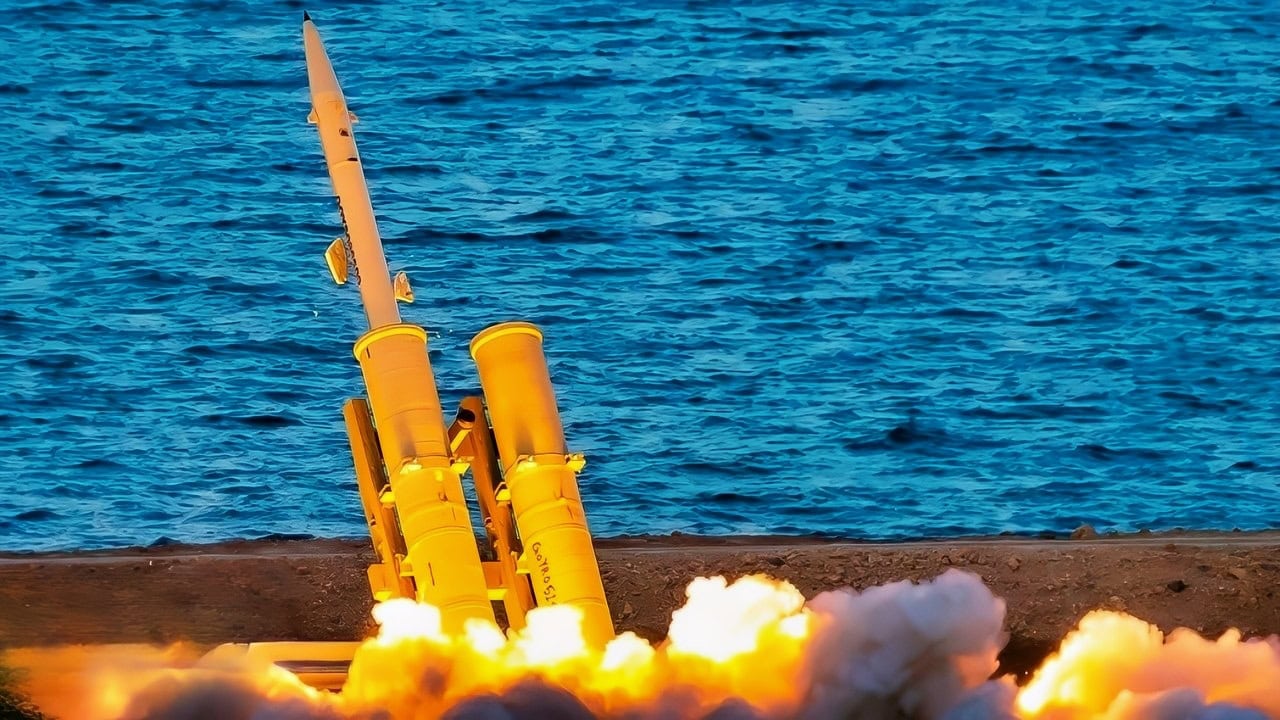
The details of the first hours still need to be sorted between military statements, propaganda, and operational reality. Al Jazeera reported that Tehran spoke of attacks on U.S. sites in Bahrain, Kuwait, Jordan, and Qatar, and that a state of alert was activated in Doha. It also mentioned that the U.S. military struck more than 140 targets inside Iran, including sites in Bandar Abbas, Sirik, Chabahar, Jask, and Asaluyeh. If even half of this description is accurate, we are facing a different pattern than the calculated exchange of strikes around the Strait of Hormuz; Iran is trying to shift the pressure from the maritime corridor to the network of bases that give the U.S. its operational depth in the Gulf.
Al Udeid Air Base is not just a large Qatari runway. It is a hub for command, control, reconnaissance, and refueling, and in Iranian military consciousness, it symbolizes the American presence that can strike Iran from a relatively close distance. An attack on it, or the announcement of targeting it, aims to show that the war does not remain within Iranian borders nor solely in the waters of Hormuz. Bahrain, Kuwait, Jordan, and Qatar are not random names; each represents a link in the chain of American deployment, from the Fifth Fleet to air and logistical support bases.
The Gulf's Problem is Not Buying Batteries but Integrating Them
Militarily, air defense does not start from the launch platform. It begins with radar, data exchange, rules of engagement, and the ability of the duty officer to distinguish within minutes between a ballistic missile, a cruise missile, a low-signature drone, and friendly air traffic. This point is often missing in the Gulf discourse about Patriot and THAAD. The battery can be purchased, and the interception can be depicted, but the operational integration between one country and another and between national forces and U.S. command is a much more sensitive issue.
The Gulf has an expensive mix of Patriot PAC-3, THAAD, early warning radars, and F-15, F-16, F/A-18, Rafale, and Eurofighter fighters. However, this system is distributed across national sovereignties, political calculations, and command centers that do not always operate as a single entity. In a crisis like this, Gulf radars may see a partially shared picture, but the final decision to intercept may go through multiple channels. Any military officer who has served in the region knows that a second of hesitation in the operations room is no less dangerous than a lack of an intercept missile.
Israel, in contrast, announced in early July the testing of an upgraded version of Iron Dome integrated with Iron Beam, according to Defense News, aimed at dealing with dense barrages and reducing interception costs through lasers. I am not saying that the Israeli model is replicable in the Gulf; geography, threat, and politics are different. But the lesson is clear: modern air defense is not a weapons showcase, but a single decision-making system. When drones and missiles arrive together, cost, ammunition, and processing speed become critical factors just like the range of the missile itself.
Iran Bets on Saturation, Not Just Precision
Iran may not need to hit every target to achieve a political result. It is sufficient for it to impose a state of repeated alert on American and Gulf bases, to force defenses to consume expensive intercept missiles, and to show Gulf residents that the war conducted in the name of their protection can reach their cities and bases. Here, the value of medium-range ballistic missiles, cruise missiles, suicide drones, and even boats or mines, if pressure returns to the sea, becomes apparent.
The attacks on ships in the Strait of Hormuz in recent weeks were part of the same logic. Defense News reported on June 26 that U.S. Central Command struck Iranian missile, drone, and radar sites in response to the targeting of a commercial vessel near Oman. After that, Al Jazeera reports indicated that Iran established what it called an authority to manage the strait and rejected foreign intervention in navigation. However, striking the bases adds a new layer: Iran is not content to say it controls the maritime corridor, but hints that the cost of opening it by force will also be borne by U.S. bases on land.
Washington Protects the Gulf but Makes It a Target
This is the paradox that many in Gulf capitals do not like to say out loud. The American presence is necessary to deter Iran, but in a moment of war, it turns the Gulf land into part of the battlefield. U.S. bases provide Gulf countries with a shield, but they also give Iran a list of legitimate targets in its military calculations. Hence, the question becomes not whether Qatar, Bahrain, or Kuwait need Washington, but how these countries can prevent themselves from becoming merely a military operating space for decisions made in Washington and Tehran.
The expected Gulf response will be more air defense, and perhaps accelerating the purchase of drone counter-systems and additional interception munitions. This is understandable, but not sufficient. Buying new PAC-3s does not solve the problem of a command center that lacks full data exchange authority with its neighbor. Purchasing additional THAAD does not solve the problem of defending against cheap drones flying at low altitudes. And annual joint training does not compensate for the absence of a clear political protocol for what happens if an Iranian missile strikes a U.S. base within the territory of a Gulf state and the defenses do not intercept it in time.
The Real Indicator in the Coming Days
The most important indicator will not be the number of missiles Iran launched, but the number of Gulf states that will allow the United States to use their territory in the next round of strikes, the level of transparency of data regarding interceptions, and whether Gulf operations rooms will transition from bilateral coordination with Washington to a single regional picture. If each country continues to defend its airspace individually, Iran will not need to breach all defenses; it will be enough for it to exploit the gaps between the networks.
In my estimation, the July 12 attack puts the Gulf to the test of triad capability: advanced equipment is present, training is varied, and command and control institutions are still governed by sovereignty sensitivities more than by the necessities of modern warfare. The old military adage says that the chain breaks at its weakest link. In the Gulf, the weakest link is not always the battery or the radar; sometimes it is a political decision waiting for permission while the missile waits for no one.
Sources
- Al Jazeera, July 12, 2026, live coverage of the exchange of strikes between Iran and the United States and the announcement of attacks on U.S. sites in Qatar, Bahrain, Kuwait, and Jordan.
- Al Jazeera NewsFeed, July 12, 2026, report on targeting U.S. sites including Al Udeid Air Base.
- Defense News, June 26, 2026, report on U.S. strikes on Iranian missile, drone, and radar sites.
- Defense News, July 1, 2026, report on Israel testing the integration of Iron Dome with Iron Beam to counter dense barrages.
- U.S. Central Command, materials published in July 2026 about regional security dialogue in Bahrain and U.S. deployment within Central Command's scope.
Iran launched missiles and suicide drones at U.S. military sites in Bahrain, Kuwait, Jordan, and Qatar on July 12, 2026, following U.S. strikes in Iran. The attacks targeted Al Udeid Air Base and aimed to showcase Iran's military capabilities. This escalation highlights the challenges of integrating air defense systems among Gulf states and the potential for increased military tensions in the region.
- Iran launched missiles and drones at U.S. military sites in multiple Gulf countries.
- The attacks were a response to U.S. strikes in Iran.
- Al Udeid Air Base in Qatar was specifically targeted.
- Iran aims to demonstrate its capability to strike U.S. bases in the region.
- The situation raises concerns about the integration of air defense systems in the Gulf.