
China's 7,300-Kilometer Submarine Missile Test Changes the Pacific Equation
 Marcus Chen
China's 7,300-Kilometer Submarine Missile Test Changes the Pacific Equation
A Chinese nuclear-powered submarine launched a ballistic missile roughly 7,300 kilometers into the South Pacific in a rare 2026 test. The distance matters more than the spectacle. Beijing was not demonstrating a weapon that can merely reach Taiwan or Japan; it was showing that the People's Liberation Army Navy can test a sea-based strategic system from waters far beyond the First Island Chain.
The Test Was Operationally Modest but Politically Loud
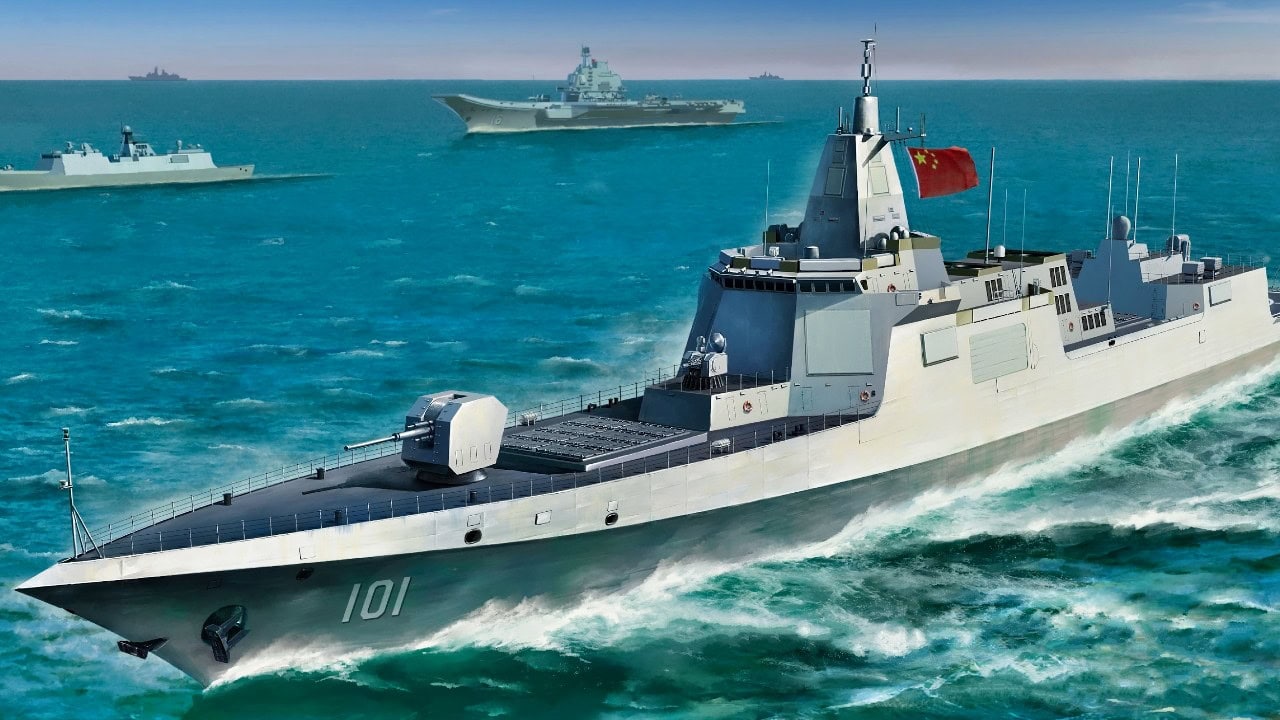
Channel News Asia reported that the missile carried a simulated warhead and landed in international waters. That distinction is important: a single test does not prove a mature patrol capability, a reliable command-and-control architecture, or a quiet ballistic-missile-submarine force. It does prove that Chinese planners are willing to expose a strategic system to the demanding conditions of a long-range Pacific firing exercise.
The likely platform was a People's Liberation Army Navy ballistic-missile submarine, or SSBN. Open-source estimates commonly place China's older JL-2 submarine-launched ballistic missile near the 7,000-kilometer class, while the newer JL-3 is generally assessed to offer substantially greater range. Public reporting does not establish which missile was used, so the prudent conclusion is narrower: China demonstrated a long-range sea-based launch, not a complete operational order of battle.
Range Changes the Patrol Problem
For the United States, the key issue is not whether one Chinese missile can reach the continental homeland. It is whether Chinese SSBNs can remain inside protected bastions, or move through contested waters under the cover of the surface fleet, while still holding U.S. and allied targets at risk.
A 7,300-kilometer trajectory launched from the western Pacific creates a different search problem from a missile fired near China's coast. The submarine can trade range for geography. It may not need to break into the central Pacific if its patrol area, missile reach, and targeting network are good enough. Conversely, if Beijing wants a credible second-strike force against the United States, its submarines must survive long patrols, communicate without revealing their position, and receive accurate target updates while submerged. The missile is only one part of that chain.
That is why the supporting activity matters. China has also increased naval passages around Japan, maintained coast guard operations east of Taiwan, and conducted joint activity with Russia, according to Defense News and CNA. These events are not necessarily one centrally directed operation. Their military value is still cumulative: more Chinese ships and aircraft are operating in the same approaches where U.S. and Japanese forces would need to find, track, and, in a crisis, contain an SSBN.
Japan and Taiwan Face the Immediate Pressure
The test's first audience was Washington, but Japan and Taiwan face the nearer operational consequences. Defense News reported that more than 100 Chinese military-linked vessels were tracked near Taiwan in early November and that Chinese far-seas deployments around Japan have become more persistent. A submarine-launched missile test adds an undersea dimension to a pressure campaign already visible on the surface and in the air.
Japan's southwestern islands sit across the routes Chinese submarines would use to reach the Pacific. Tokyo therefore has to solve two problems at once: monitor Chinese naval forces moving through the island chain and preserve enough anti-submarine warfare capacity for the platforms that do not advertise their presence. More patrol aircraft, fixed sensors, and surface escorts help, but none is cheap. Japan's reported plan to lift five-year defense spending as high as 80 trillion yen from April 2027 reflects that arithmetic.
For Taiwan, the test complicates the familiar blockade scenario. A crisis would not be limited to Chinese ships surrounding the island. Beijing could use coast guard and naval forces east of Taiwan to build what analysts describe as a jurisdictional record, while submarines and long-range missiles raise the cost of American reinforcement. The eastern approaches are not a sanctuary simply because they are farther from China's coastline.
The United States Still Has a Tracking Advantage, Not a Free Pass
The U.S. Navy retains major advantages in undersea warfare, allied basing, and long experience tracking ballistic-missile submarines. But advantage is not the same as coverage. A single SSBN test says little about the size of China's deployable force; it says a great deal about the direction of Chinese investment.
Washington's response should therefore be measured in sensors and endurance, not only in another headline platform. The Western Pacific needs persistent undersea surveillance, resilient data links, and enough allied aircraft and submarines to maintain contact when Chinese forces use surface patrols, maritime militia, and electronic warfare to complicate the picture. Japan, Australia, and the Philippines can contribute geography and access, but access without stocked magazines, maintenance capacity, and practiced anti-submarine procedures is a map, not a war plan.
One missile test is a signal. A repeatable patrol cadence is a force.
What to Watch Next
- Whether China conducts another Pacific SSBN test or publishes a more regular test pattern.
- Whether coast guard and naval activity east of Taiwan becomes continuous rather than episodic.
- Whether Chinese submarines begin operating with more distant surface or air support beyond the First Island Chain.
- Whether Japan and the United States expand real anti-submarine coverage, rather than announce another long-term concept.
The 7,300-kilometer launch did not prove that China has solved the hardest problem in nuclear deterrence: keeping submarines hidden and connected on patrol. It did prove that the Pacific missile map is no longer a coastal one. If Beijing turns this test into a cadence, the United States and Japan will be defending an undersea battlespace that is wider, noisier, and more expensive to monitor. The math is moving before the fleet numbers do.
Sources
China conducted a submarine-launched ballistic missile test in the South Pacific in November 2026, demonstrating its capability to launch missiles from beyond the First Island Chain. This test involved a ballistic missile that traveled 7,300 kilometers and was part of a broader increase in Chinese naval activity near Taiwan and Japan. The test has significant implications for regional security, prompting Japan to consider increasing its defense spending.
- China launched a ballistic missile 7,300 kilometers into the South Pacific from a nuclear-powered submarine.
- The missile test was operationally modest but politically significant, demonstrating China's long-range capabilities.
- More than 100 Chinese military-linked vessels were tracked near Taiwan in early November 2026.
- China's naval presence around Japan has become more persistent, complicating regional security dynamics.
- Japan plans to increase defense spending significantly in response to these developments.