
China's Aircraft Carrier "Liaoning" Advances South of Okinawa, Japan's Insufficient Surveillance Capability Becomes a Challenge for the Japan-U.S. Alliance
 Tanaka Takashi
China's Aircraft Carrier "Liaoning" Advances South of Okinawa, Japan's Surveillance Capability Shortcomings Become a Challenge for the Japan-U.S. Alliance
On October 15, China's Navy aircraft carrier "Liaoning," accompanied by multiple destroyers, passed through the waters between Okinawa Island and Miyako Island heading towards the Pacific Ocean. According to the Ministry of Defense, approximately 10 takeoffs and landings of carrier-based aircraft were confirmed, and the Japan Maritime Self-Defense Force deployed one escort ship and two patrol aircraft, with fighter jets also launched in response. On the following day, October 16, it is reported that the Liaoning advanced towards the South China Sea.
What Liaoning's Navigation Indicates
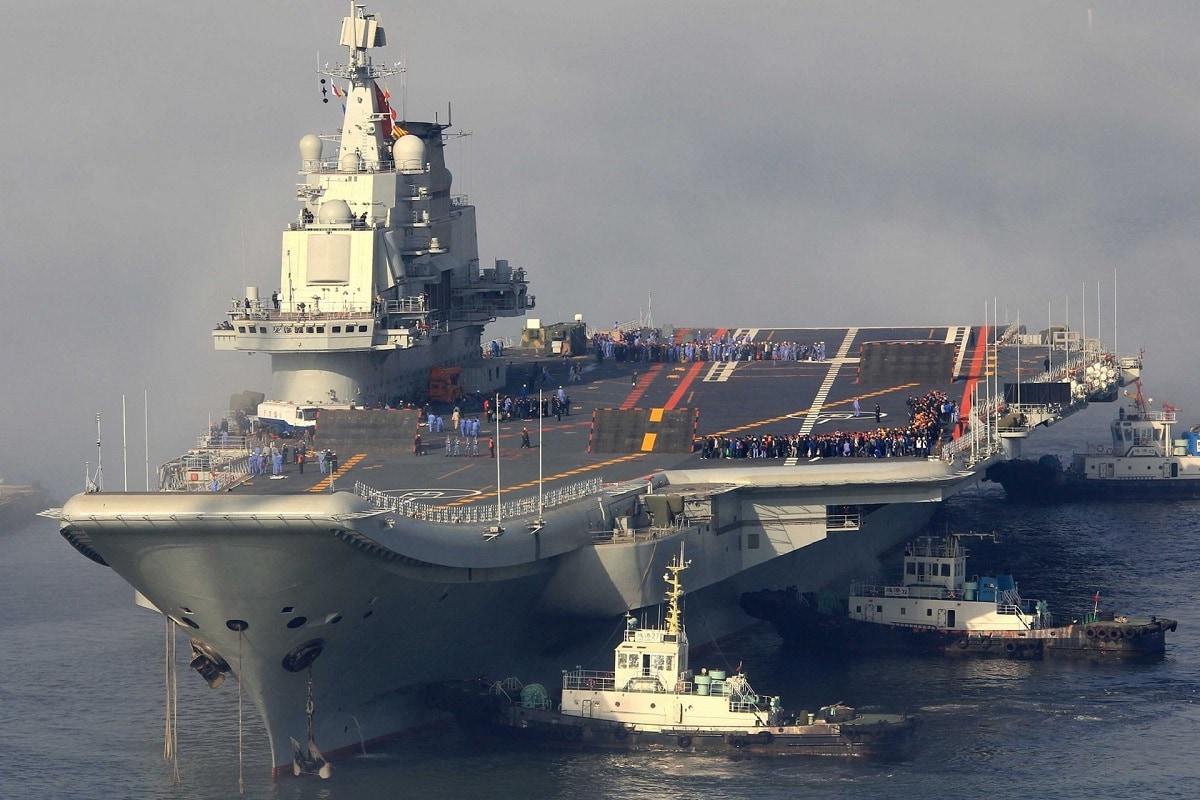
Kyodo News reported that Defense Minister Shinjiro Koizumi stated that strengthening information gathering and surveillance on the Pacific side is an "urgent issue." The Japanese response is appropriate. However, the issue is not whether the Liaoning was confirmed once. It is about how long and in which maritime airspace it could be continuously tracked while moving from the East China Sea to outside the first island chain.
The Liaoning is the oldest of the three aircraft carriers owned by China and differs from the Fujian-class, which is equipped with an electromagnetic catapult. Nevertheless, the approximately 10 takeoffs and landings this time indicate an intention to use the carrier not merely as a symbol but as a training platform for conducting air operations at long distances. Even if the Chinese Navy describes it as "annual routine training," capabilities and intentions must be evaluated separately.
What the JMSDF Needs is More Than Just the Number of Vessels
Japan's weakness lies not in the range of anti-ship missiles or the performance of escort ships, but in the layer of sensors needed to maintain contact in the vast Pacific. If patrol aircraft, satellites, drones, submarines, and U.S. military intelligence cannot be integrated into a single maritime traffic route (SLOC) map, even if the position of the aircraft carrier can be "discovered," the significance of its actions cannot be judged early. The Indo-Pacific Defense Forum also reported that unauthorized surveys by Chinese vessels in Japan's exclusive economic zone increased in 2026, indicating that there is little room to treat aircraft carrier navigation and maritime surveys as separate issues.
In the Japan-U.S. alliance, it is realistic for the U.S. Navy to complement long-range surveillance and strike capabilities while the JMSDF takes on the responsibility of sustained tracking around the Nansei Islands. However, a surveillance network that assumes U.S. intelligence will arrive is vulnerable to communication disruptions and satellite degradation. Japan's consideration of large-scale deployment of unmanned systems would be meaningless if it ends up being a competition of numbers. What is needed is an operational design that does not cease discovery, identification, tracking, and engagement decision-making.
Overlooked Political Risks
The navigation of the Liaoning does not immediately signify armed conflict. Rather, attention should be paid to how China gradually expands the range it can call "routine training," thereby accumulating surveillance burdens on Japan. In the author's view, the true challenge is not losing sight of the aircraft carrier, but the time required for Japan and the U.S. to make political judgments that distinguish between crisis and training while observing the same track.
Reference Information
- Ministry of Defense and Self-Defense Forces Public Information
- Kyodo News, Japan defense chief vows to boost monitoring after sailing of China carrier
- The Japan Times, Koizumi says China carrier drills in Pacific highlight Japan's limited surveillance capabilities
- Indo-Pacific Defense FORUM, China's intrusions into Japanese waters surged in 2026
Chinese aircraft carrier Liaoning sailed south of Okinawa on October 15, 2023, accompanied by multiple destroyers. The carrier conducted around 10 flight operations before moving towards the South China Sea on October 16. In response, Japan deployed an escort ship and two patrol aircraft to monitor the situation, emphasizing the need for improved surveillance capabilities in the region.
- Chinese aircraft carrier Liaoning passed between Okinawa and Miyako Island on October 15, 2023.
- The carrier conducted approximately 10 flight operations during its transit.
- Japan deployed one escort ship and two patrol aircraft in response to the carrier's movements.
- Liaoning is the oldest of China's three aircraft carriers and is used for training purposes.
- The Japanese Defense Minister highlighted the need to enhance surveillance capabilities in the Pacific.