
Israel buys 12 AH-64E Apache helicopters in 2026 to enhance its ground war and deepen its reliance on Washington.
 Ahmed Al-Rashid
Israel Purchases 12 AH-64E Apache Helicopters in 2026 to Enhance Its Ground Warfare and Deepen Its Dependence on Washington
On October 15, 2026, the Israeli Ministry of Defense successfully signed an agreement to purchase 12 AH-64E Apache attack helicopters after months of financial stagnation, and before Israel lost its American production window. Practically speaking, the significance of the deal lies not only in the number of aircraft but in the manner in which the decision was made: the Israeli army needed continuous operational pressure, and the government needed to divert funding from a long-term national program, while Washington remained the entity holding the key to production and delivery.
A Small Deal with a Big Decision
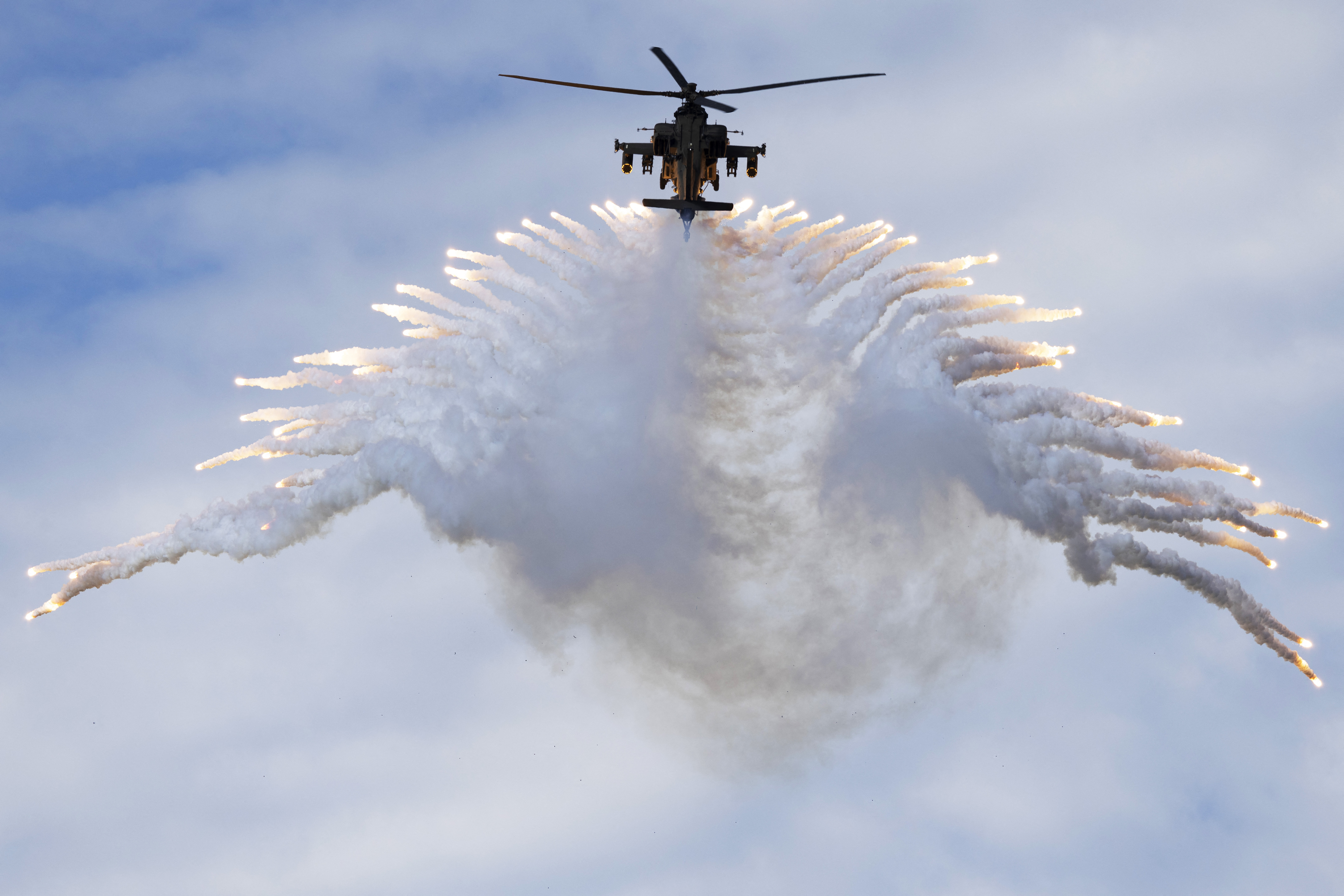
According to Defense News, the deal was at risk of being lost after the Ministry of Finance and the Ministry of Defense failed to agree on a source of funding, despite the United States granting Israel repeated extensions. After missing the original deadline on October 7, Israeli officials feared that the production share would be transferred to another foreign customer, which would mean delays in delivery and increased costs. Therefore, the government approved the budget source in an urgent phone vote, at the expense of another non-defense national program.
Magazine EDR On-Line confirmed that the agreement includes 12 helicopters of the Echo version, the latest version of the Apache, with deliveries set to begin in the early next decade. The Israeli Ministry of Defense stated that the action was part of a ten-year force-building plan, rather than a separate purchase imposed by a one-day crisis. This distinction is important because Israel is not just purchasing an off-the-shelf platform but reserving production, training, and maintenance capabilities for years.
What Does the AH-64E Add to the Israeli Army?
The AH-64E is a twin-engine, two-seat helicopter designed to operate in a dense fire environment. The system can carry up to 16 Hellfire missiles, 76 2.75-inch rockets, and a 30mm M230 chain gun with a stock of up to 1,200 rounds. These figures do not mean that the aircraft will always take off with its full payload, but they illustrate its ability to remain over the battlefield and switch ammunition types according to the target.
Most importantly for Israel is the networked communication via Link 16, and the helicopter's ability to operate within a manned and unmanned team, in addition to an open systems architecture that allows for software updates and integration of new devices. In Gaza or along the Lebanese border, these advantages can connect the helicopter to drones, command centers, and reconnaissance units, rather than making it an independent platform waiting for coordinates from a ground station.
However, the attack helicopter is not a magic solution. The urban environment reduces visibility and gives shoulder-fired missiles and heavy machine guns dangerous opportunities, while the density of cheap air defense alters low-flying flight calculations. Therefore, the true value of the Apache will be linked to the quality of intelligence information, the ability to identify targets before firing, and the presence of drones and reconnaissance that protect it from surprises.
Why Now When Delivery Is Far Off?
It may seem strange for Israel to agree in 2026 to a purchase that will not begin delivery until the early next decade. However, armies do not buy aircraft according to daily news schedules. Prolonged warfare consumes structures, engines, spare parts, flight hours, pilots, and technicians. Additionally, the wars in Gaza and on other fronts have shown that Israel needs precise and repeated firepower that can operate close to ground forces, not just jet fighters.
Militarily, the Apache provides a layer between heavy air power and ground units. The fighter is faster and has a longer range, but it is not always the most suitable tool for accompanying ground advances or hitting a moving target in a short time window. The helicopter can remain in the area longer, receive target updates, and use its gun or missiles according to the level of threat. This flexibility is why demand for the Apache continues even in the era of drones.
The Triad Capability Reveals the Limits of the Deal
I return here to the capability triangle that matters to any military personnel who has served in the region: equipment, training, and institutions. The equipment is present in the contract, but training will require new crews, trainers, simulators, ammunition stock, and flight hours. Institutions include maintenance chains, distribution of responsibility between air and ground forces, and protection of data that passes through networks. If the deal is reduced to the purchase of 12 flying structures, Israel will have paid a high price for a deficient capability.
Moreover, reliance on Link 16 and American systems does not end at delivery. Updates, spare parts, munitions, and technical support are tied to a political relationship with Washington. While Israel has an advanced defense industry and the ability to modify many systems, it does not have complete independence from the American supplier for a platform like the Apache. Here lies the usual Israeli paradox: a desire for operational decision-making freedom, with a deep reliance on an external supply chain.
The Regional Message and the American Dimension
The deal sends a message to adversaries that Israel is planning for a long ground war, not a short air operation. It also tells allies that American cooperation will remain central to building Israeli strength even when budgets are delayed or political priorities change. The Israeli Ministry of Defense described the agreement as part of a decade-long armament plan that includes platforms, munitions, and additional interceptors.
However, the message carries another aspect. Saving the deal at the last minute after diverting funds from a civilian program reveals that the defense budget is not limitless, even for Israel. Every dollar that goes to the Apache does not go to air defense, interceptors, border protection, or civilian investment. Therefore, the purchase of 12 helicopters should not be read as evidence of absolute superiority, but as a painful choice between competing needs.
Conclusion
Israel secured 12 AH-64E Apache helicopters and won a production window that was about to close. This is a real administrative and operational success. However, the deal alone will not resolve the ground warfare issue, will not eliminate the risks of drones and close air defense, and will not grant Israel independence from the United States. The actual value will emerge when the aircraft turn into trained squadrons, information networks, continuous maintenance, and clear rules of engagement. The structural contradiction remains as it is: Israel wants the freedom to use force in the region, but its ability to maintain that force is tied to decisions, budgets, and a production chain that lies beyond its borders.
Sources
- Defense News, October 16, 2026, Israeli Apache Deal and Last American Deadline
- EDR On-Line, Agreement Between the Israeli Ministry of Defense and the Pentagon for 12 Apache Helicopters
- Israeli Ministry of Defense, Statements from the Minister of Defense and the Director General Regarding the Force-Building Plan and the Agreement
Israel signed a deal on October 15, 2026, to purchase 12 AH-64E Apache helicopters to enhance its ground warfare capabilities. This procurement is part of a ten-year military buildup plan and reflects Israel's reliance on U.S. military support. The deal was critical to secure production slots and maintain operational pressure amid financial negotiations.
- Israel signed a deal to purchase 12 AH-64E Apache helicopters on October 15, 2026.
- The deal was crucial for maintaining operational pressure and securing production slots from the U.S.
- The helicopters are part of a long-term military buildup plan over ten years.
- The Apache helicopters will enhance Israel's ground warfare capabilities and integrate with UAVs and command centers.
- The procurement reflects Israel's reliance on U.S. military support and funding.