
China's DF-27 Puts Northern Australia Inside the 2026 Target Set
 Marcus Chen
China's DF-27 Puts Northern Australia Inside the 2026 Target Set
The number that matters is 5,000 to 8,000 kilometers. That is the range the U.S. military attributes to China's DF-27 intermediate-range ballistic missile, and it is enough to change Australia's old comfort with distance. A new Lowy Institute warning, published on June 15, argues that China can already put northern Australia at risk from South China Sea positions and that the threat grows as the Rocket Force, the People's Liberation Army Navy, and the bomber force add longer reach.
This is not a prediction that Beijing is about to fire on Australia. It is a capability problem. Capability is what planners have to buy insurance against, because intent can change in a weekend. If a Taiwan crisis pulls U.S. forces into the fight, the bases that let those forces operate from Australia become part of the order of battle whether Canberra likes the phrase or not.
The Range Problem Is No Longer Theoretical
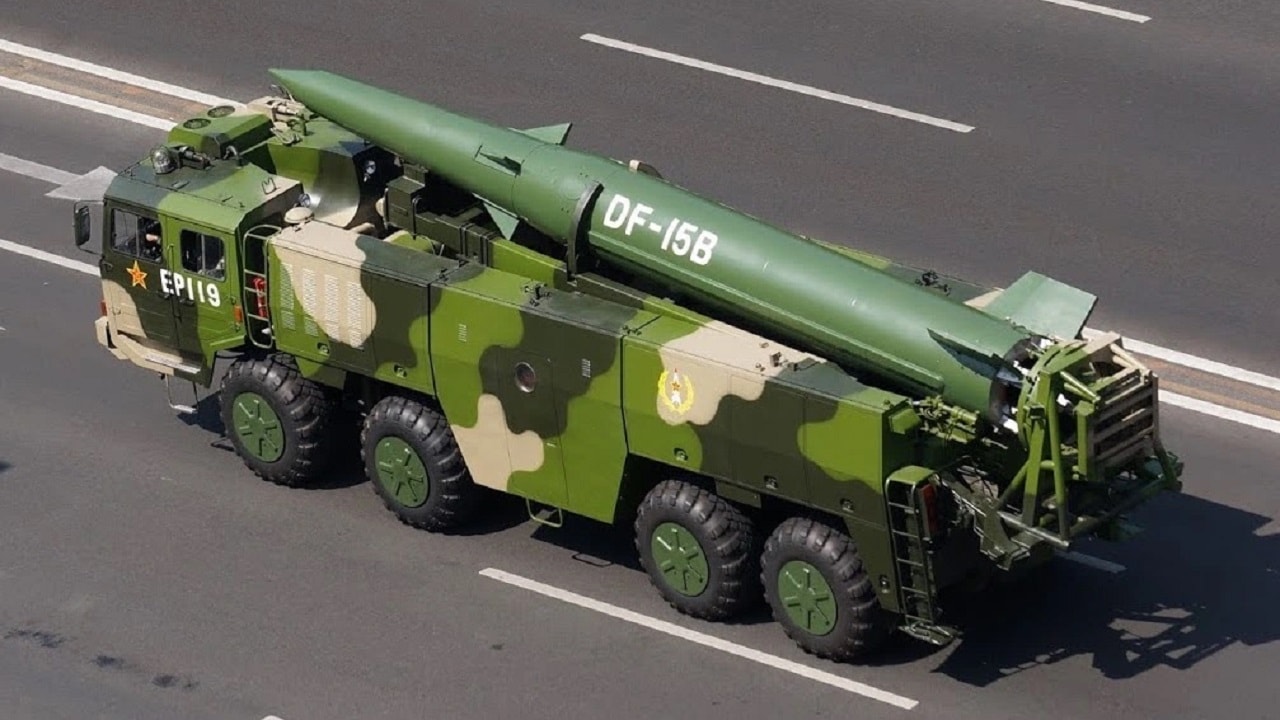
Lowy's public summary says the direct strike threat is expanding as China fields missiles from ships, submarines, and land-based systems. AFP's report on the study highlighted three delivery baskets: missiles fired from Chinese territory, missiles launched from South China Sea outposts, and future conventionally armed intercontinental-range systems. The DF-27 sits in the middle of that basket. At 5,000 kilometers it can reach far beyond the first island chain. At 8,000 kilometers it makes the map look very different for Darwin, RAAF Tindal, and any logistics node supporting U.S. operations from the north.
The operational point is simple. Australia has treated depth as a form of defense. China's missile force is turning depth into a timer. A missile launched from the South China Sea does not have to destroy Australia. It only has to force commanders to disperse aircraft, harden fuel farms, move munitions, complicate submarine support, and spend interceptors on base defense instead of sea control.
That is why the word "strike" can be misleading. The first salvo in a Western Pacific war would not need to be a city attack. It would likely be an attempt to blind, delay, and suppress the allied network. Airfields, ports, communications nodes, undersea cable landing points, and fuel storage are the useful targets. Northern Australia is not a sanctuary if it is hosting the aircraft, submarines, tankers, surveillance platforms, and ammunition that keep U.S. forces in the fight.
AUKUS Solves The Wrong Clock
Australia's answer to the China problem is still heavily weighted toward AUKUS nuclear-powered submarines. The submarines matter. A conventionally armed SSN can patrol at distance, threaten Chinese surface and submarine forces, and hold the sea lanes at risk. But the timeline is brutal. The first transferred Virginia-class boat is supposed to arrive in the early 2030s. The Australian-built follow-on class comes later. That is a strategic capability arriving after the period in which the regional missile problem is already maturing.
Gareth Evans' recent criticism of AUKUS was political, but one part of it overlaps with hard naval arithmetic: the U.S. and U.K. submarine industrial bases are already under pressure. Washington needs its own Virginia-class production rate to recover before it can spare boats without weakening the U.S. Navy. London has its own schedule and cost strain. Anyone who has served around ship maintenance knows the difference between a signed communique and a hull that can deploy.
The Lowy-linked reporting points to an even sharper comparison. China has roughly nine nuclear-powered attack submarines now and could approach 25 by 2035. Australia may have only two by then. Even if those numbers move, the slope is the problem. Beijing is adding missile reach and undersea endurance faster than Canberra can add survivable counters.
Base Defense Is The Missing Bill
The unglamorous answer is base defense, dispersal, and munitions depth. Australia needs more hard stands, more fuel distribution points, more decoys, more runway repair capacity, and more local missile defense. Those investments do not photograph as well as an SSN, but they decide whether allied aircraft can generate sorties after the first night.
RAAF Tindal is the obvious case. It is valuable because it sits closer to the fight than southern Australian bases, but that same geography makes it easier to target. Darwin's port and fuel infrastructure matter for the same reason. HMAS Stirling in Western Australia is less exposed to the South China Sea missile arc than Darwin, but it is becoming more important as the submarine support hub for AUKUS. A base that becomes more useful also becomes more targetable.
There is a budget lesson here. Long-range strike cannot be the whole answer to long-range strike. If Australia buys exquisite offensive systems while leaving bases brittle, it is building a force that looks good in a briefing and folds in the first week of a missile campaign. The U.S. has the same problem across Guam, Japan, and the Philippines. Australia should learn from that instead of importing it.
The Taiwan Scenario Pulls Australia In
Lowy is careful to frame the issue as capability, not intent. That is the right caveat. But the most plausible pathway to Australian exposure is not a bilateral China-Australia war. It is a Taiwan conflict that becomes a regional fight. In that scenario, the question for Beijing is not whether Australia is formally at war on day one. The question is whether Australian territory enables U.S. operations.
If the answer is yes, China has incentives to threaten or suppress those nodes. It may use cyber attacks first. It may use maritime pressure, economic coercion, or demonstrations of missile reach. But the military logic points in one direction: any base that extends U.S. persistence inside the second island chain becomes part of China's targeting problem.
That should change Australia's planning language. "Homeland defense" and "forward operations" are no longer separate boxes. Northern Australia is both rear area and front-line infrastructure. The missile math does not respect the distinction.
What Canberra Should Admit
The answer is not panic, and it is not pretending AUKUS is enough. Canberra should admit three things. First, the DF-27 and follow-on systems make direct strike a live planning problem in 2026, not a 2035 abstraction. Second, U.S. access to Australian bases carries a cost that has to be funded in concrete, interceptors, fuel resilience, and command redundancy. Third, submarine acquisition is not a substitute for surviving the opening phase of a regional war.
The geography changed because the weapons changed. Australia is still far from China on a schoolroom map. It is not far from China's target set anymore.
China's DF-27 missile system poses a direct strike threat to northern Australia, with capabilities to reach significant distances, impacting military operations and logistics. The threat is expected to mature by 2026, necessitating a reassessment of Australia's defense strategy. The People's Liberation Army Rocket Force is expanding its missile capabilities, which could complicate U.S. operations in the region.
- China's DF-27 missile has a range of 5,000 to 8,000 kilometers.
- Northern Australia is at risk from Chinese missile capabilities.
- The threat to Australia is not just theoretical but a live planning problem for 2026.
- China's missile force is expanding its reach and capabilities.
- Australia's current defense strategy may not adequately address the evolving threat.