
China’s first aircraft carrier forms ‘evolving pattern’ of voyages in disputed Asian seas
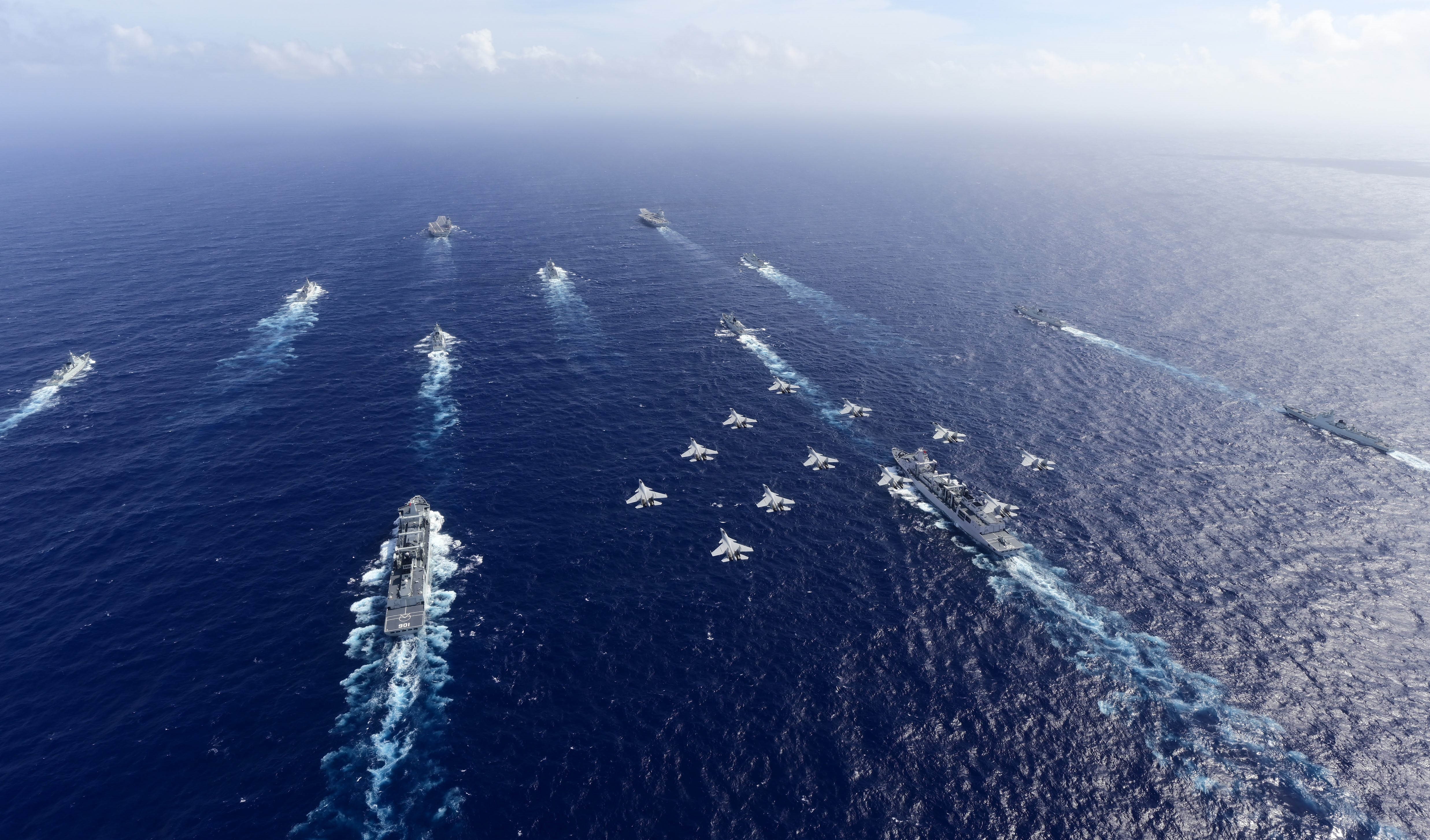
NEW TAIPEI CITY, Taiwan— China’s first aircraft carrier, heavily watched around East Asia as an emblem of Beijing’s growing naval power, had made at least six faraway deployments since its completion 14 years ago.
It made another in October.
So frequent are the Chinese aircraft carrier CNS Liaoning’s publicly visible voyages that military analysts presume that the People’s Liberation Army Navy has fixed a routine that will let the relatively aged carrier help train and equip the fleet’s two more modern ones.
Still, the carrier group’s passages not far from Taiwan, Japan and the Philippines – places that have political or maritime sovereignty disputes with China – have raised alerts.
“The current voyage by the Liaoning appears to be part of an established evolving pattern of far-seas training deployments,” said Carl Thayer, an Asia specialist and emeritus professor at the University of New South Wales in Australia.
“The Liaoning demonstrates China’s naval military capability and political influence through its constant presence in China’s near and far seas,” he said.
The aircraft carrier led a naval task group to the western Pacific Ocean on Oct. 14 for training, the Chinese People’s Liberation Army Navy said via China’s official Xinhua News Agency. Citing the navy, Xinhua called the expedition a “drill” and part of an annual routine training plan aimed at “testing and improving combat readiness.”
China’s state-controlled Global Times news outlet called the Liaoning’s October voyage its second in the distant seas and hailed the carrier’s long-term progress as going from a “coastal pathfinder” to a “far-sea blade.”
The vessel, categorized as a “short take-off but arrested recovery” aircraft carrier, measures about 305 meters (1,000 feet) long and with flight deck width up to 75 meters.
As of Oct. 23, the carrier group had done exercises near the southernmost Japanese outlying islands and was headed for the South China Sea near the Philippines, according to local media reports in East Asia. The reports said it went with two large destroyers and a guided-missile destroyer.
The deployments are meant to show China’s two more-modern carriers, the CNS Fujian and the CNS Shandong, how to adopt new technology, experts said.
The nine-year-old Shandong carrier would learn about “new and emerging” technology as the older Liaoning tests flight operations, sensors and modern aircraft, said Collin Koh, a senior fellow at Nanyang Technological University in Singapore.
“The Shandong aircraft carrier is basically an improved version of the Liaoning,” Koh said. He said the current deployment was probably “meant maybe to validate certain technologies.”
Being the oldest of China’s three carriers, the Liaoning would “not be the frontline reaction force if there were a contingency”, said Alexander Huang, chairman of the Council of Strategic and Wargaming Studies in Taipei.
China’s maritime rivals have taken notice.
The Taiwan Ministry of National Defense said in mid-October it was monitoring the possibility of large-scale Chinese military exercises nearby as an outcome of the Liaoning’s movements.
China claims self-ruled Taiwan as part of its territory and has not ruled out the use of force to take it. The PLA has stepped up military activity in waters near the island since 2022.
In the South China Sea, Beijing has already shored up its sovereignty claims over the past two decades by building artificial islands, often for military use. Brunei, Malaysia, the Philippines and Vietnam dispute parts of the sea with China.
In Tokyo, which disputes a group of uninhabited islets with Beijing, the defense ministry said it had seen fighter aircraft taking off and landing from the Liaoning carrier 250 kilometers (155 miles) south of Japan’s Ishigaki Island.
The Chinese carrier group launched and recovered aircraft in Japan’s maritime exclusive economic zone during its deployment, said Colin Karotam, senior resident fellow with the Defence Strategy Program at the Australian Strategic Policy Institute. That activity is “uncommon,” Karotam said, though it may have taken place before.
The Chinese carrier group’s activities also began shortly before the Keen Sword 27 U.S.–Japan military exercises launched on Oct. 19. The exercises on Ishigaki are biennial and include the Philippines among other nations. China sees the United States, a treaty ally of both Japan and the Philippines, as a military rival in Asia.
Xinhua said the Liaoning’s movements in October comply with international law and “are not directed at any specific country or target.”
CNS Liaoning conducted naval training exercises in the Western Pacific Ocean on October 14, 2023, as part of a routine deployment. The carrier group, which included two large destroyers and a guided-missile destroyer, aimed to enhance combat readiness and demonstrate China's naval capabilities. These movements have raised alerts among regional military observers, particularly near Taiwan and Japan.
- CNS Liaoning conducted a naval task group exercise in the Western Pacific on October 14, 2023.
- The carrier group included two large destroyers and a guided-missile destroyer.
- The exercise is part of an annual routine training plan to improve combat readiness.
- The Liaoning's movements have raised alerts among regional military observers, particularly near Taiwan and Japan.
- China's naval activities are seen as a demonstration of its growing military capabilities.