
China's New Carriers Have an Undersea Blind Spot US Submarines Can Exploit
 Marcus Chen
China's New Carriers Have an Undersea Blind Spot US Submarines Can Exploit
The new CSIS report on defeating China's carrier force lists five ways to hurt a carrier group: land-based strike networks, satellite-fed long-range air attack, cyber and electromagnetic assault, drone swarms, and submarine ambush. According to the report, covered this week by SCMP, the fifth element is the one that should keep PLAN planners awake. US attack submarines operating in the western Pacific remain the single most credible threat to China's rapidly expanding carrier fleet — and the gaps in the PLAN's undersea detection and tracking are exactly where that threat lives.
The Gap Is Real, and It's Specific
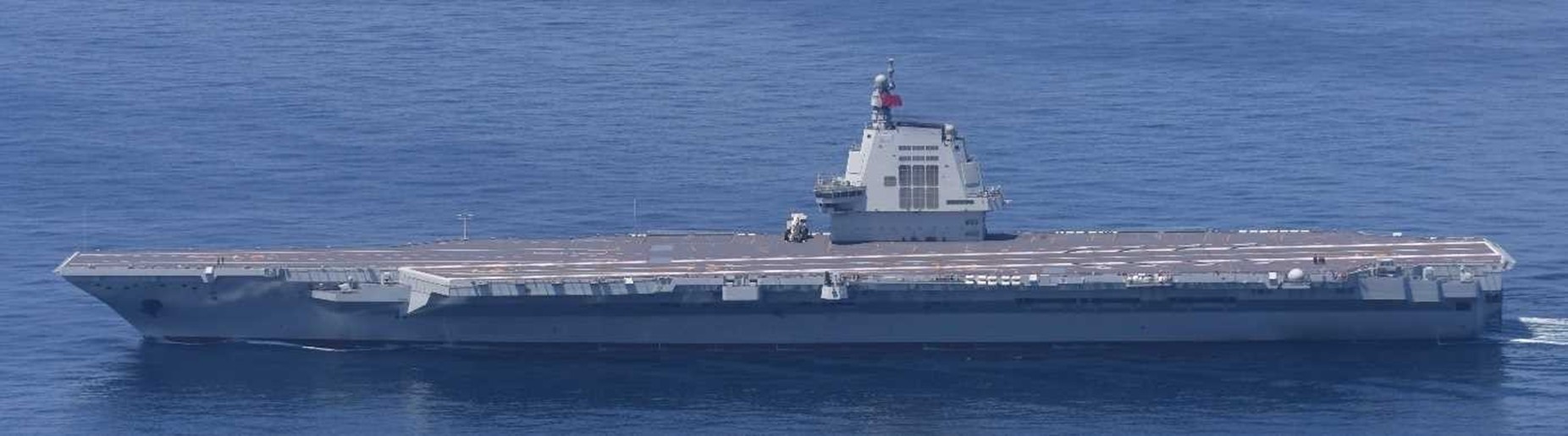
Anyone who has screened a carrier knows the undersea problem is not about one sensor — it's about the whole chain. The US Navy can fuse SOSUS-style fixed arrays, P-8 patrol aircraft, SSN pickets and towed-array escorts into a single picture. China is assembling that chain from a much thinner base. The PLAN operates fewer than a dozen nuclear-powered attack submarines, all Type 093-series boats, and most of its ASW burden still falls on surface escorts with hull-mounted sonar. The maritime patrol leg is only now maturing: the upgraded Y-9, with a new nose-mounted AESA radar, a smaller tail-mounted magnetic anomaly detector and up to a hundred sonobuoys, reached initial operational capability in South China Sea drills only this summer — years after the US fielded the P-8A at scale.
That matters because a carrier group is a giant acoustic billboard. The Fujian displaces roughly 80,000 tons and makes noise at every knot. A modern US SSN at patrol speed runs quieter than the ambient sea state, which means Chinese detection ranges collapse to a few tens of kilometers — often less than the torpedo range of the boat doing the hunting. The CSIS report's point is straightforward: against a force that cannot build an undersea picture, the submarine is not a harassment tool. It is the strike platform.
Beijing Has Already Read This Report
What makes this more than a think-tank exercise is that the PLA Navy is spending real money on the answer. The Fujian, commissioned in November 2025, carries a six-tube 324mm lightweight torpedo launcher where its predecessors mounted depth-charge launchers. Chinese military media, citing the June edition of Defence Review, identify it as an anti-torpedo torpedo (ATT) system — the first hard-kill torpedo defense fitted to any carrier in the world — and frame it explicitly as a response to the "severe threat" posed by US Seawolf-class and SSN(X)-class submarines. Beijing demonstrated an ATT prototype in 2016, a decade after the US Navy's own ATTDS program collapsed. The message is not subtle: the PLAN believes heavyweight torpedoes, not anti-ship missiles, are the most dangerous thing pointed at its carriers.
The July 6 test of a submarine-launched strategic missile deep into the South Pacific showed the same thinking from the other side of the ledger. Whatever one makes of the diplomatic fallout — Pacific Island Forum ministers failed to agree on a joint response in early August — the operational point is that Beijing is building confidence in long-range undersea operations at the same time it is hardening its carriers against undersea attack.
The Hard Part Nobody Advertises
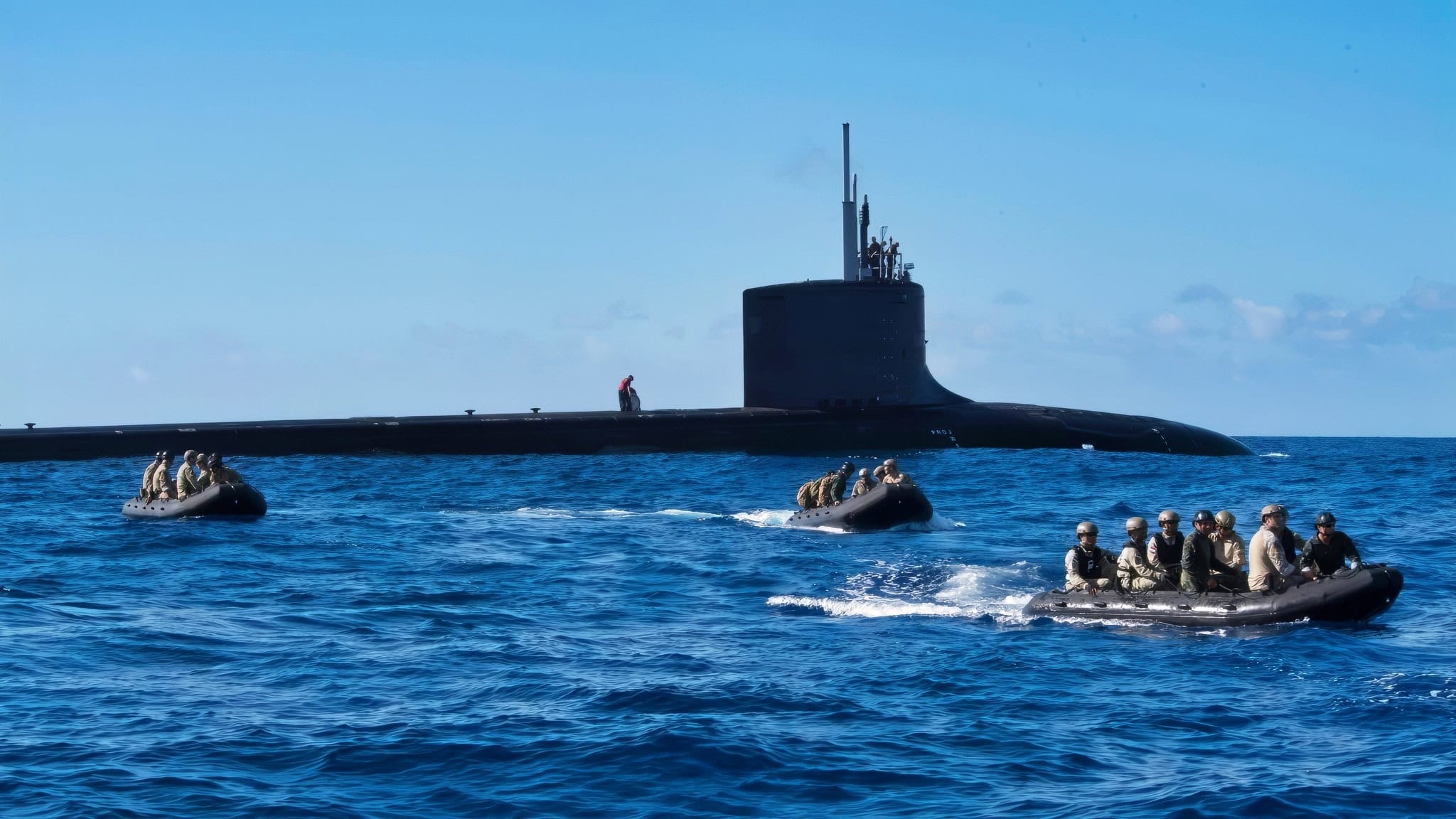
But here is the part of the cost-imposition math that cuts both ways. A Mk-48 ADCAP has an effective range of roughly 40 kilometers, and a carrier group transits at 25 knots or better. To land a shot, a submarine has to get ahead of the group, inside the escort screen, into the baffles — which means penetrating a layered ASW defense that includes towed-array destroyers, dipping-sonar helicopters and MAD-equipped patrol aircraft. That is the hardest shot in naval warfare, and it has been executed successfully in exercises far less contested than a Taiwan contingency would be. The report's authors know this; that is why they call it cost-imposition rather than a guaranteed kill.
There is a second constraint the report only glances at. The US Navy cannot surge submarine numbers any faster than China can build ASW capacity. The same industrial base that is struggling to deliver Virginia-class boats on schedule — the problem at the center of the AUKUS debate — is the base that has to keep a western Pacific SSN presence credible over a long conflict. Torpedo magazine depth, crew rest cycles and maintenance availability all cap how many boats can actually sit in the Philippine Sea on any given day. The paper threat is real; the sustained presence is the hard part.
Bottom Line
So the honest judgment is this: the CSIS report is right about where the vulnerability sits, and Beijing is already spending to close it. The Fujian's ATT system is a band-aid on a doctrine gap — no hard-kill torpedo defense has ever been proven against a spread of heavyweight torpedoes at fleet scale, and a carrier that cannot hear the submarine still cannot defend against what it cannot localize. But the US side has no free lunch either, because submarine warfare rewards patience and industrial output, not cleverness at the podium.
For now, the US attack submarine force is the only American capability that can reach a Chinese carrier group before that group reaches the first island chain. Whether the Fujian's torpedo defense actually works is the most important unanswered question in the western Pacific — and it is a question no exercise will answer until someone fires a real heavyweight torpedo in anger.
US attack submarines threaten China's carrier fleet due to significant gaps in the PLAN's undersea detection capabilities. The Fujian carrier, commissioned in November 2025, features a new anti-torpedo torpedo system as a response to this threat. However, the effectiveness of this system against heavyweight torpedoes is still unproven, raising concerns about the carrier's vulnerability in the Western Pacific.
- China's Fujian carrier has a new anti-torpedo torpedo system to counter US submarine threats.
- US attack submarines are the most credible threat to China's carrier fleet.
- China operates fewer than a dozen Type 093-series nuclear-powered attack submarines.
- The US Navy has superior undersea detection capabilities compared to the PLAN.
- The effectiveness of the Fujian's new defense system against heavyweight torpedoes remains untested.