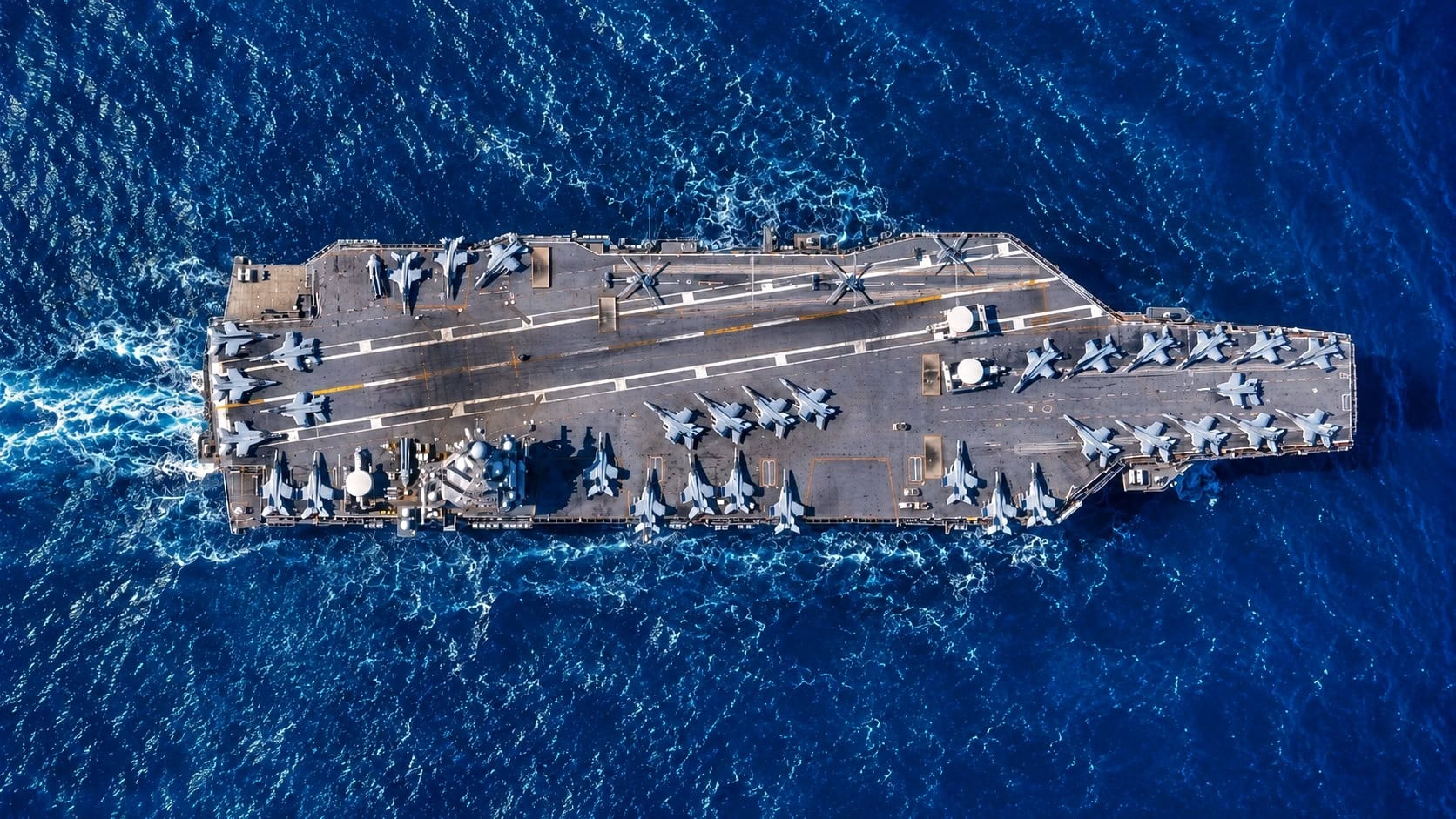
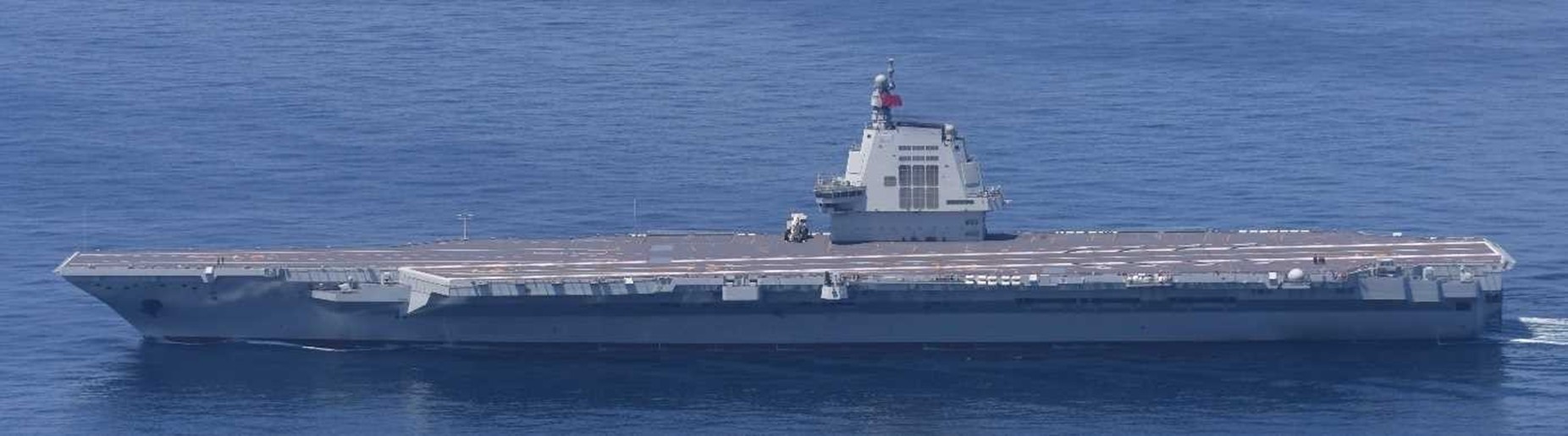
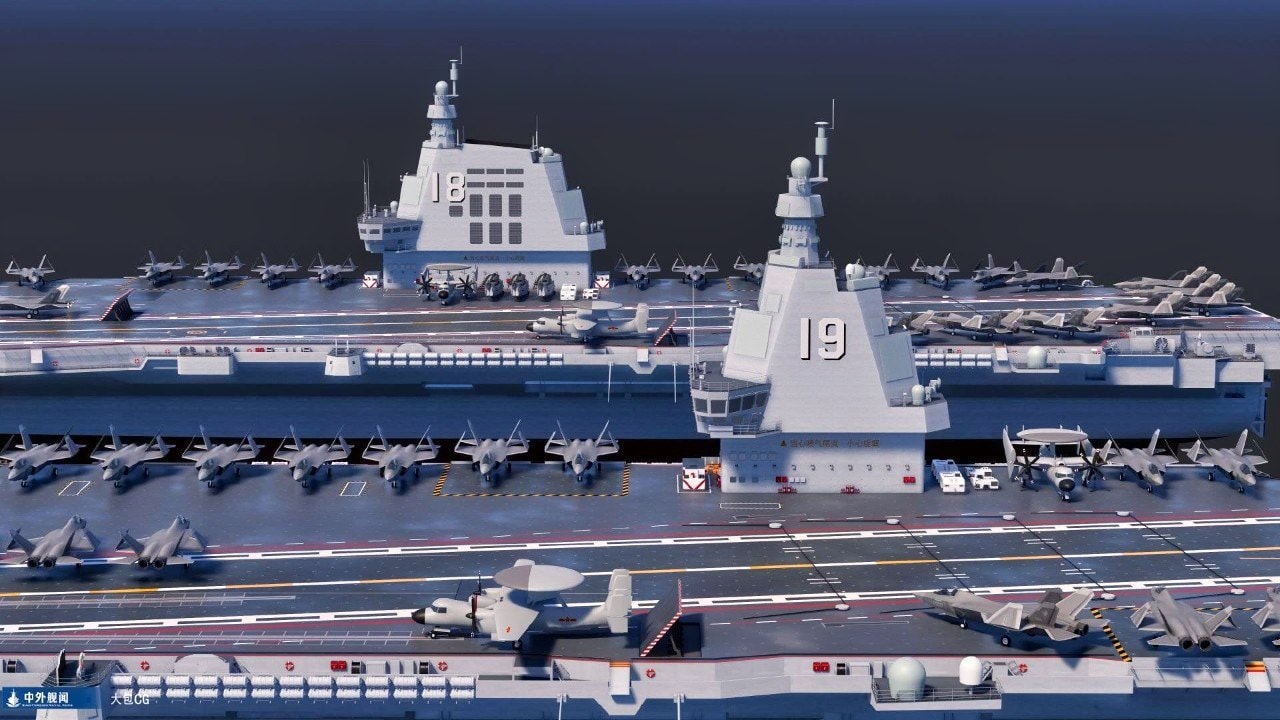
Fujian's importance lies less in tonnage than in what a catapult removes from the equation. On the ski-jump decks of Liaoning and Shandong, a J-15 buys its takeoff run with fuel and ordnance, and the group has no fixed-wing airborne early warning at all. A catapult launches aircraft at full load and, more consequentially, launches types a ramp cannot: the KJ-600 gives a PLA Navy task group organic wide-area radar coverage for the first time, extending detection and targeting well beyond what a Z-18J helicopter and shipborne sensors can provide. Pairing that with the J-35 and the J-15DT electronic warfare variant gives the ship a mixed wing structured much like a US carrier air wing, which is a change in kind rather than in degree.
The technical claim underneath is also worth separating from the operational one. China moved directly from ski-jumps to electromagnetic catapults, skipping steam entirely, and by September 2025 had shown three aircraft types launching and recovering - including the first EMALS launch of a stealth fighter by any navy. That sequencing was faster than most outside assessments expected, and it happened without the publicly visible reliability troubles that dogged USS Gerald R. Ford's catapults and weapons elevators. What is not yet demonstrated is sustained sortie generation: how many aircraft the ship can cycle per day, whether all three catapults can be run concurrently under load, and how a conventional steam plant supplies the electrical demand of continuous launches. Those figures have not been released, and the released footage has consistently shown single-catapult operations.
A reasonable near-term reading is that Fujian is a capability the PLA Navy now possesses but has not yet fully worked up. Commissioning at Sanya places it with the Southern Theater Command, closest to the South China Sea and to contingencies south and east of Hainan, and it will spend a period in trials and air wing qualification before deploying as a formed strike group. Even then, a conventionally powered carrier remains tied to replenishment in a way a nuclear one is not, and a single such hull cannot maintain continuous presence. The more consequential question is what Fujian teaches: shipyard imagery already points to a nuclear-powered successor, and the deck procedures, catapult experience and aircrew pipeline being built now are the inputs to that ship rather than the end of the program.