
China’s secretive spaceplane recaptures its own satellite
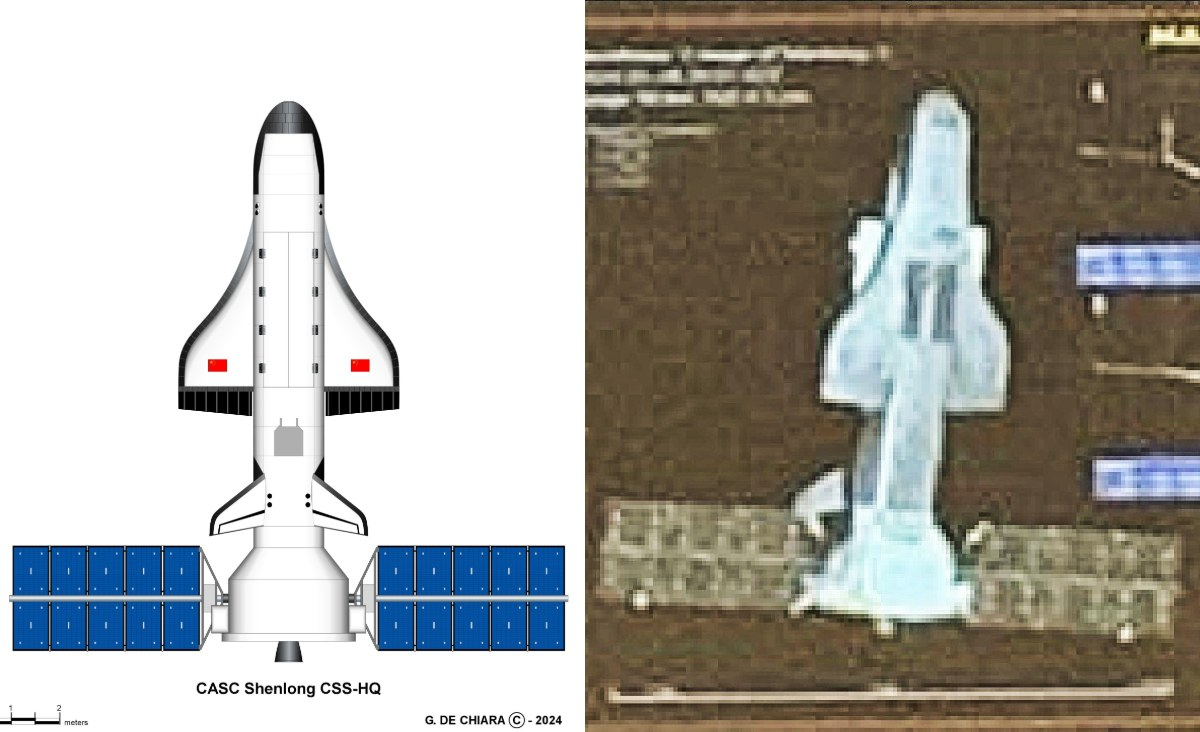
China’s spaceplane has spent the past three months releasing, retrieving, and then recapturing the same small satellite in orbit, according to a timeline astrophysicist Jonathan McDowell posted Sept. 23 based on U.S. Space Force tracking data. It’s the clearest look yet at what the vehicle, known unofficially as Shenlong, has been doing during its fourth trip to orbit.
According to McDowell, Shenlong released the satellite, cataloged as object 2026-024H, on June 21 and brought it back aboard around July 12, likely using a robotic arm. In late August, the spaceplane released the same satellite a second time and moved several thousand kilometers away. It then closed back in for a new rendezvous on Sept. 10 and recaptured the satellite again on Sept. 13. U.S. tracking systems briefly logged what looked like a second object during this period, but McDowell said he believes that was a duplicate catalog entry for the same satellite rather than a new one.
China has never officially named the vehicle or released its technical specifications. “Shenlong,” meaning “Divine Dragon,” is the label trackers and space enthusiasts have settled on based on years of outside observation, since Beijing has said almost nothing about the program directly. The vehicle launches on a rocket and lands on a runway, a configuration that draws frequent comparisons to the U.S. Space Force’s X-37B, another spaceplane whose missions are also largely classified.
This is not the first time Shenlong has repeated this pattern. On its second mission, which ran from August 2022 to May 2023, observers tracked the spaceplane deploying an object and recovering it more than once. Its third mission, spanning December 2023 to September 2024, included a similar sequence. The current flight launched Feb. 6 from the Jiuquan Satellite Launch Center, and the tracking firm LeoLabs first detected the newly released satellite in June, noting the behavior matched what Shenlong had done on earlier missions.
The maneuvers Shenlong keeps practicing, closing in on an object, grabbing it, and letting it go again, fall under a category analysts call rendezvous and proximity operations. Those skills could support satellite servicing, but the same techniques could also be used to inspect, disable, or capture another country’s satellite without permission, which is why Western analysts track each instance closely.
The Secure World Foundation, a space policy nonprofit, has noted that the U.S. X-37B has never approached or rendezvoused with another object in orbit during its public missions and generally operates below the altitudes where most working satellites sit, a contrast that has fueled continued attention on Shenlong’s behavior.
Content preview only. Full article available at source. View Full Article
China's spaceplane Shenlong has been actively releasing and recapturing a satellite in orbit since February 6, 2023, with notable activities occurring on June 21, July 12, and again in September. These maneuvers, which involve rendezvous and proximity operations, have raised concerns among Western analysts regarding potential military applications. The operations are tracked by U.S. Space Force and have been confirmed by astrophysicist Jonathan McDowell.
- China's spaceplane Shenlong has recaptured the same satellite multiple times in orbit.
- The satellite was released on June 21 and recaptured on July 12, with further operations in August and September.
- The maneuvers performed by Shenlong could support satellite servicing or military operations against other satellites.
- The vehicle's behavior is being closely monitored by Western analysts due to its potential military implications.
- Shenlong's operations are similar to those of the U.S. X-37B spaceplane.