
China's Taiwan Patrols Turn the Coast Guard Into a Blockade Tool in 2026
 Marcus Chen
China's Taiwan Patrols Turn the Coast Guard Into a Blockade Tool in 2026
A Chinese coast guard patrol east of Taiwan has done something more important than add another ship to a crowded map. It has put Beijing's maritime law-enforcement forces on the side of Taiwan that is hardest for the island to defend and easiest for commercial shipping to use as an alternate route.
The Patrol Is About Access, Not Just Presence
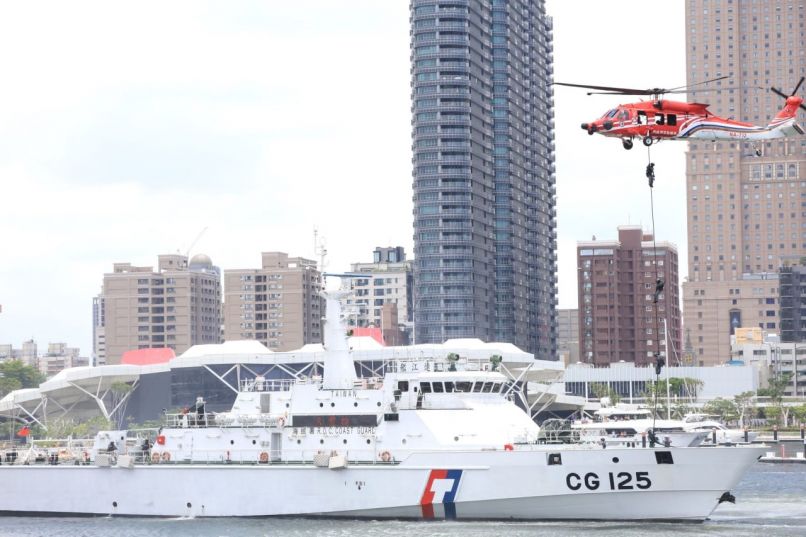
Reports published on November 1 by The Japan Times and other outlets said Taiwan accused China of harassing vessels during a patrol off its east coast. The same reporting described Taipei shadowing the Chinese ships. Chinese state media separately reported that the China Coast Guard conducted patrols east of Taiwan, while Beijing's maritime forces have also been active around Huangyan Dao in the South China Sea.
The location matters. Most public discussion of a Taiwan blockade starts on the west coast, where the Taiwan Strait is narrow and the People's Liberation Army can bring shore-based missiles, aircraft, and naval forces to bear. Taiwan's east coast is different. The Pacific side offers deeper water and a route toward Hualien and Taitung. It is also where Taiwan expects to preserve military and commercial access if the western approaches are under pressure.
A patrol east of the island therefore tests a practical question: can China make the waters around Taiwan feel controlled before it fires a shot? If merchant captains begin slowing, rerouting, or waiting for clearance, Beijing has gained leverage without announcing a blockade.
Why the Coast Guard Is the Right Instrument
A People's Liberation Army Navy destroyer would create an unmistakable military crisis. A coast guard cutter creates ambiguity. Beijing can describe the operation as routine administration, while Taiwan must decide whether to respond with its own coast guard, navy, or aircraft. Each choice carries a different escalation cost.
That ambiguity is not a weakness. It is the operating concept. A coast guard patrol can inspect, warn, shadow, or obstruct vessels while remaining below the threshold that would automatically trigger a U.S. military response. It also gives China a way to make a future quarantine look like an extension of existing law-enforcement practice rather than the opening move of a war.
The hardware is less important than the endurance. A blockade is not a single missile salvo; it is a schedule. The force has to maintain ships on station, rotate crews, coordinate with maritime militia and naval units, and keep surveillance over the approaches. Coast guard ships are built for long patrols and can sustain pressure in places where a navy would be politically exposed.
East-Coast Pressure Complicates Taiwan's Defense Plan
Taiwan can track a small number of patrol ships. The harder problem is deciding what to protect when the patrols become routine. A coast guard presence near the east coast threatens shipping, ports, offshore infrastructure, and the movement of military supplies at the same time. Taipei must spend scarce surveillance and escort capacity on a problem that is deliberately designed to look civilian.
This is where the geography turns into arithmetic. Taiwan's western flank is already the obvious focus for air-defense and anti-ship missile batteries. Adding a persistent eastern patrol does not require China to close every route. It only requires Beijing to force Taiwan to divide sensors, aircraft, escorts, and command attention between two maritime faces.
Recent coverage in the South China Morning Post has also linked the patrol activity to wider Chinese maritime pressure around Taiwan and to the question of whether Beijing's 2027 military milestone is becoming a readiness deadline in Washington. The point is not that a 2027 conflict is inevitable. The point is that the infrastructure for coercion is being assembled in increments that are individually deniable.
The Political Effect May Outrun the Military Effect
China does not need to stop every ship to create a crisis. It needs insurers, ship operators, and foreign governments to ask whether a vessel can safely pass through waters that Beijing claims to administer. That is a cheaper form of sea denial than deploying a carrier strike group, and it is harder to answer with a conventional show of force.
Taiwan's decision to shadow the patrols is therefore necessary but limited. It demonstrates that Taipei will contest the activity, yet it also exposes the island to a repeated cycle of close encounters. Every encounter creates the possibility of collision, miscalculation, or a demand that Taiwan either back down or escalate.
China is not practicing a blockade only when it closes a lane. It is practicing one when it teaches everyone else to treat access as conditional.
What Washington Should Measure
Washington should stop measuring these operations by ship count alone. The more useful indicators are patrol duration, distance from Taiwan's ports, interaction with commercial vessels, coordination with aircraft and naval units, and the time required for Taiwan to respond. Those figures reveal whether a patrol is a headline event or the rehearsal of a standing control regime.
The United States also needs an answer that does not automatically turn every coast guard encounter into a naval confrontation. Better maritime-domain awareness, preplanned escort arrangements, allied legal support, and resilient commercial routing would make coercion harder without handing Beijing an easy escalation narrative. Japan and the Philippines matter here because the eastern approaches are connected to the wider Pacific operating picture, not isolated from it.
The latest patrol is not proof that China can seal Taiwan's waters tomorrow. It is proof that Beijing is learning how to impose costs before attempting to seal them. That distinction matters. If Taiwan and its partners wait for a declared blockade, the most important part of the blockade may already be working.
Sources
- The Japan Times, November 1, 2026, reporting Taiwan's claim that China harassed shipping during an east-coast patrol.
- South China Morning Post, November 1, 2026, reporting expanded maritime patrol activity around Taiwan.
- Taipei Times, October 31, 2026, analysis of China's military purge and the possible effect on near-term war risk.
- China Military Online, October 30, 2026, report on PLA combat-readiness patrols around Huangyan Dao.
Chinese coast guard patrols east of Taiwan harassed vessels and shadowed Taiwanese ships in November 2026. This activity threatens Taiwan's shipping routes and military supply lines, creating ambiguity in China's maritime operations. Taiwan's response involved shadowing the patrols, highlighting the ongoing contest for control in the region.
- China's coast guard conducted patrols east of Taiwan in November 2026.
- Taiwan accused China of harassing vessels during these patrols.
- The patrols threaten Taiwan's shipping and military supply routes.
- China aims to create ambiguity in its maritime operations to avoid direct military confrontation.
- Taiwan's response involves shadowing Chinese patrols, indicating a contest for control.