
Chinese Navy's 599 Ship and 33 Landing Ships Pass Through Miyako Strait: Southwest Defense Line in May 2026
 Tanaka Takashi
Chinese Navy Ship 599 and Landing Ship 33 Pass Through Miyako Strait, May 2026 Southwest Defense Line
On May 22 at 3 PM, a P-3C belonging to the 5th Air Wing in Naha captured a combination of two vessels approximately 110 kilometers southwest of Kume Island, which carries more implications than the numbers suggest. According to the announcement by the Ministry of Defense's Joint Staff Office on May 25, the Chinese Navy's Type 054A frigate number 599 and Type 075 landing ship number 33 advanced southeast in the same waters and subsequently passed between Okinawa Island and Miyako Island heading towards the Pacific Ocean.
Significance of the Passage Accompanied by a Landing Ship
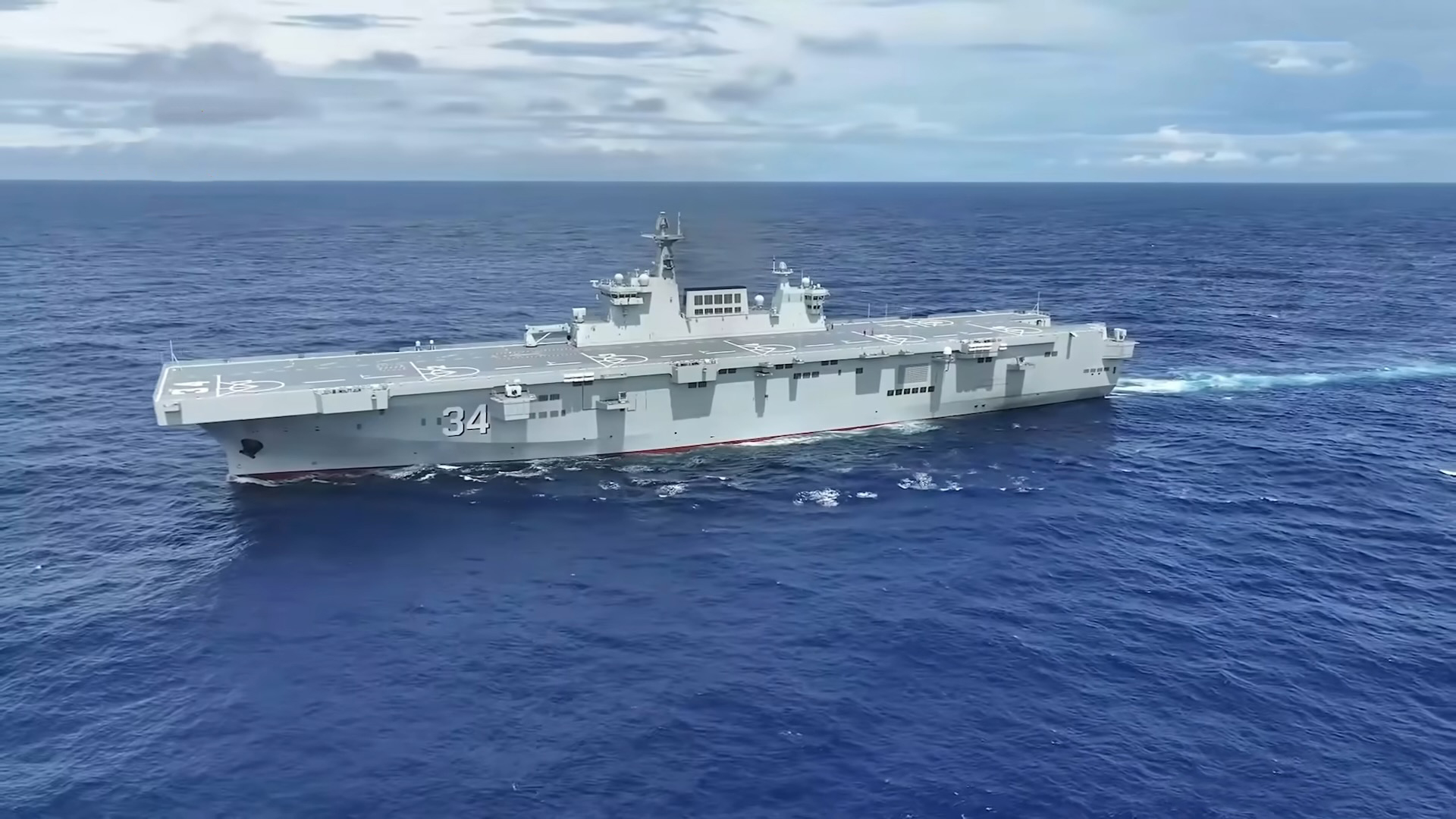
The Type 054A is the mainstay frigate of the Chinese Navy, responsible for air defense, anti-submarine, and surface escort missions. While ship number 599 is not a new vessel, the issue is not the performance of a single ship but the fact that it was paired with a Type 075 landing ship to utilize the opening of the Nansei Islands. The Type 075 is generally regarded as an amphibious assault ship, featuring a full-length flight deck, helicopter operation capabilities, and the ability to transport landing troops and equipment. This should be viewed not only as a training exercise for deployment beyond the first island chain but also as a broader strategic maneuver.
I believe it is an overestimation to interpret this as immediate preparation for an amphibious operation against Japan. It is necessary to treat capabilities and intentions separately. However, in terms of capabilities, the situation is different. If landing ships regularly operate with escort vessels, passing from southwest of Kume Island through the Miyako Strait, the Japan Maritime Self-Defense Force (JMSDF) will have to continuously monitor not only surface combatants but also the deployment of large transport forces on the Pacific side.
Continuity with the First Confirmation of the Jiangkai III on May 19
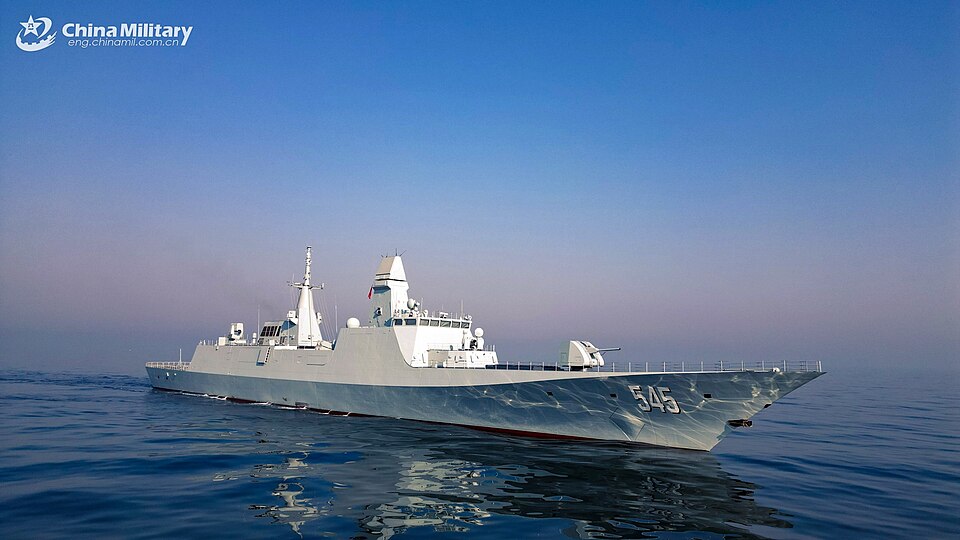
This announcement is not an isolated event. On May 19, the Joint Staff Office also confirmed the presence of Type 054B frigate number 545 and Type 901 fast combat support ship approximately 520 kilometers northwest of Kume Island, announcing that the fleet advanced southeast through the Miyako Strait. This was the first confirmation of a Jiangkai III class by the JMSDF's surveillance. In other words, in the same week, the Chinese Navy showcased a combination of a new frigate and supply ship, as well as a combination of an older frigate and a large landing ship, at the same southwestern exit.
It is noteworthy that on May 19, the P-1 from Atsugi and the P-3C from Naha were involved in surveillance, while on May 22, the P-3C from Naha was on duty. The response of the JMSDF's air units is appropriate, but the P-3C is aging, and the replacement with the P-1 is not progressing at an infinitely fast pace. Even with only two vessels, if simultaneous movements occur in the Tsushima, Miyako, Yonaguni, and Osumi straits, the number of patrol aircraft and maintenance time will directly become operational constraints.
Southwest Islands from the Perspective of SLOC Defense
Discussions in Japan often focus on the Type 12 surface-to-ship guided missile and counterstrike capabilities. Of course, extending range is necessary. However, without a system to detect, identify, and continuously track vessels passing through the straits and relay that information to political leadership without delay, long-range weapons will not substitute for judgment. During the Cold War, the main focus for countering the Soviet Union was on the Soya, Tsugaru, and Tsushima straits, but the current emphasis has shifted southwest. Moreover, the adversary is gaining experience in peacetime international strait navigation by reconfiguring submarines, destroyers, supply ships, and landing ships.
The Joint Staff Office's announcement on May 25 clearly stated that ships 599 and 33 advanced southeast between Okinawa Island and Miyako Island towards the Pacific. This brief statement illustrates the burden of southwest defense.
The deterrence of the Japan-U.S. alliance is not established solely through flashy joint exercises. It is supported by the unglamorous capability to consistently record such two-ship passages with the same precision. The true risk may not be that the Chinese Navy suddenly initiates something, but rather that the Japanese side dismisses the routine repetitions as low-intensity background noise.
Main Sources
- Ministry of Defense Joint Staff Office, May 25, 2026, on the movements of Chinese Navy vessels
- Ministry of Defense Joint Staff Office, May 19, 2026, on the movements of Chinese Navy vessels
- Janes, May 2026 report, analysis on the first confirmation of Type 054B
Chinese Navy frigate 599 and landing ship 33 passed through the Miyako Strait on May 22, 2026, heading southeast towards the Pacific Ocean. This movement was observed by a P-3C aircraft from the 5th Air Wing in Naha. The presence of these vessels indicates a potential increase in Chinese naval operations in the region, necessitating ongoing monitoring by Japanese forces.
- Chinese Navy frigate 599 and landing ship 33 passed through the Miyako Strait on May 22, 2026.
- The vessels were observed by a P-3C aircraft from the 5th Air Wing based in Naha.
- This movement is part of a broader pattern of naval activity in the region.
- The report indicates a potential increase in Chinese naval operations near Japan.
- The Japanese Self-Defense Forces need to monitor these movements closely.