

Summary and Key Points: In September 1918, during the Meuse-Argonne Offensive, a German machine gun shot George S. Patton Jr. through the thigh while he was forward with the 304th Tank Brigade, trying to get stalled tanks and infantry moving. The bullet passed through his leg. He kept directing the attack until he was evacuated, and the Army awarded him the Distinguished Service Cross. That was twenty-five years before he commanded an army in Sicily.
George Patton’s Place in History
“Do everything you ask of those you command.” The quote is closely associated with the leadership style of Gen. George S. Patton Jr., who demanded much from his soldiers, including discipline, aggression, endurance, speed, and a willingness to face danger.
But central to Patton’s concept of command was the idea that an officer couldn’t demand hardships he was unwilling to endure himself.
Famous for being profane, abrasive, and demanding, Patton was also present near the front. And long before becoming one of America’s most famous WWII generals, Patton led American tanks into combat during WWI, repeatedly exposing himself to German fire.
He was even shot through the thigh, enhancing the credibility he needed to later put his men in harm’s way.
Raised a Soldier
Born November 11, 1885, in San Gabriel, California, Patton came from a prominent military family with deep southern roots. Patton’s grandfather was a Confederate colonel killed during the Civil War, so Patton grew up steeped in military history, classic heroes, and ideas of honor and glory—and of course, a family martial tradition.
Patton attended Virginia Military Institute before transferring to West Point. He struggled academically, particularly with mathematics, and was forced to repeat his first year before ultimately graduating from West Point in 1909.
He was commissioned into the cavalry and was obsessed with becoming a great battlefield commander. Patton was an exceptional horseman, swordsman, and athlete.
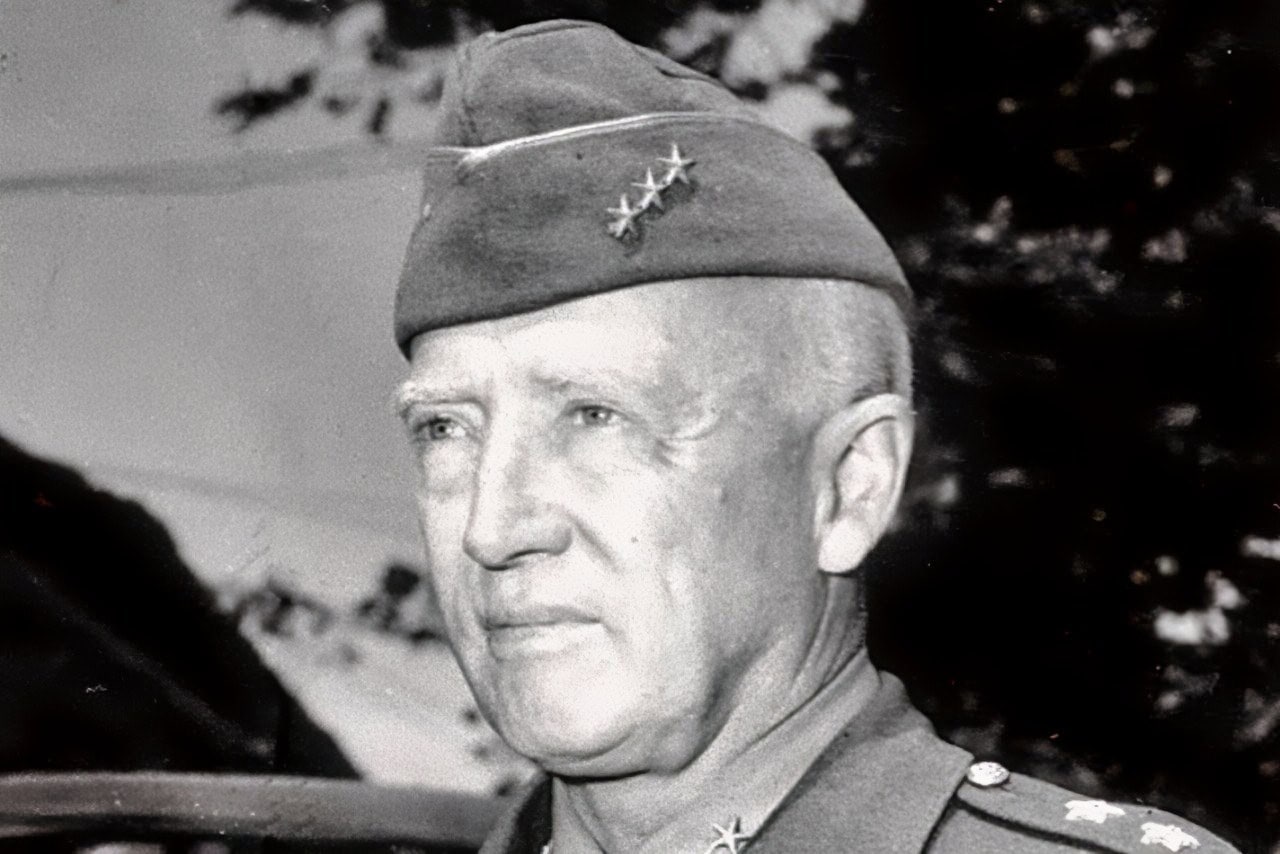
George S. Patton Quote of the Day. Creative Commons Image.
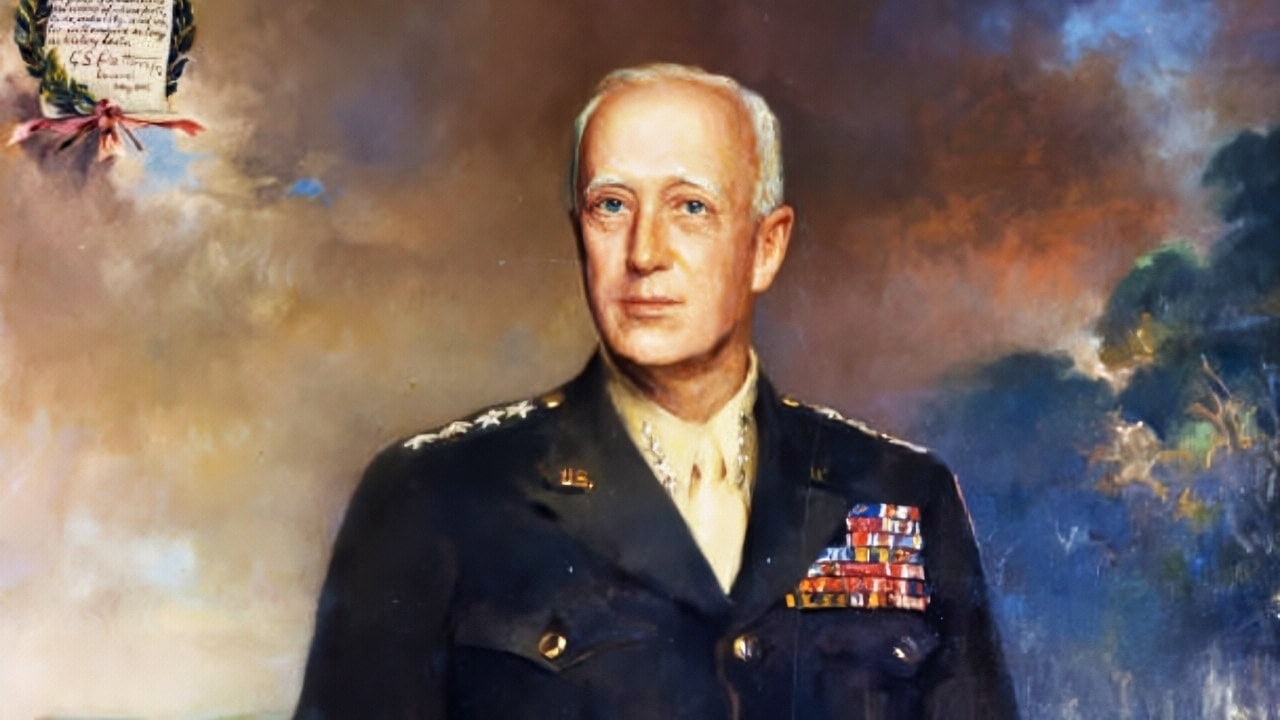
Portrait of Army General Patton. Image Credit: Creative Commons.
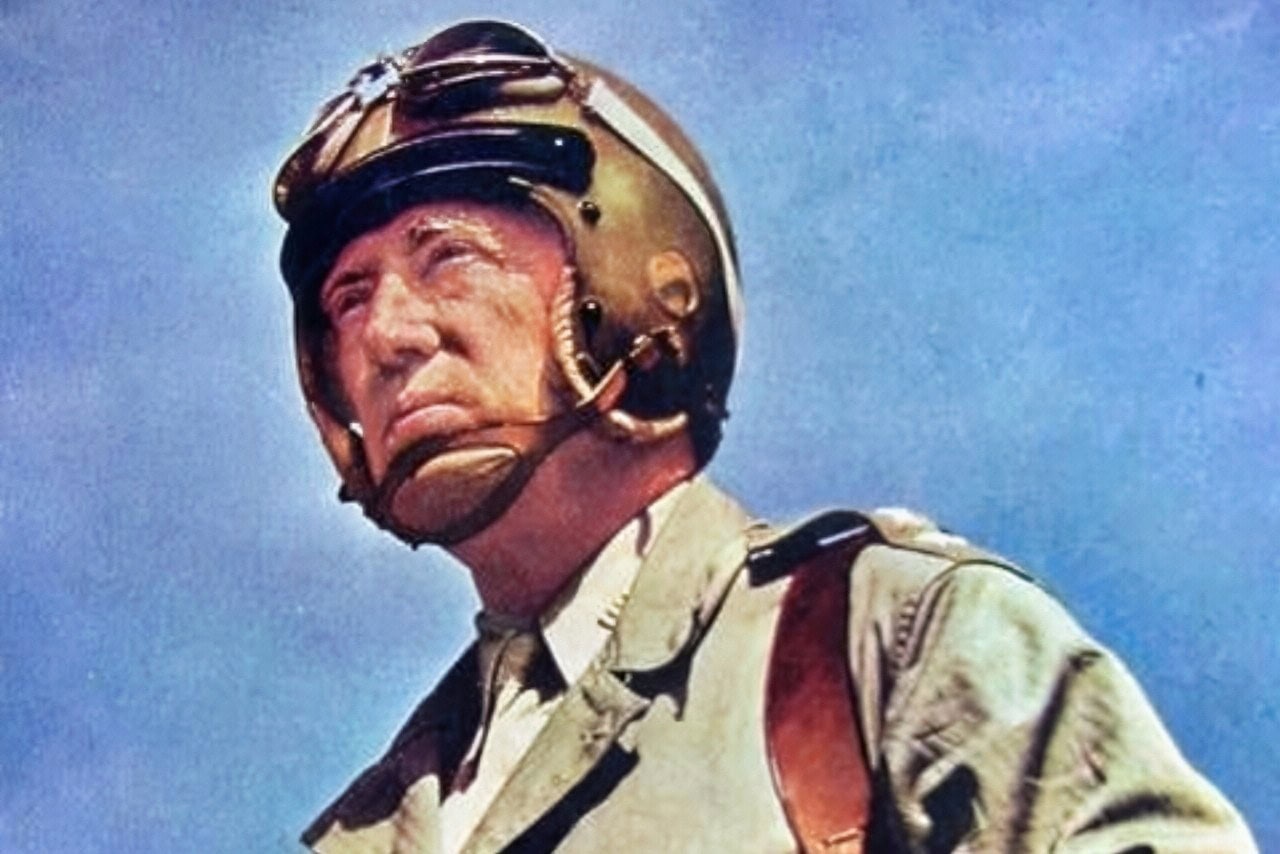
General George Patton of the U.S. Army. Image Credit: Creative Commons.
He competed for the United States in the modern pentathlon at the 1912 Stockholm Olympics in events including pistol shooting, swimming, fencing, riding, and running.
He finished fifth overall.
Entering Combat
Patton served during the 1916 Punitive Expedition in Mexico, where the young cavalry officer was first exposed to warfare.
When the United States entered World War I in 1917, Patton traveled to France with the American Expeditionary Forces and became one of the earliest American officers specializing in tanks.
He helped establish the American tank school at Langres, France, where he closely studied the emerging doctrine of armored warfare.
While early tanks were primitive by modern standards, Patton quickly recognized their potential to restore mobility to battlefields dominated by trenches and machine guns.
He eventually commanded the 304th Tank Brigade.
Patton Gets Shot
During the Meuse-Argonne Offensive in September 1918, Patton personally moved forward with his tanks and infantry, repeatedly exposing himself to fire as he tried to get stalled troops and tanks moving.
Eventually, German machine gun fire struck him in the upper thigh.
The bullet passed through his leg. Patton continued directing action before being evacuated and later received the Distinguished Service Cross for heroism, proving his leadership wasn’t theoretical.
Between the Wars
After World War I, the US military contracted dramatically, and tanks were a controversial budget item.
Patton remained interested in the new armor technology and developed a relationship with another officer who shared the interest: Dwight D. Eisenhower.
Both studied the potential of mechanized operations, and by the early 1940s, when the German blitzkrieg showed how devastating concentrated armor could be, the US suddenly needed officers who understood tanks. Patton had been preparing for decades.
World War II
Patton commanded armored forces during the US entry into WWII, leading the Western Task Force during Operation Torch.
After America was defeated at Kasserine Pass in 1943, Patton took command of II Corps, where he imposed intense discipline on his troops, believing that discipline away from combat translated into discipline in combat.
Patton commanded the Seventh Army during the Allied invasion of Sicily in July 1943, where he developed a rivalry with British General Bernard Montgomery.
Patton’s forces drove across the island, captured Palermo, and then raced towards Messina in a campaign that demonstrated Patton’s defining characteristics—speed and aggression.
But during the campaign, Patton also had an incident that almost ruined his career when he slapped two hospitalized American soldiers suffering from combat exhaustion, accusing them of cowardice.
The incident demonstrated Patton’s downside: his volatility, ego, and tendency to say inflammatory things.
He was a divisive figure.
His legacy remains compelling today because of his contradictions—the way he could be brilliant and reckless, inspiring and abusive, all at once.
About the Author: Harrison Kass
Harrison Kass is a writer and attorney focused on national security, technology, and political culture. His work has appeared in Tablet, City Journal, The Hill, The Spectator, and The Cipher Brief. He holds a JD from the University of Oregon and a master’s in Global & Joint Program Studies from NYU. More at harrisonkass.com.