
China's 2026 Mobilization Law Makes Civilian Shipping Part of a Taiwan War
 Marcus Chen
China's 2026 Mobilization Law Makes Civilian Shipping Part of a Taiwan War
China's revised National Defense Mobilization Law takes effect on October 1. The important change is not a new missile or a larger fleet. It is the legal mechanism to turn civilian capacity into military capacity before the first shot is fired.
Defense News reported on September 14 that the revised law allows national defense mobilization to draw on China's economic and social resources when sovereignty, unity, territorial integrity, or development interests are judged to be threatened. Analysts cited in that report expect the measure to cover people over 18, commercial ships and aircraft, private land, communications systems, cyber infrastructure, and drone production. That is a broad definition of the rear area. In a Taiwan contingency, the rear area would be the entire Chinese coast.
The Law Targets the Missing Half of a Blockade
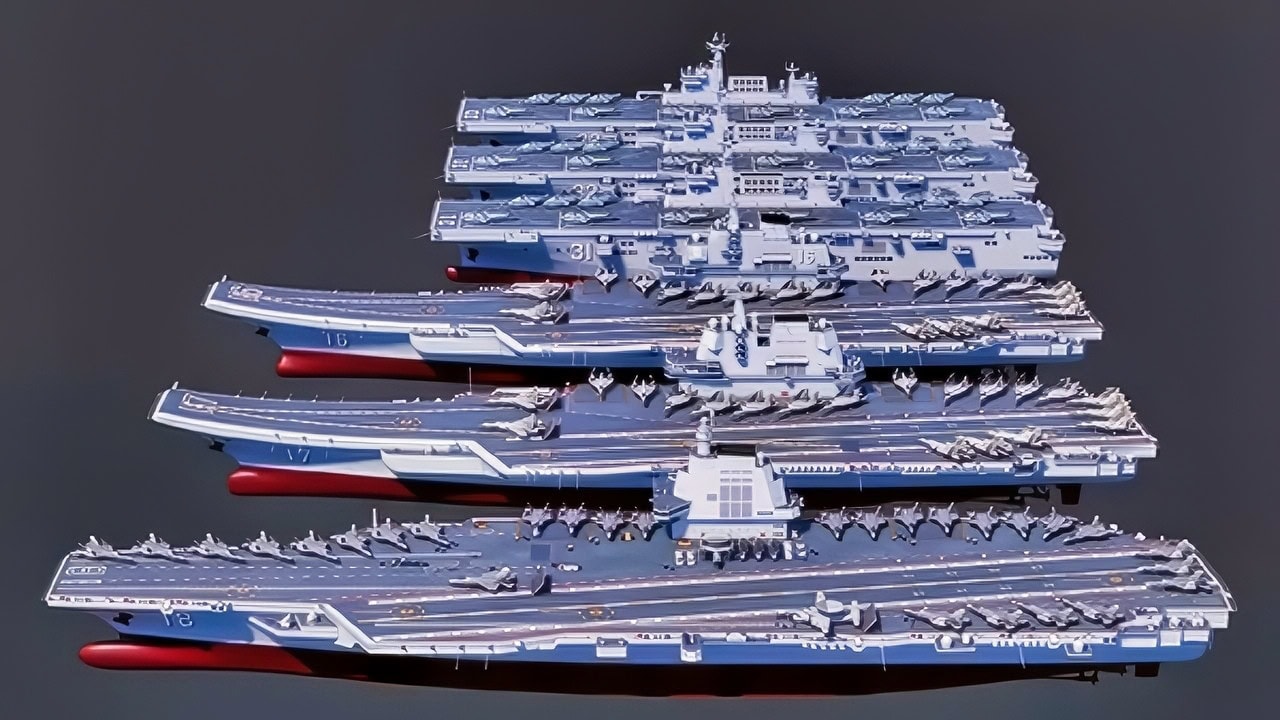
The People's Liberation Army Navy already has the visible tools for a quarantine or blockade: aircraft carriers, large surface combatants, submarines, coast guard cutters, maritime militia, and land-based anti-ship missiles. The harder problem is endurance. A blockade is not a photograph of warships at sea. It is the ability to replace fuel, move ammunition, repair engines, rotate crews, and sustain pressure across several hundred miles of water for weeks.
China's commercial fleet helps solve that problem. Civilian roll-on/roll-off ships can move vehicles and fuel. Container ships can carry packaged supplies. Ferries can provide lift across the Taiwan Strait, although using them in contested waters would expose them to mines, submarines, aircraft, and anti-ship missiles. The law does not make these vessels warships. It makes their requisition predictable, centralized, and legally available to the state.
That distinction matters. Beijing does not need every civilian hull to enter the combat zone. It needs enough transport capacity to free military vessels for escort, missile defense, and sea denial. A commercial ship carrying fuel to a mainland port can have military value even if it never approaches Taiwan.
What the Numbers Actually Say
China has the world's largest commercial shipbuilding industry and one of the largest merchant fleets. But hull count is not the same as usable lift. A requisitioned vessel needs trained crews, compatible loading equipment, secure communications, port access, and a route that remains open. A ship tied to a commercial schedule is not automatically an amphibious transport.
The practical advantage is depth, not invulnerability. If the PLA loses ten military transports, the loss is immediately visible and operationally significant. If it can draw on hundreds of commercial hulls, it can distribute risk and complicate targeting. The same logic applies to repair yards and logistics nodes. Civilian shipyards can provide more berths and labor; civilian satellite and data networks can provide redundancy; drone factories can replace attrited reconnaissance systems faster than a purely military supply chain.
There is also a coercive effect. Taiwan, Japan, the Philippines, and the United States would have to treat a larger set of Chinese vessels and facilities as possible military enablers. That expands the surveillance problem and creates legal dilemmas. Striking a civilian ship because it may be supporting a blockade carries escalation and law-of-war risks. Ignoring it may allow the PLA to preserve its tempo.
Mobilization Does Not Equal Sea Control
Here is the part that should restrain alarmism: a law cannot remove geography, mines, submarines, or the Taiwan Strait's weather. Nor can it give an untrained merchant crew the damage-control skills of a naval auxiliary. China may be able to requisition a ship quickly, but it cannot instantly transform that ship into a survivable assault platform.
Any Taiwan operation would still face the central naval calculation of distance, firepower, and persistence. The mainland has short interior lines to the strait, but the crossing remains exposed. Taiwan can attack ports, staging areas, and shipping with land-based missiles, mines, drones, and fast attack craft. U.S. and Japanese forces would add submarines, long-range aircraft, and distributed fires. Civilian vessels would increase the number of targets, but they would also increase the number of vulnerable assets China must protect.
The law is therefore more useful for a coercive campaign than for a clean invasion. It can support a prolonged inspection regime, selective quarantine, missile blockade, or pressure campaign designed to make commercial traffic avoid Taiwan. Those options require persistence and ambiguity. They do not require China to land an armored division on day one.
The October Deadline Is a Signal
Global Times described the revision as a way to place mobilization within defined procedures rather than improvise during a crisis. That is the official argument. The operational reading is less comfortable: Beijing is reducing the bureaucratic friction between a political decision and the use of national resources.
Reuters has separately reported that Taiwan sees China's air and maritime pressure as increasingly difficult to predict, while Taiwan's defense officials have emphasized the importance of maintaining access to outside supplies. Those concerns intersect. A mobilization law that reaches ships, communications, and industrial production gives Beijing more options below the threshold of declared war, while making Taiwan's commercial lifelines more exposed.
For Washington and Tokyo, the warning is not that China will seize every merchant ship tomorrow. It is that an apparently civilian crisis can acquire military mass quickly. Port closures, insurance suspensions, cyber disruption, and compulsory shipping orders could create operational effects before any formal blockade is announced.
What Taiwan and the United States Should Do
Taiwan should treat civilian logistics as part of its defense plan. That means dispersing fuel and ammunition, hardening ports, rehearsing repair under attack, preparing alternate unloading sites, and integrating commercial operators into mobilization exercises. The goal is not to keep every port open. It is to prevent one damaged terminal or one insurance panic from stopping the island's resupply system.
The United States and Japan need a clearer picture of China's dual-use fleet. Tracking military hulls is not enough. Planners should model commercial shipping, repair yards, fuel terminals, and data networks as a connected system. They also need rules for warning, boarding, escort, and interdiction that are credible before a crisis begins. A policy invented after a blockade starts will be a policy written under fire.
The Bottom Line
China's revised law will not solve the PLA's amphibious problem. It does something more practical: it gives Beijing legal access to the industrial and commercial depth needed to sustain pressure after the opening salvo. That favors blockade, quarantine, and prolonged coercion—missions where ambiguity is an asset and time works against Taiwan.
The United States has spent years counting Chinese warships. It now needs to count the civilian systems that keep those warships supplied. The next Taiwan crisis may not begin with a fleet sortie. It may begin with a shipping order, a port requisition, and a commercial network that suddenly belongs to the PLA.
China's revised National Defense Mobilization Law, effective October 1, 2026, enables the requisition of civilian shipping and resources for military purposes in a potential Taiwan conflict. This law allows the People's Liberation Army to utilize commercial vessels and infrastructure to support military operations, enhancing logistical capabilities. Analysts warn that this development increases the complexity of military planning for Taiwan and its allies, as civilian assets may be rapidly mobilized for military use.
- China's National Defense Mobilization Law takes effect on October 1, 2026.
- The law allows requisitioning of civilian resources for military use in a Taiwan conflict.
- Civilian shipping will play a role in supporting military operations.
- The law aims to reduce bureaucratic friction in mobilization during crises.
- Taiwan's defense officials express concerns over increased pressure from China.