
DEUTZ buys FFG for 1.6 billion euros and reveals Germany's industrial problem 2026
 Dr. Klaus Weber
DEUTZ buys FFG for 1.6 billion euros and highlights Germany's industrial problem in 2026
1.6 billion euros are enough to turn a Cologne engine manufacturer into a national system provider for armored vehicles overnight. However, they are not enough to equip the Bundeswehr more quickly. This is precisely the strategic significance of DEUTZ's planned acquisition of Flensburger Fahrzeugbau Gesellschaft: The process shows how quickly capital structures can adapt to the new security situation and how slowly real military capacity is formed from it.
According to Handelsblatt and corporate circles, DEUTZ intends to fully acquire FFG. The purchase price is around 1.6 billion euros, of which about one billion is in cash and approximately 600 million euros in new DEUTZ shares. The previous FFG owners are expected to hold up to 29.9 percent of DEUTZ, just below the threshold that would trigger a mandatory offer under German takeover law. The transaction still requires the approval of an extraordinary general meeting on August 24, 2026, and the clearance from antitrust authorities. The completion is scheduled for late 2026 or early 2027.
From a supplier to a system house
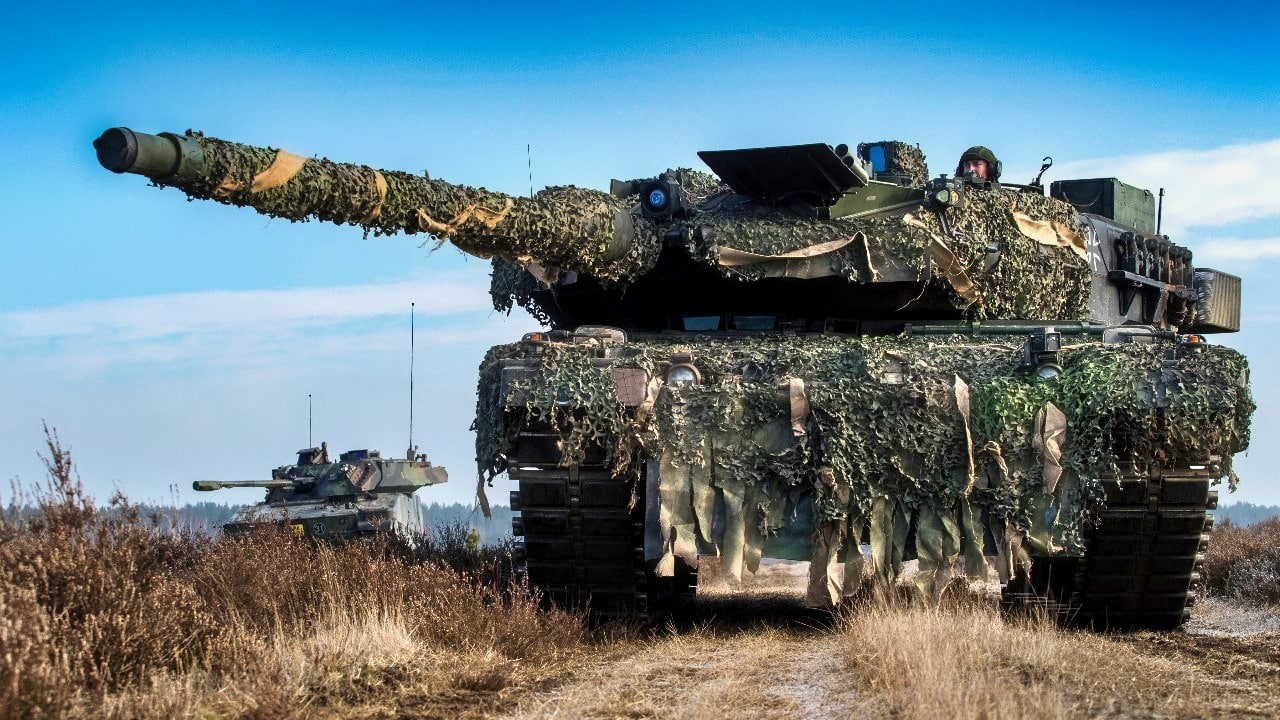
FFG is not a symbolic acquisition. The company from Flensburg develops, manufactures, maintains, and modernizes armored wheeled and tracked vehicles. The publicly listed product lines include WiSENT 1 and WiSENT 2, a recovery and support module for Boxer vehicles, as well as the ACSV G5. Additionally, it modernizes old platforms, including Wiesel and Leopard 2. This is more important for European land forces than it sounds in industrial policy Sunday speeches: It is not the shiny new battle tank that determines readiness in the short term, but the ability to maintain old fleets, recover damaged vehicles, and implement upgrades without years of procurement loops.
DEUTZ brings drives, service networks, and energy supply solutions to the table. The group employs around 6,000 people, while FFG has about 1,100. FFG generated approximately 760 million euros in revenue in 2025, according to press reports; DEUTZ links the acquisition with the goal of achieving four billion euros in revenue and a ten percent operating margin by 2030. This explains the stock market reaction: The share price rose by about six percent in early trading on the day of the announcement. Investors no longer see defense as a political risk, but as a manageable long-term market.
The real bottleneck is not in the ownership register
The temptation is great to read the acquisition as proof of the German turning point. A civilian traditional company is massively entering the defense sector; medium-sized vehicle expertise is being combined with industrial scaling capability; national value creation remains in Germany. This is not wrong. But it is only half the truth.
Arms capability does not arise from signing a corporate purchase agreement. It arises from production lines, skilled workers, supply chains, test stands, ammunition supply, spare parts stocks, acceptance authorities, and long-term orders. Germany can change the ownership structure of an important land system house in a few months. However, it cannot create welders, electronics technicians, tank mechanics, quality inspectors, and military acceptance officers out of nothing in the same time frame. The Bundeswehr has known this problem for years: Money is provided, but the material result comes with a delay.
This is precisely why the FFG purchase is strategically interesting. It concerns not only new vehicles but also the less visible area of sustainability. In a long war, what matters is how many vehicles return to the unit after being damaged. Ukraine has shown that recovery vehicles, workshop capacity, and spare parts are not side issues but operational prerequisites. European armies possess many different platforms, often in small national series. A company that masters the modernization and repair of various wheeled and tracked vehicles is therefore closer to the actual capability problem than some prestige programs.
Industrial consolidation does not replace procurement reform
The political question now is whether Berlin will develop a procurement logic from this process or treat it as mere market activity. If DEUTZ Defense becomes just a fifth business area alongside Engines, Service, Energy, and New Tech, the capital market wins. However, if a reliable industrial hub for the Bundeswehr, NATO partners, and Ukraine support emerges from it, European defense capability wins.
Three conditions must be met for this. First, the federal government needs multi-year framework contracts, not just project-based individual orders. A system house will only invest in capacity if the demand is politically and budgetarily robust. Second, modernization and repair must receive the same political status as new procurement. A Leopard 2 that is made operational again after combat damage is often militarily more valuable than another PowerPoint draft for the next generation. Third, national consolidation must not turn into European isolation. FFG works for the Bundeswehr and NATO partners; this networking is the benefit.
There is a parallel to other European programs here. In the FCAS, national leadership claims block technological integration. In SAFE, financing instruments are created without automatically eliminating production bottlenecks. In the DEUTZ-FFG deal, the problem is reversed: The industry is moving faster than the state. This is rare enough and should concern Berlin. Because when companies create strategic coherence while the public client continues to think in annual budgets and procurement routines, a new asymmetry arises.
The German turning point becomes more industrially concrete, but not easier
For the Bundeswehr, the acquisition is not a miracle in the short term. Neither will the available Leopard 2 numbers increase tomorrow, nor will ammunition gaps disappear. However, in the medium to long term, it can change the structure of the German land system sector. A company that integrates drives, energy supply, platform modernization, and vehicle service can technically simplify procurement and shorten maintenance cycles. This is especially true for support platforms, where European armies have less media attention but enormous operational deficits.
The price of 1.6 billion euros is therefore less surprising than the political lesson derived from it. Europe's defense spending is increasing, and companies are responding. But higher spending will only translate into military power if public procurement, industrial capacity, and operational priorities align. The DEUTZ-FFG purchase shows that the market has understood the new demand. Whether the German state can translate it into operational readiness remains the true test of the turning point.
More German capital in the defense industry is not yet German defense capability. But without such industrial hubs, every procurement reform remains an administrative regulation without a workshop.
DEUTZ is acquiring FFG for 1.6 billion euros to strengthen Germany's military vehicle production capabilities. The acquisition, which involves a cash payment and new shares, is set to be completed by the end of 2026 or early 2027, pending regulatory approvals. This move aims to address Germany's defense procurement challenges and enhance operational readiness of military vehicles.
- DEUTZ is acquiring FFG for 1.6 billion euros.
- The acquisition aims to enhance Germany's military vehicle production capabilities.
- FFG develops and modernizes armored vehicles.
- The deal requires approval from a special shareholders' meeting and antitrust authorities.
- The completion of the acquisition is expected by the end of 2026 or early 2027.