
Doha Talks Cannot Tame Iran Hormuz Risk
 Alexandra Reeves
Doha Talks Cannot Tame Iran Hormuz Risk
The awkward truth about the new US-Iran talks in Doha is that they are not really about trust. They are about traffic.
Qatar has brought American and Iranian channels back into motion after a brutal fortnight of strikes, counterstrikes and public denials. Al Jazeera reported on July 1 that Qatari Prime Minister and Foreign Minister Sheikh Mohammed bin Abdulrahman bin Jassim Al Thani met US envoy Steve Witkoff and Jared Kushner in Doha, while Iranian officials were expected to engage Qatari mediators over implementation of the June 17 memorandum of understanding. Washington calls the process technical talks. Tehran insists there are no direct negotiations. That distinction matters politically in Iran, but it does not change the military question sitting underneath the diplomacy: who gets to shape the rules in the Strait of Hormuz?
The Ceasefire Is Already Being Militarised
The June 17 MoU reportedly extended a ceasefire by 60 days and put four hard issues on the table: the Strait of Hormuz, frozen Iranian assets, long-term sanctions relief and Iran nuclear limits. That sounds like a diplomatic agenda. In practice, it is a military risk register.
According to Al Jazeera, the past two weeks have already included US bombing of Iran, Iranian attacks on US military assets in Kuwait and Bahrain, disputes over shipping through Hormuz and continuing Israeli operations in Lebanon. Just Security has tracked the broader conflict as a US-Israel war against Iran that began in February 2026, and notes that US and Israeli strikes killed senior Iranian leaders and triggered Iranian attacks across the Gulf. This is not a clean ceasefire between tired belligerents. It is a pause in a regional war where every convoy, tanker and air defence radar can become leverage.
Vice President JD Vance told Fox News that the United States is in a strong position whether the talks succeed or fail, saying Iran nuclear and military capabilities have been destroyed. He also warned that Iranian attacks on shipping in Hormuz would bring a US military response. That is meant as deterrence. It also boxes Washington in. If Iran tests the water with harassment, inspection demands, drone shadowing or mining scares short of a spectacular attack, the White House will have to decide whether to escalate for credibility or absorb the humiliation for stability.
Hormuz Is the Real Negotiating Table
The Strait of Hormuz is not just a map label. Roughly one-fifth of global petroleum liquids consumption has historically moved through that narrow waterway, making it one of the few places where local tactical friction can become a global economic event within hours. Iranian leaders know this. So do Gulf monarchies, US naval commanders and insurers in London.
That is why Tehran is pushing the strait into the centre of the bargain. Al Jazeera quoted former CIA officer Scott Uehlinger saying US negotiators are using technical talks to head off future difficulties around Iran diplomatic gambit to control its role in Hormuz. That phrase is doing a lot of work. A gambit can be legal language, port fees, inspection rules, escort procedures, notification regimes or simply enough ambiguity to make commercial operators nervous.
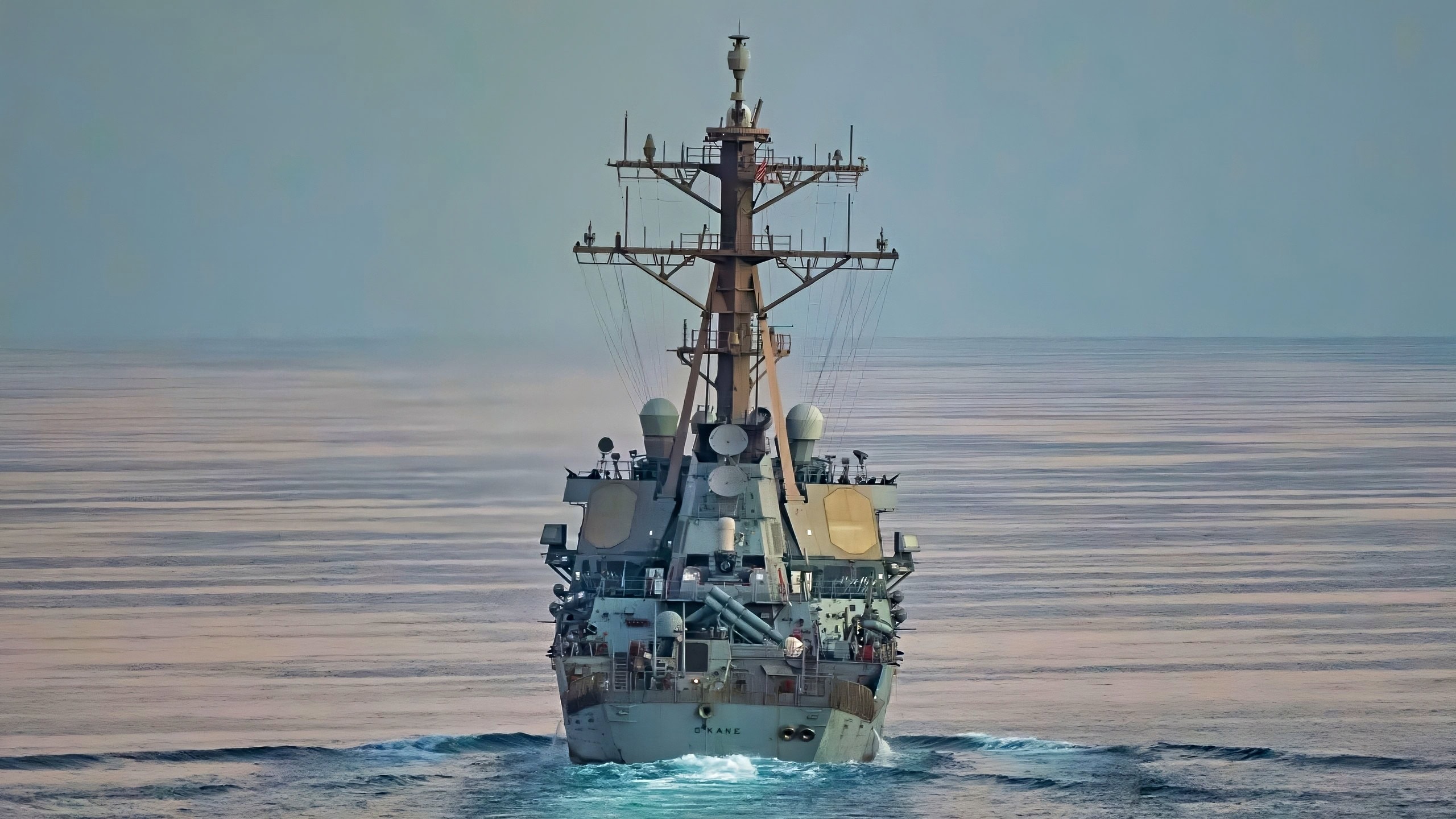
The military reality is ugly. Iran does not need to close Hormuz to profit from crisis. It can raise the cost of passage with coastal missiles, fast attack craft, drones, mines, electronic interference and plausible-deniability pressure on commercial shipping. The US Navy can keep the strait open in a high-end fight, but keeping it open every day without turning every incident into a war is harder. Maritime security is a stamina contest, not a single carrier photo opportunity.
Washington Wants Coercion and Diplomacy at Once
There is a familiar American assumption here: hit hard, then negotiate from strength. Sometimes it works. Often it produces a second problem, because the other side has to prove it was not merely beaten into submission.
Tehran is denying direct talks partly because senior Iranian officials cannot be seen smiling for cameras while domestic critics ask where the promised asset release is. Iranian President Masoud Pezeshkian said Iran expects 6 billion dollars in frozen funds to be released as a first step, according to Al Jazeera. If that money does not move, Iranian negotiators have little to sell at home. If it does move too quickly, Washington will be accused of rewarding coercion. Qatar can mediate the channel, but it cannot solve that political arithmetic.
The nuclear file is even more awkward. US officials are publicly claiming Iran nuclear infrastructure has been destroyed. Yet the talks still include Iran nuclear programme as a core issue. If the programme is gone, why negotiate limits? If limits matter, then destruction was not a strategy by itself. This is the part of coercive diplomacy that Washington never likes to say out loud: bombs can change timelines, but they rarely answer the political question of what the adversary is prepared to accept afterward.
Europe Should Be More Nervous Than It Looks
This is Alexandra territory in the transatlantic sense, because Europe will feel the second-order effects before many Americans do. A Hormuz crisis means energy volatility, insurance spikes, shipping reroutes and another US military demand signal toward the Gulf at exactly the moment NATO wants Washington focused on Russia. Everyone in Brussels can say Ukraine remains the priority. Carrier schedules and tanker rates may say something else.
The risk is not that the Doha talks fail in a dramatic press conference. The risk is that they half-work. A partial arrangement could calm oil markets for a few weeks while leaving the operational rules in Hormuz deliberately vague. That is enough for politicians. It is not enough for naval commanders or commercial captains.
There is also an Israeli variable that the Doha process cannot neatly contain. Al Jazeera noted continuing Israeli assaults in Lebanon as part of the recent tension set. If Israel concludes that Washington is trading too much away for a Hormuz de-escalation, it has military options of its own. If Iran-linked actors in Lebanon or Iraq act while talks continue, the US may be pulled back into kinetic response before negotiators settle even the technical details.
What To Watch Next
- Whether any portion of the 6 billion dollars in frozen Iranian funds is actually released.
- Whether US naval posture in the Gulf shifts from visible deterrence to routine escort patterns.
- Whether Iran uses legal or administrative language to assert a new role over Hormuz transit.
- Whether Israeli operations in Lebanon disrupt the Doha channel.
The key finding is simple: Doha is not a peace process yet. It is an attempt to prevent the Strait of Hormuz from becoming the next battlefield while both sides pretend the talks are less direct than they are.
That may be enough for a few days. It is not a settlement. The uncomfortable conclusion is that Washington is trying to convert battlefield advantage into maritime predictability, and Iran is trying to convert maritime vulnerability into political leverage. One side may get a deal. Neither side is likely to get control.
Qatar mediated US-Iran talks in Doha on July 1, 2023, focusing on military tensions in the Strait of Hormuz. The June 17 memorandum extended a ceasefire and addressed key military issues, including Iranian attacks on US assets. The US maintains a military presence in the region, while Iran seeks to leverage its position in Hormuz for political advantage. Ongoing Israeli operations in Lebanon add complexity to the situation.
- Qatar mediated US-Iran talks in Doha on July 1, 2023.
- The June 17 memorandum of understanding extended a ceasefire and addressed military issues in the Strait of Hormuz.
- US bombing of Iran and Iranian attacks on US assets occurred in the past two weeks.
- Iran is leveraging its position in the Strait of Hormuz for political gain.
- Israeli military operations in Lebanon continue amidst the negotiations.