
Domestic "Devil Fish" Targets "Underwater Explosives" - On-Site Footage Released for the First Time
In the dim waters with visibility of less than 1 meter, a shadow is stealthily moving, locking onto "underwater explosives"… It is the "Soaring" V-shaped bionic manta ray soft-bodied submersible developed by the Ningbo Research Institute of Northwestern Polytechnical University.
Underwater, the forward-looking sonar at the front of the bionic manta ray can penetrate the darkness to capture targets, while the side-scan sonar on both sides can simultaneously scan the seabed and transmit data in real-time, quickly outlining the underwater topography to clear obstacles for forward movement.
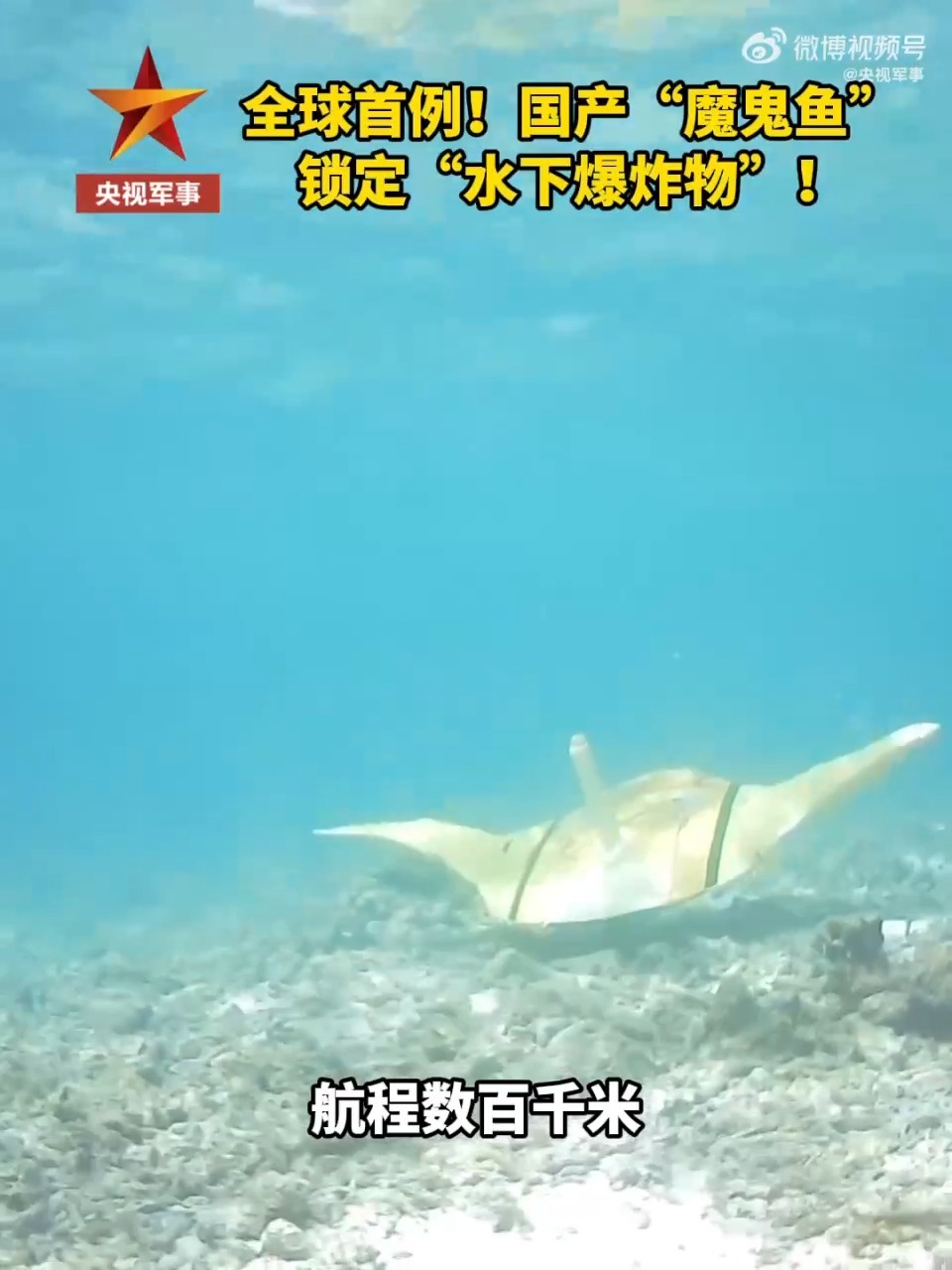
In addition, this "devil fish" also boasts outstanding endurance; it carries an amount of electricity equivalent to half that of a small household electric car, yet can travel at full speed for dozens of hours, covering hundreds of kilometers. By adjusting its buoyancy while gliding in the sea, its range can reach over a thousand kilometers.
A bionic manta ray drone developed by the Ningbo Research Institute of Northwestern Polytechnical University is operating underwater to locate explosives. It utilizes advanced sonar systems for terrain mapping and can travel hundreds of kilometers on a single charge. This technology showcases significant advancements in underwater reconnaissance capabilities.
- A bionic manta ray drone has been developed by the Ningbo Research Institute of Northwestern Polytechnical University.
- The drone is capable of locating underwater explosives in low visibility conditions.
- It has advanced sonar systems for terrain mapping and obstacle clearance.
- The drone can operate for dozens of hours and travel hundreds of kilometers on a single charge.