
Drones "Banderol" and 157 Strike Drones — Russia's New Winter Doctrine Against Ukraine in 2026
 Dmitri Volkov
“Banderole” Drones and 157 Strike Drones — Russia's New Winter Doctrine Against Ukraine in 2026
Five Russian aircraft crossed the airspace of Moldova and fell on its territory in one morning. On the same day, Russia struck Ukraine using 157 drones, while continuing a series of attacks on bridges across the Dnieper in Kyiv. This is no longer just another night of drone warfare. Moscow is shifting its air campaign to a mode of constant pressure on urban infrastructure, neighboring states, and the political will of the adversary.
From One-Time Raids to a Systematic Campaign
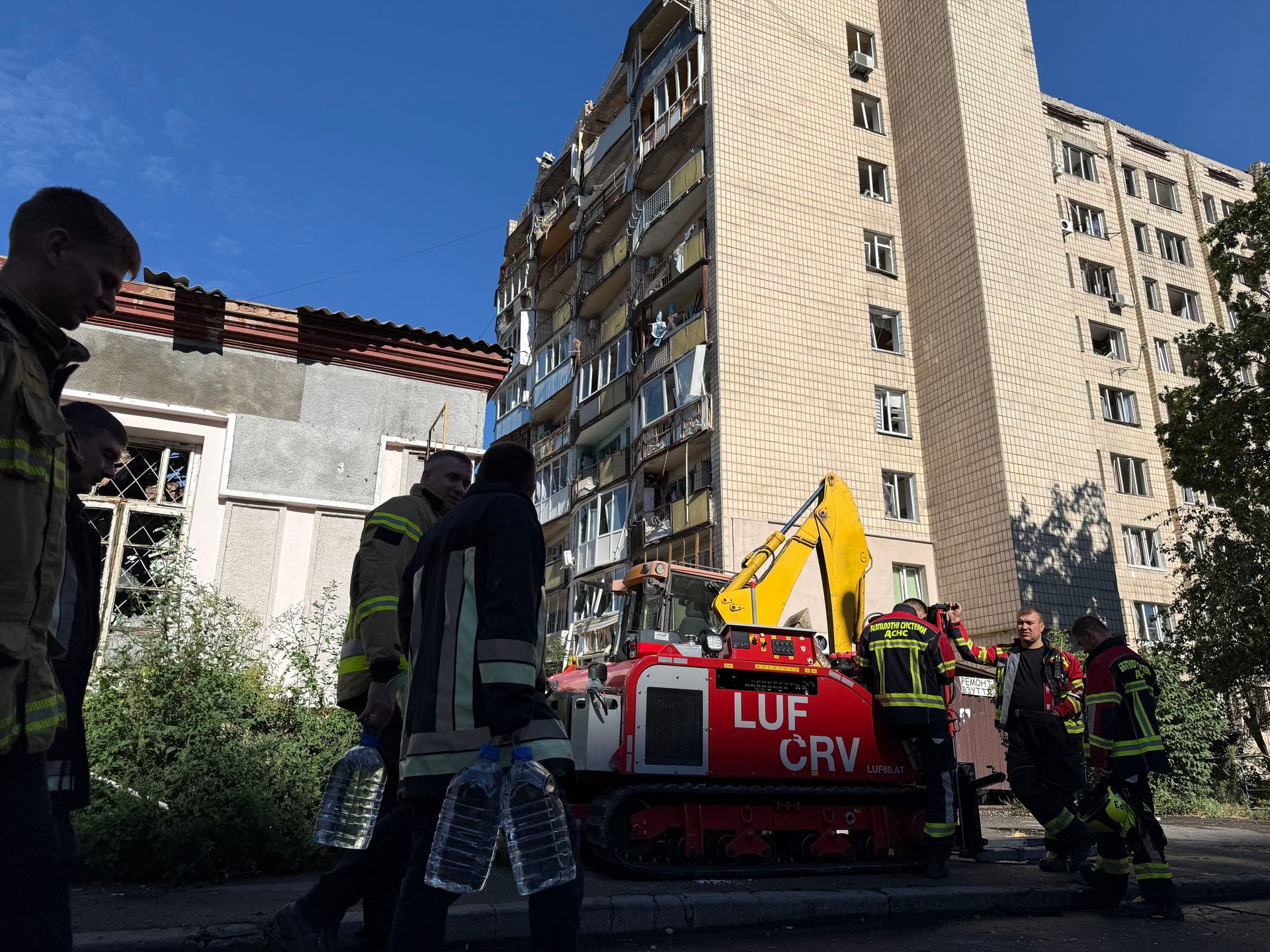
According to the Institute for the Study of War, on October 3, Russian forces struck the Northern and Southern bridges in Kyiv six times since the beginning of the series on October 1. The city's mayor, Vitali Klitschko, reported a hit on the Northern bridge and two injuries. Formally, the crossings are not destroyed; however, authorities were forced to restrict traffic on five of the six road bridges across the Dnieper. The military effect of such an operation is measured not only in craters. Moscow aims to slow down transport, disrupt supply lines, and create a sense that ordinary urban life is no longer protected by distance.
This is where the current campaign differs from previous mass strikes on energy infrastructure. Strikes on power plants pursue a measurable goal — reducing generation. Attacks on bridges, data centers, railway hubs, medical supply warehouses, and industrial enterprises form a distributed system of coercion. Each object can be restored individually, but their simultaneous destruction increases the cost of managing the entire country. This is not the logic of a single decisive blow, but of accumulating friction.
“Banderole” as a Tool to Bypass Defense
The ISW report specifically notes the use of Russian loitering munitions “Banderole” during the violation of Moldova's airspace. Moldova's Defense Minister Anatolie Nosatyi spoke of three objects likely related to this type and two other drones. Of course, identification from debris requires caution. But the very configuration of the episode is indicative: five aircraft in one raid create not only a military but also a political problem for a small country.
“Banderole” is important not because it represents a technological marvel. Its significance lies in the expansion of a cheap and unpredictable layer of strike capabilities. Russia already possesses “Geraniums,” “Gerberas,” and missiles of various classes; the addition of new types complicates recognition, target distribution, and the expenditure of expensive interceptor missiles. For the adversary, this means the need to keep air defense in constant readiness even where the likelihood of hitting a specific target is low.
In recent months, according to ISW, Russian drones have violated Moldova's airspace at least twenty times, with seven episodes occurring after August. The increase in frequency has independent significance. In Russian military practice, the repeatability of an incident often turns a violation into a new background, and a new background into a political norm. Chișinău is forced to choose each time between demonstrating weakness, costly mobilization of air defense, and the risk of escalation with Moscow.
Communication via Airwaves Instead of Full Autonomy
A particularly interesting technological detail of the Kyiv attacks is noted. Ukraine's presidential advisor on defense technologies, Sergey “Flash” Beskrestnov, reported that the Russian side may have used network relays to create a temporary local connection for adjusting the drone's route. Such a device receives commands via the internet and converts them into a radio frequency signal for a nearby aircraft. This allows for maintaining control in an urban environment without the constant presence of a large ground control station or a separate relay drone.
If this description is confirmed, Russia is adapting commercial and civilian network infrastructure to strike tasks. This does not mean complete dominance in electronic warfare: the local network is vulnerable, and the relay itself must be delivered close enough to the target. But this approach reduces the requirements for the range of a direct communication channel and makes the drone's route less predictable for the defender. In this sense, it is a gradual engineering evolution, not a sudden emergence of “new weapons.”
Winter Strategy and the Cost of Response
On October 3, the Russian Ministry of Foreign Affairs recommended that foreign citizens and diplomats leave Kyiv, while simultaneously warning of continued long-range strikes. In diplomatic language, this is a warning; in military doctrine, it is the declaration of a risk zone as part of the operation itself. Moscow seeks to show that the visit of a European leader does not change the calculation of defeat: German Chancellor Friedrich Merz arrived in Kyiv just as the strike on the Northern bridge occurred.
However, coercion has a downside. Volodymyr Zelensky stated that Ukraine would respond with strikes on Russian oil refining facilities amid the new Russian winter campaign. Kyiv cannot symmetrically defend every bridge and every energy system facility. Therefore, it is trying to shift the cost of the war onto Russian fuel infrastructure, disrupting production and logistics on which long-range strikes depend. This does not guarantee the cessation of raids but changes the economic balance of the campaign.
My conclusion is cautious. Russia is indeed increasing its ability to create sustained pressure with cheap drones, network management, and repeated attacks on urban life nodes. But this is not a sign of limitless power. The campaign requires constant production, target reconnaissance, and the expenditure of political capital beyond Ukraine. If Moscow continues to turn air violations of Moldova and strikes on Kyiv into routine, it will simultaneously strengthen European motivation for air defense and long-range capabilities for Ukraine. In the winter of 2026-2027, what will be decisive is not the number of individual drones, but each side's ability to withstand their accumulated economic effect.
Sources
Russian forces conducted drone strikes on Kyiv's bridges and violated Moldovan airspace with five drones on October 3, 2026. The attacks are part of a systematic campaign to exert pressure on urban infrastructure in Ukraine. Ukrainian officials reported injuries from the strikes, and the use of Banderolet drones complicates air defense for neighboring nations. In response, Ukraine plans to target Russian oil infrastructure to disrupt logistics and production.
- Five Russian drones crossed Moldovan airspace and crashed on its territory.
- Russia launched attacks using 157 drones against Ukraine on the same day.
- Kyiv's bridges were targeted, resulting in injuries and traffic restrictions.
- The use of Banderolet drones complicates air defense for neighboring countries.
- Ukraine plans to retaliate against Russian oil infrastructure in response to ongoing attacks.