
Egypt and Mali Strengthen Their Ties — The JNIM Tests the New Strategic Depth of the Sahel in 2026
 Marie Dubois
Egypt and Mali Strengthen Their Ties — The JNIM Tests the New Strategic Depth of the Sahel in 2026
Aswan, November 22, 2026. In the halls of the Aswan forum, the security of the Sahel has become central to Egyptian diplomacy. Egyptian Foreign Minister Badr Abdelatty met with his Malian counterpart Abdoulaye Diop as Cairo advocates an approach combining security, ideological struggle, and development. This is not yet a military alliance. It is the beginning of a repositioning.
A Diplomatic Meeting on a Front Line
The public statements reported by Egypt Today, Ahram Online, and Daily News Egypt remain cautious. The two ministers spoke of bilateral relations, regional stability, and cooperation against terrorism. No Egyptian deployment in Mali, no bases, and no operational timeline have been announced. This distinction matters. In the Sahel operational theater, a political statement does not secure a route or reclaim an isolated post.
For Bamako, the immediate benefit is political. Mali can show that it does not solely depend on Moscow, Ankara, or its neighbors in the Sahel States Alliance. For Cairo, the stakes are broader than Mali. Egypt wants to be recognized as an African security power capable of engaging with both the Maghreb, the Nile Basin, and West Africa.
Why Cairo is Looking Towards Bamako
Egypt has considerable military experience, a growing defense industry, and a geographical position that gives it a unique perspective on trans-Saharan flows. However, its model is not that of Barkhane. Cairo lacks the French intelligence infrastructure in the Sahel and the political freedom to sustainably project ground units 3,000 kilometers from its bases.
Its announced approach is therefore gradual. It may begin with training, intelligence sharing, counter-terrorism cooperation, and diplomacy. These tools are less visible than an armored column, but they are easier to maintain. They also meet the demands of Sahelian juntas, which want partners without public political conditions.
However, this compatibility has its limits. The Egyptian doctrine remains centered on the state and its regular forces. Yet the Support Group for Islam and Muslims (JNIM) is not only seeking to destroy Malian units. It imposes taxes, controls routes, negotiates with communities, and transforms gray areas into logistical depths. Cooperation between staff headquarters will not be sufficient to reclaim these spaces.
The Real Test Will Be on the Roads, Not in the Capitals
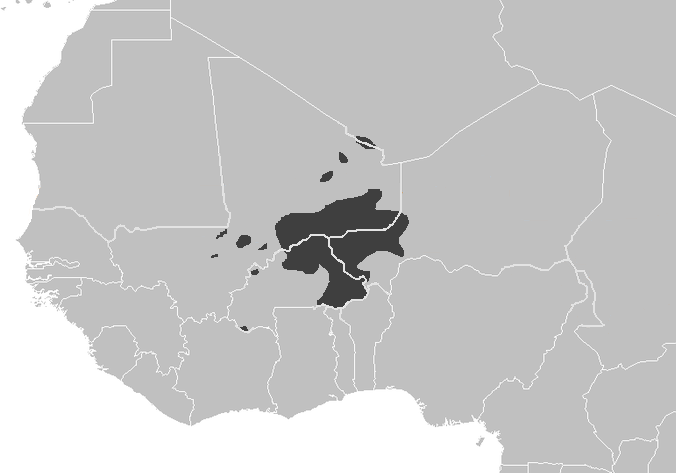
On a map, Cairo and Bamako seem distant. On the ground, the corridors of interest to the JNIM connect the rural areas of central Mali to routes towards Burkina Faso, Niger, and coastal countries. The operational question is simple: who controls the water points, markets, and junctions after a patrol passes?
Egyptian assistance may improve aerial surveillance or training for personnel. It will not solve the problem of garrisons that remain locked behind their walls, nor that of convoys that can no longer move without escort. The experience of Barkhane has shown: a foreign force can make contact and lose control of the area as soon as it leaves the main route.
The available information is still incomplete. The reports from the meeting do not specify the volume of the envisaged cooperation, the financing mechanisms, or the exact role of Russia. It would therefore be premature to speak of an Egyptian shift in the Sahel. The signal is diplomatic before it is military.
A New Space for Competition
The meeting in Aswan occurs in a region where every partnership is read as a message directed at another actor. Bamako can use Cairo to expand its maneuvering space against Moscow, without breaking ties with the instructors and Russian networks already present. Egypt, for its part, can attempt to offer a more institutional cooperation than that of mercenaries and more acceptable than the return of a European power.
This competition does not guarantee better outcomes for civilians. It may even produce a more blurred chain of responsibilities, with multiple training providers, incompatible doctrines, and differing objectives. For Malian forces, receiving equipment or training is only useful if logistics, local intelligence, and administrative presence follow.
The decisive point is not whether Egypt enters the Sahel, but whether it is willing to invest in the long term, at the level of units and territories.
In the coming months, three indicators will need to be monitored: the opening of training programs between Cairo and Bamako, the emergence of concrete intelligence agreements, and the capacity of Malian forces to maintain a presence beyond urban centers. If these signs do not emerge, Aswan will remain a beautiful diplomatic photograph. If they do appear, the JNIM will have to reckon with an additional actor — but not necessarily with a force capable of closing the roads.
Sources: Egypt Today, “Egypt, Mali FMs meet to boost ties, Sahel security,” November 22, 2026; Ahram Online, “Egypt calls for development, security cooperation to counter terrorism in Sahel,” November 22, 2026; Daily News Egypt, “Abdelatty outlines Egypt's approach to security in Sahel,” November 22, 2026.
Egypt and Mali's foreign ministers met in Aswan on November 22, 2026, to strengthen diplomatic ties and discuss security cooperation in the Sahel. The meeting emphasized regional stability and counter-terrorism efforts, but no military deployment was announced. Egypt seeks to enhance its role as a security power in Africa, while the JNIM continues to challenge control in rural Mali.
- Egypt and Mali are strengthening diplomatic ties to enhance Sahel security.
- No Egyptian military deployment in Mali has been announced.
- The meeting focused on regional stability and counter-terrorism cooperation.
- Egypt aims to be recognized as a security power in Africa.
- The JNIM poses a significant challenge in controlling rural areas.