
Poland's Patriot and F-16 Respond to Russian Missiles in 2026 — Why NATO Security Does Not Begin with Article 5
 Dr. Klaus Weber
Poland's Patriot and F-16 Respond to Russian Missiles in 2026 — Why NATO Security Does Not Begin with Article 5
On November 20, 2026, three Russian missiles entered Polish airspace, according to Polish sources. Two suspected Kh-101 cruise missiles and a jet-powered drone flew between 30 and 60 miles deep into Polish territory while Russia attacked Ukraine with more than 400 drones and 110 missiles. Poland launched F-16s, activated Patriot batteries, and alerted air defense in coordination with NATO partners. No one was injured in Poland. Strategically, however, the incident is serious because Europe's security guarantee does not begin with Article 5, but with the ability to detect, identify, and intercept a missile in time.
An Incident with Political Intent
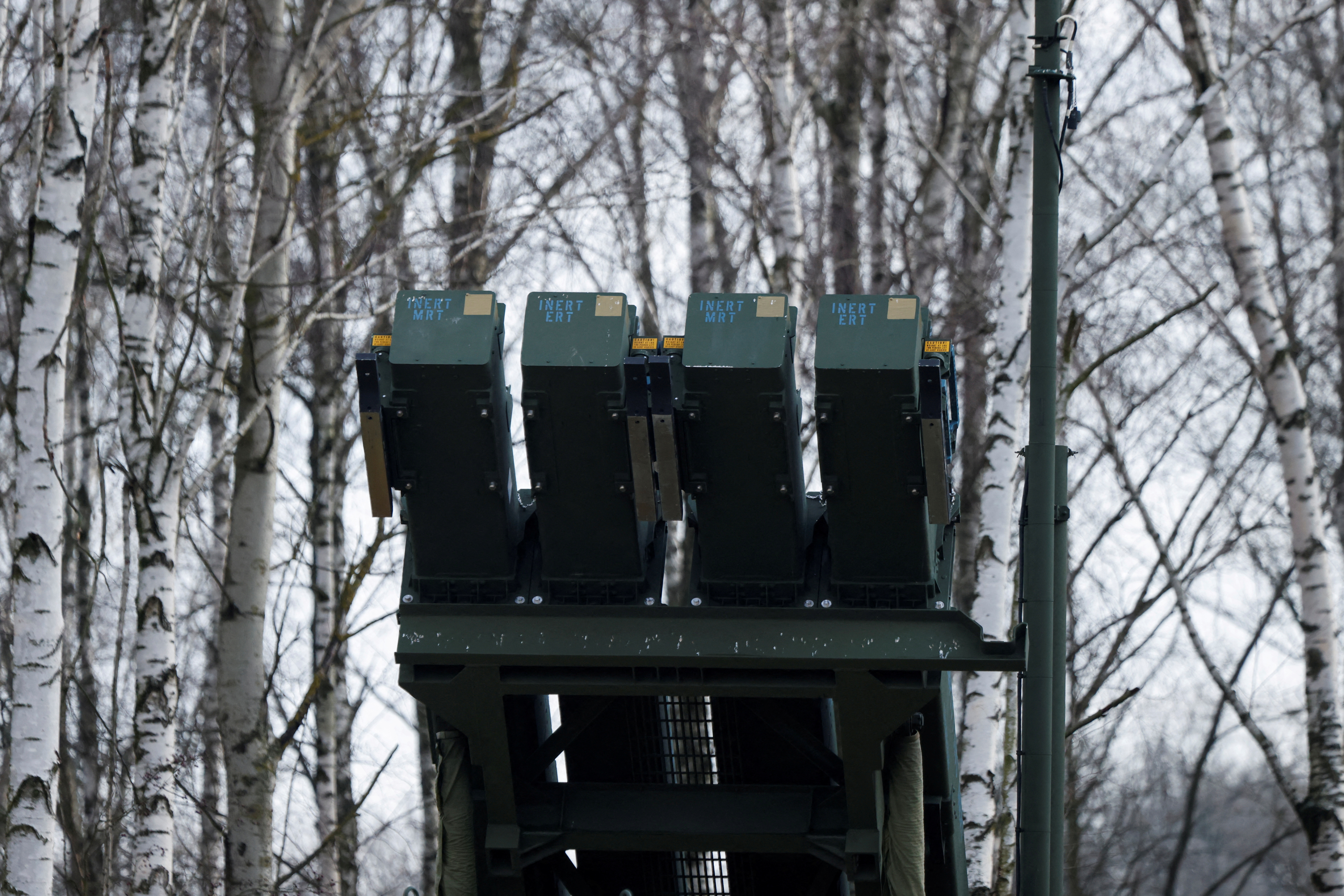
Polish Prime Minister Donald Tusk described the airspace violation as an "intentional provocation." Defense Minister Władysław Kosiniak-Kamysz also pointed to the timing and location. At the same time, troops from eleven European countries were present in Poland participating in an exercise of the Coalition of the Willing. This exercise was aimed at a potential post-war mission in Ukraine. Whether Moscow actually planned the missiles to disrupt the exercise remains an open investigative question. Politically, however, the combination of attack, geography, and timing is enough to change the European risk calculation.
Russia is not only testing the reaction times of individual states. It is testing the political translation of a limited incident into collective resolve. This is precisely where the significance of the Polish term "provocation" lies: Warsaw did not want to classify the incident as either a random deviation or an automatically hostile attack. It wanted to show that there is a large space for practical deterrence between these categories.
Patriot and F-16 Are the Real Security Guarantee
The technical response was multinational. Polish F-16s, Swedish JAS 39 Gripens, a Dutch A330 Multi Role Tanker Transport, and ground-based air defense were activated. This is lived NATO integration: sensors, aircraft, command posts, and political communication must function within minutes. But this chain is only as strong as its weakest link.
Patriot is not a symbolic device. The system is designed to combat aircraft, cruise missiles, and certain ballistic missiles; however, its effectiveness depends on radar range, identification, rules of engagement, and available interceptors. A Patriot system that is alerted too late or whose interceptors must be conserved does not create security but only the illusion of an existing capability. Therefore, the incident once again shows why Europe's air defense problem does not end with the ordering of individual batteries.
According to President Volodymyr Zelensky, Ukraine was able to intercept 79 of the 110 missiles, but none of the 27 ballistic missiles. These figures have not been independently verified and must be treated with caution. The political finding is nonetheless clear: even a densely defended country can be pushed to the limits of its defense by saturation attacks, ballistic missiles, and short warning times. Poland, in turn, can only protect its own population if it supports Ukraine as a forward defense zone while also defending the NATO eastern flank itself.
Why Article 5 Is Not an Automatic Response Mechanism
In public debate, Article 5 is often described as an automatic military switch. This is incorrect. The treaty obliges allies to consider an attack on one member as an attack on all and to take the measures they deem necessary. However, a formal activation requires a political decision from the North Atlantic Council. After that, each country determines for itself what contribution it will make. NATO air defense is therefore not an autonomous mechanism but the result of national approvals, shared situational awareness, and deployable units.
The credible guarantee is not "Article 5 will apply at some point." It is "The first missile will be detected, assessed, and — if necessary — intercepted."
Precisely for this reason, the response on Polish soil was more important than the later statement from NATO Secretary General Mark Rutte that the alliance stands in solidarity with Poland. This statement was politically necessary but militarily insufficient. Deterrence arises from the combination of political clarity and material readiness. Those who only promise solidarity without providing sensors, interceptors, and command structures produce a press release, not deterrence.
Europe's Strategic Dilemma
The incident occurred during a phase when Washington, Moscow, and Beijing were negotiating over the Ukraine war while European states were only slowly asserting their influence on the talks. In Berlin, discussions were also taking place about "NATO-like" security guarantees for a potential post-war order in Ukraine. This sounds far-reaching but remains vague without precise rules, forces, and funding. A guarantee that is only discussed after an attack regarding its scope is not a guarantee but a political option.
For the European Union, this results in an institutional problem. The EU can organize loans, joint procurement, and industrial programs. However, it cannot replace what is actually needed in Poland through financial instruments: permanently available air defense batteries, common rules of engagement, integrated sensors, and sufficient ammunition. The European Defense Agency can promote cooperation; it cannot shoot down a missile. There is a long, politically uncomfortable path between European industrial policy and deployable NATO capability.
Germany is particularly affected by this. Since the Zeitenwende, Berlin has been talking about greater European responsibility but remains dependent on transatlantic systems, American technology, and limited production capacities in air defense. This is rational in the short term. However, in the long term, it will create a dependency if Europe buys Patriot without establishing a robust joint architecture for supply, maintenance, and further development.
The Lesson from Polish Airspace
November 20 was not an Article 5 moment. Precisely for this reason, Europe should take it seriously. Russia was able to raise the question of how far NATO is willing to bear political risks without triggering a formal alliance case with a limited airspace violation. Poland responded with readiness, not escalation. That was the right response — but it must not be confused with sufficient defense capability.
Europe's task now is not to formulate the next statement more sharply. It must close the interception chain: joint reconnaissance, faster decisions, more Patriot and other air defense systems, interoperable combat aircraft, and industrial stocks. The paradoxical truth is: Article 5 remains indispensable, but its credibility is decided daily before Article 5. More money can finance capability. Only deployable systems can prove it.
Sources
- CBS News, November 20, 2026, report on Russian missiles in Polish airspace and the attack on Ukraine: Poland accuses Russia of intentional provocation.
- Al Jazeera, November 20, 2026, analysis of proposed NATO-like security guarantees for Ukraine: Kushner says Russia OK with NATO-like security pact.
- NATO, treaty text and explanation of Article 5: The North Atlantic Treaty.
On November 20, 2026, three Russian missiles, including two Kh-101 cruise missiles and one drone, entered Polish airspace, prompting Poland to activate F-16 aircraft and Patriot missile batteries. The Polish Prime Minister labeled the incursion as an intentional provocation, coinciding with a military exercise involving troops from eleven European nations. No injuries were reported, but the incident raised significant political and military concerns regarding NATO's collective defense capabilities.
- Three Russian missiles entered Polish airspace on November 20, 2026.
- Poland activated F-16s and Patriot batteries in response.
- The incident was described as an intentional provocation by Polish officials.
- No injuries were reported in Poland during the incident.
- The event occurred during a military exercise involving troops from eleven European nations.