
Elbit to build artillery training center for Israel’s Roem and PULS
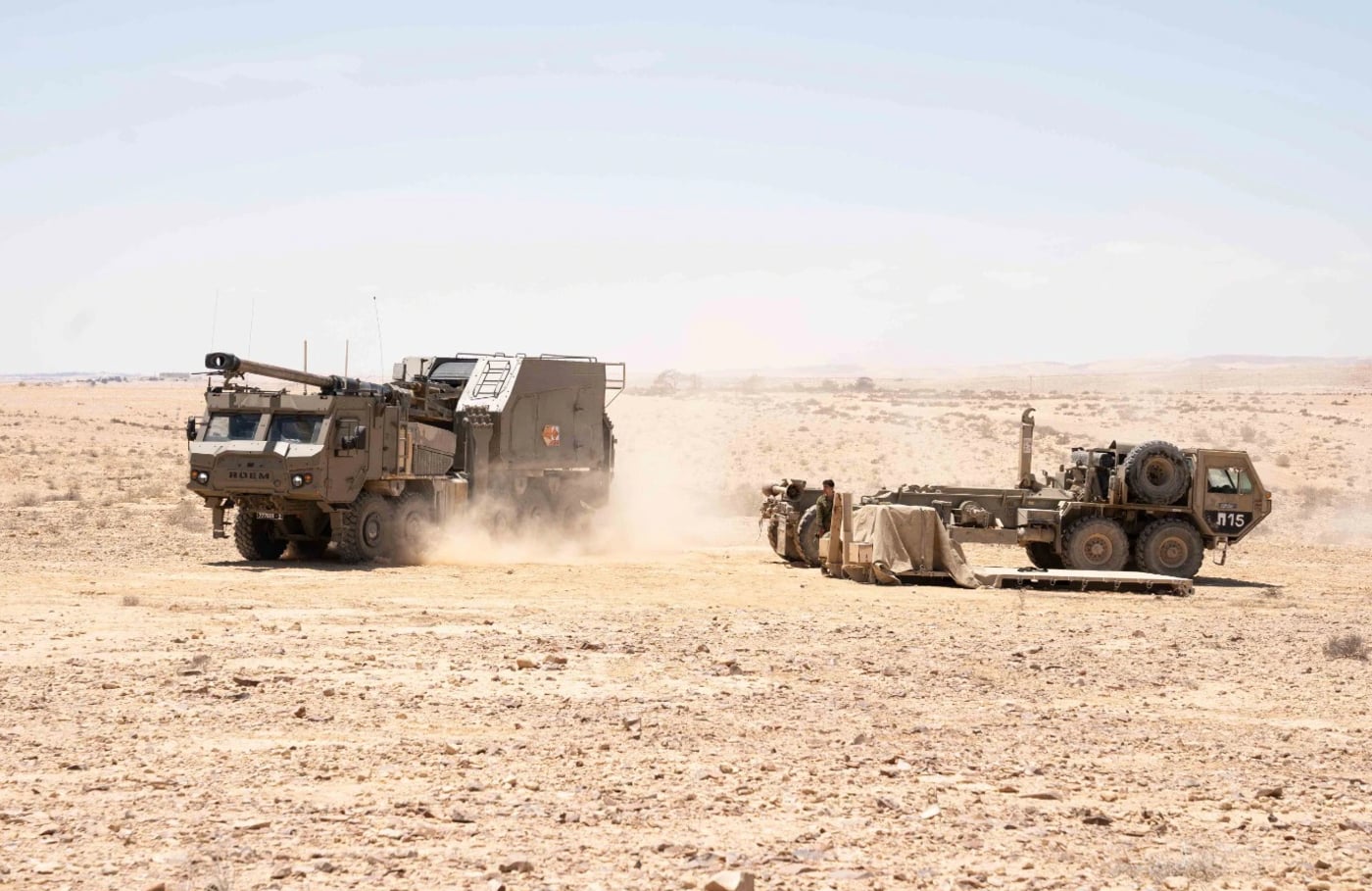
Israel’s Defense Ministry has signed a 15-year contract with Elbit Systems worth about 600 million shekels, or roughly $192 million, to build and run a training and simulation center for the Israel Defense Forces Artillery Corps as it brings the new Roem self-propelled howitzer and Lahav rocket launcher into service.
The ministry’s Directorate of Defense Procurement signed the deal together with the IDF Ground Arm, the ministry said on social media on Nov. 2. The center will train commanders and crews on the Roem, the IDF name for Elbit’s SIGMA 155 mm wheeled howitzer, and the Lahav, Israel’s version of Elbit’s PULS precision rocket launcher.
Elbit will build the physical infrastructure and classrooms and supply driving and mission simulators, then provide instructors, maintenance and logistics support over the life of the contract. The ministry said the center should shorten the time it takes to qualify artillery crews, raise their skill level and save money by reducing wear on operational vehicles used for training. It did not say where the facility will be built, how many simulators it will include or when it will open.
“The combination of advanced training and simulation technologies with a full, long-term support package will help the Artillery Corps realize the full firepower potential of the Roem cannon and the new systems, while saving and making optimal use of resources,” said Ze’ev Landau, head of the Directorate of Defense Procurement. (Translated from Hebrew.)
The Roem is replacing the U.S.-built M109 howitzers, known in Israel as the Doher, that have served the IDF for about four decades. It mounts a fully automated 155 mm gun on a 10×10 truck, needs a crew of three instead of seven, and can hit targets about 40 km (25 miles) away, roughly double the range of the M109. The Artillery Corps says it can fire up to eight rounds per minute.
Elbit handed over the first Roem at its plant in Yokneam in late December 2025, and the system went into training at the Tze’elim base in southern Israel. The 282nd Artillery Brigade used it in combat for the first time in April, firing on rocket and anti-tank launch sites during operations in southern Lebanon.
The Lahav has been in IDF service since 2020. Its PULS launcher can fire rockets and missiles of several calibers from the same truck and has sold widely in Europe, including to the Netherlands and Spain, and to Greece, which signed a $750 million deal for the system in April.
“Elbit, as a partner to the needs of the defense establishment and the IDF, has developed for the Ground Arm one of the most advanced training and instruction systems in the world. The artillery school and the training system for artillery fighters will allow the Artillery Corps high-quality and efficient training to keep the fire system at the highest readiness,” said Boaz Cohen, general manager of Elbit Systems Land & Armaments. (Translated from Hebrew.)
The ministry described the contract as a key step toward the full operational entry of the Roem and Lahav, but did not give a date for when the Artillery Corps expects to complete its transition to the new systems.
Content preview only. Full article available at source. View Full Article
Israel's Defense Ministry signed a 15-year contract with Elbit Systems on November 2, 2023, to establish a training and simulation center for the Artillery Corps, focusing on the new Roem self-propelled howitzer and Lahav rocket launcher. This initiative aims to enhance the training of artillery crews and optimize resource use. The Roem howitzer is set to replace the older M109 models, while the Lahav has been operational since 2020.
- Israel's Defense Ministry signed a 15-year contract with Elbit Systems worth about 600 million shekels ($192 million).
- The contract involves building a training and simulation center for the Artillery Corps.
- The center will focus on training for the Roem howitzer and Lahav rocket launcher.
- The Roem howitzer replaces the M109 howitzers used by the IDF for about four decades.
- The Lahav rocket launcher has been in IDF service since 2020.