
Escalation of Mutual Attacks: Russia Targets Ukrainian Military Enterprises, Zelensky: Russian Ballistic Missiles Remain Ukraine's "Greatest Challenge"
[Global Times Special Correspondent in Russia, Xiao Xinxin] According to the Ukrainian News Agency on the 7th, Ukrainian President Zelensky stated on social media that the Russian military launched attacks on the infrastructure of Ukraine's capital Kyiv and 12 regions in the early hours of that day, with energy facilities being one of the main targets of the attack. Reports indicate that, according to information released by the Ukrainian Ministry of Internal Affairs on the morning of the 7th, the attacks have resulted in at least 12 deaths and over 40 injuries. In an evening video address on the 6th, Zelensky stated that, based on the latest intelligence, Russia is preparing to launch a large-scale attack on Ukraine. He urged the public to pay attention to missile attack alerts and stated that Ukrainian authorities and the air force are prepared to respond.
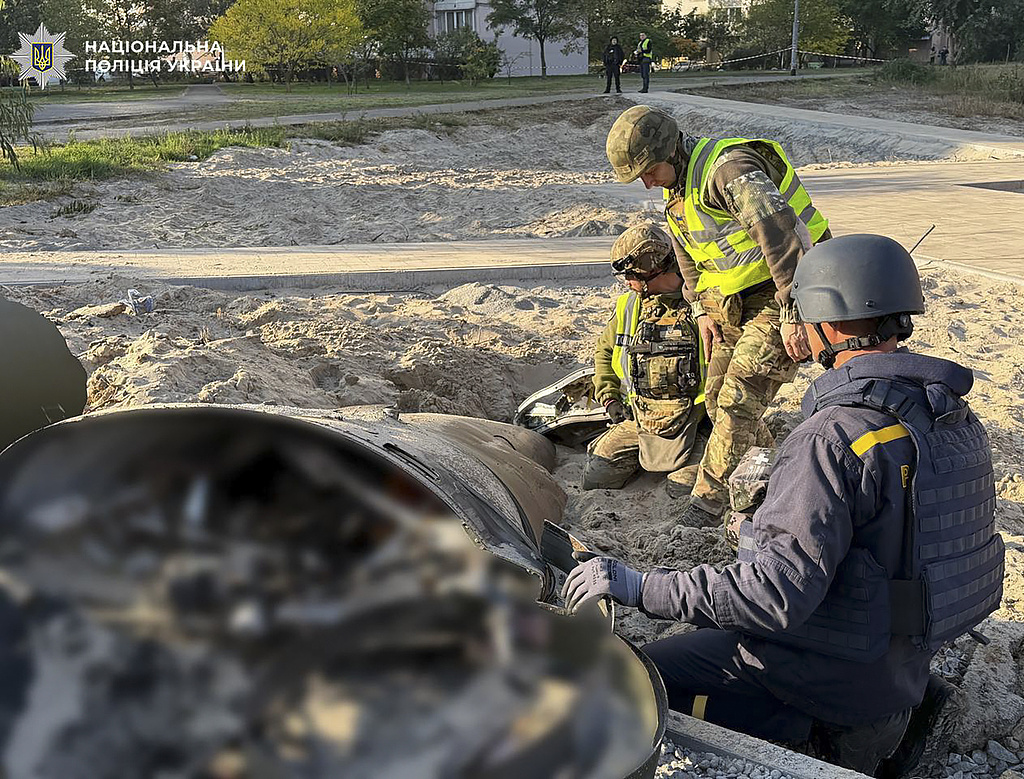
Reports indicate that on the 7th, Zelensky stated that the Russian military launched 70 missiles and used drones in this attack, including a large number of ballistic missiles, but Ukraine only successfully intercepted a portion of them. Russian ballistic missiles remain the "biggest challenge" faced by Ukraine, which is searching daily for "Patriot" air defense systems to intercept missiles. He also mentioned that in response to Russia's attacks on Ukrainian civilians, the Ukrainian military struck four Russian targets in the past day, including two oil facilities in the Russian regions of Perm Krai, Samara, and Astrakhan, as well as a training ground, while the Ukrainian military also conducted strikes in the Black Sea waters.
The Russian Ministry of Defense reported on the 7th that the Russian military used land-based, sea-based, air-based precision weapons, and drones to strike military enterprises in Kyiv city, Kyiv region, and five other regions that produce and store "Flamingo" cruise missiles and medium- to long-range drones for Ukraine's "Fuel Point" company. The Russian military also targeted port and ship repair infrastructure in Odesa region and vessels used by the Ukrainian military.
According to AFP, in recent weeks, both Russia and Ukraine have claimed to escalate their strikes against each other. Russia has heavily attacked key bridges, port facilities, and logistics centers of the Ukrainian military in the capital Kyiv. Ukraine has targeted the Russian capital Moscow and oil facilities in southern Russia, resulting in surface oil spills, beach closures, and black rain.
According to the Ukrainian "Kyiv Independent," the North Bridge across the Dnieper River was attacked by Russian drones on the 3rd and 4th, while the South Bridge in Kyiv was also attacked on the 1st and 2nd. Reports indicate that Russian drones had never directly attacked any major bridges in the Ukrainian capital before. The Associated Press stated that Russia's repeated strikes on Kyiv's transportation arteries are a form of harassment tactic, part of a large-scale operation to undermine Ukraine's economy and public life. The Russian Ministry of Defense claimed that the bridges in question were used for the movement of Ukrainian military troops and the transportation of military supplies.
According to the Ukrainian News Agency on the 7th, Ukrainian Air Force spokesman Ignat stated that Russia has intensified its use of jet drones to attack Ukraine. The number reached 3,500 in September, compared to 2,800 in August. In terms of performance, Russian jet drones are approaching the capabilities of cruise missiles. Ukrainian Air Force Deputy Commander Cherevatsky stated on the 6th that the Ukrainian military is not expected to receive a large number of intercepting drones against Russian jet drones until late November at the earliest. Additionally, due to the frequent deployment of Ukrainian F-16 fighter jets for intercepting drones, their service life is rapidly being consumed.
Reuters reported that Russian strikes have severely impacted the Ukrainian economy. The chairman of the budget committee of the Ukrainian Verkhovna Rada (parliament), Pidras, stated that in the first nine months of this year, Ukraine expects to lose over 49.5 billion hryvnias (approximately 1.1 billion USD) in tax revenue due to Russian attacks. The Ukrainian government anticipates losses could reach up to 70 billion hryvnias by the end of this year. Reports indicate that the agricultural sector, as the largest source of export revenue for Ukraine, has been particularly hard hit. Russian attacks on Ukraine's Black Sea coastal ports led to a 36.6% year-on-year decline in Ukrainian grain exports in September.
On the other hand, Ukraine's attacks on Russian refineries have also had negative effects on Russia. Sky News reported on the 7th that the Volgograd refinery owned by Russian oil company Lukoil was damaged by a drone attack and completely ceased crude oil processing on the 2nd. This refinery has an annual crude processing capacity of about 14 million tons, accounting for approximately 5% of Russia's total refining capacity. Previously, the Ukrainian Ministry of Defense stated on the 4th that Ukraine had destroyed over 51% of Russia's refining capacity.
According to reports from RIA Novosti, analysts have stated that Ukraine's attempts to strengthen its strikes on Russian refining enterprises may lead to further escalation of the situation, potentially provoking a stronger response from Russia and expanding the scale of confrontation. Ukraine lacks a clear vision for ending the conflict, and such strikes can only produce limited tactical effects, making the negotiation process more difficult. Reports indicate that European support for Ukraine and the disruption of the peace process have also contributed to the ongoing conflict.
Additionally, according to a report by Reuters on the evening of the 6th, citing EU diplomats, representatives of EU member states are expected to approve around 1,650 new sanctions against Russia on the 7th, mainly targeting Russian military-industrial enterprises. This will be the largest package of sanctions imposed by the EU against Russia since the outbreak of the Russia-Ukraine conflict in 2022.
According to TASS, Russian presidential press secretary Peskov stated on the 7th that the EU is formulating its defense policy around the idea of confronting Russia. This is a dead end that will not yield any good results. Europe is obsessed with the idea of militarizing the EU, transforming it from an economic union into a military-political alliance. Russia is taking all necessary measures to ensure national security at the strategic level.
According to Ukraine's "National Network" on the 7th, Deputy Head of the President's Office Velysyuk stated that peace will not come in the foreseeable future. No matter how much Ukraine desires peace, it must accept this reality. She believes that accepting Russian conditions means Ukraine's surrender. Peace will eventually come, but not soon. Ukraine must currently focus on continuing to fight.
On October 7, 2023, Russian forces launched missile and drone strikes against Ukrainian infrastructure, particularly targeting energy facilities and military production sites in Kyiv and other regions. The attacks resulted in at least 12 fatalities and over 40 injuries. In retaliation, Ukrainian forces struck four Russian targets, including oil facilities and a training ground. The ongoing conflict has severely impacted Ukraine's economy, particularly its agricultural exports.
- At least 12 people were killed and over 40 injured in the attacks.
- Russia launched 70 missiles and used drones in the strikes.
- Ukrainian forces targeted four Russian sites in response to the attacks.
- The attacks included strikes on military production facilities and energy infrastructure.
- Ukraine's agricultural exports have significantly declined due to Russian attacks on ports.