
Escalation of the Red Sea Situation: The Horn of Africa Faces Multiple Challenges
Recently, the Houthi armed forces in Yemen have intensified their offensive against the government forces. On the 11th, the organization stated that since launching the offensive on September 3, it has captured approximately 5,400 square kilometers of land in western Yemen. On the same day, the Yemeni government reported that the Houthi armed forces have taken control of the entire western coastline of the country and continue to advance southward. On September 11, local time, the Houthi armed forces reached Piling Island in the Bab-el-Mandeb Strait, raising significant international concern over the security situation of shipping in the Red Sea.
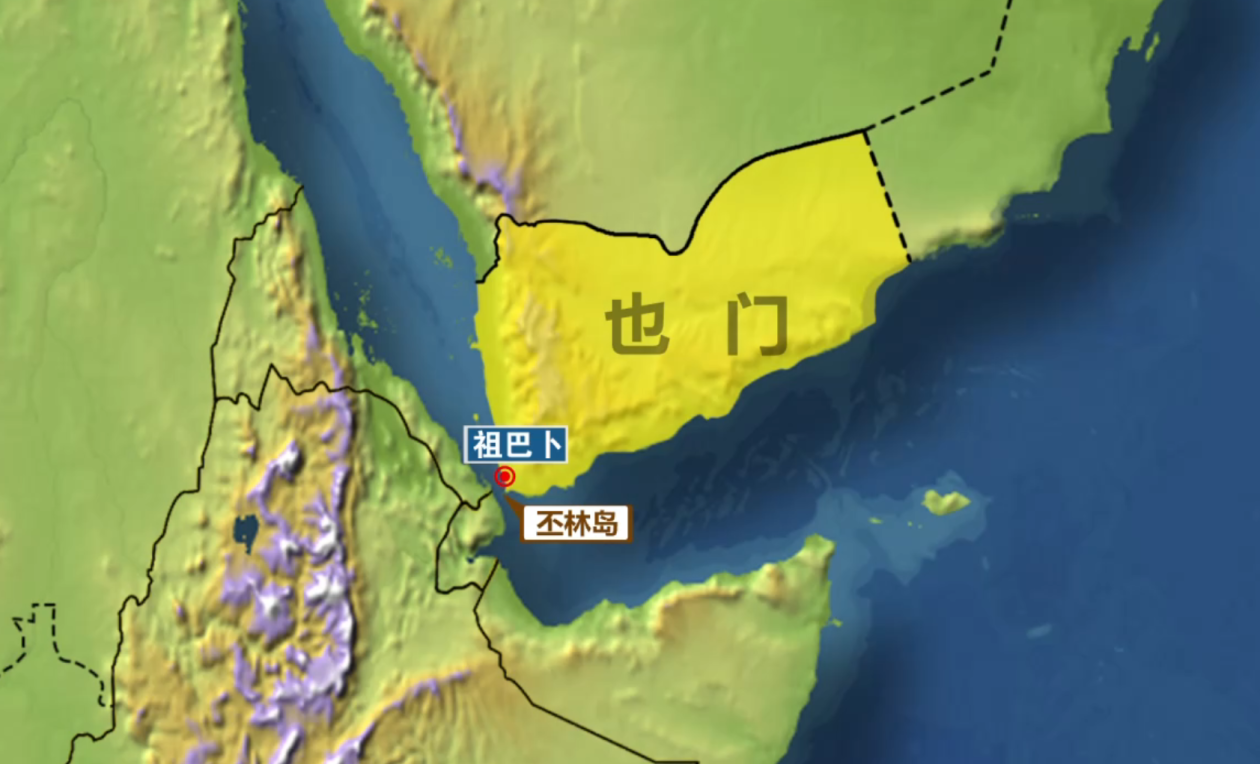
The narrowest point of the Bab-el-Mandeb Strait is about 29 kilometers wide, connecting the Red Sea to the Gulf of Aden and the Indian Ocean to the south, with Djibouti and Eritrea on the west side. It is an important maritime passage linking Asia, Africa, and Europe, and is also a crucial route for vessels entering the Indian Ocean from the Suez Canal. According to data from the U.S. Energy Information Administration, before the outbreak of the U.S.-Iraq war, about 12% of global oil transport passed through the Bab-el-Mandeb Strait, while the number of vessels passing through the strait on September 10 had dropped to single digits.
As the Houthi armed forces move closer and take control of key positions around the strait, the risks begin to extend to the other side of the Red Sea. The first to feel the pressure is the Horn of Africa.
Djibouti: The Bab-el-Mandeb Strait is right at the "doorstep"
Among the countries in the Horn of Africa, Djibouti is the most directly affected.
Djibouti has a small land area but occupies an important position at the western entrance of the Bab-el-Mandeb Strait. Ports, logistics, and transshipment trade are its economic pillars and also serve as a vital channel for Ethiopia's foreign trade. According to data from the International Monetary Fund, about 95% of Djibouti's port business is driven by Ethiopian trade, and port activities are highly correlated with the economic growth of the country.
On September 11, the Djibouti Ministry of Foreign Affairs issued a statement expressing high concern over the situation in the Bab-el-Mandeb Strait, emphasizing the importance of maintaining freedom of navigation at sea, and supporting efforts to ease tensions and promote a political resolution to the Yemen issue.
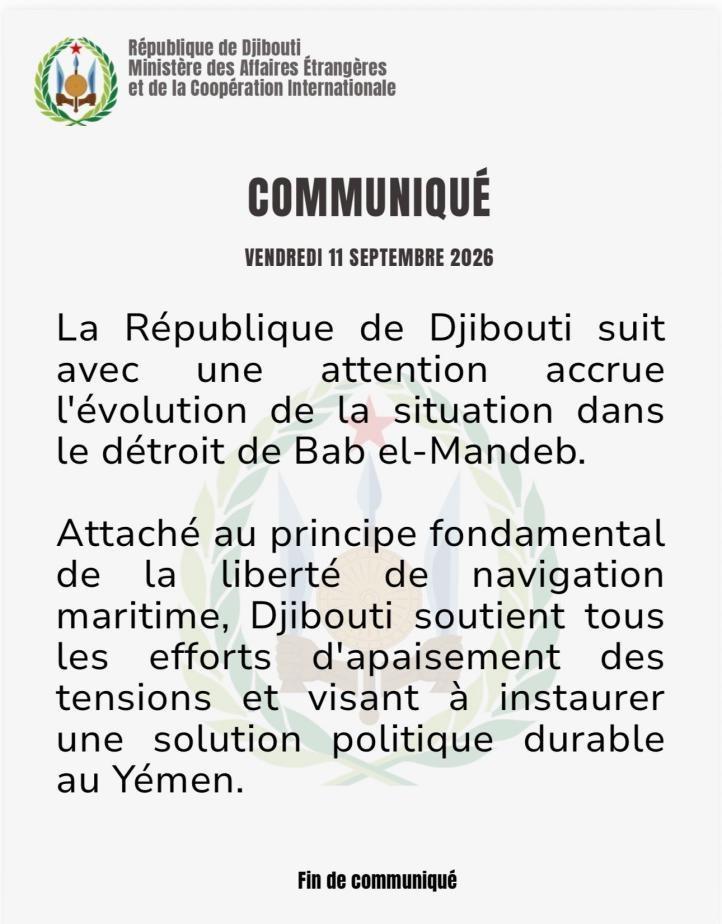
△ The Djibouti Ministry of Foreign Affairs stated that it is closely monitoring the situation in the Bab-el-Mandeb Strait and emphasized freedom of navigation at sea.
For Djibouti, the risks do not only stem from military conflict. If shipping companies perceive that the risks in the Bab-el-Mandeb Strait continue to rise, leading to further reductions in Red Sea routes or detours around the Cape of Good Hope, the port's berthing, resupply, and transshipment operations may be affected.
The Bab-el-Mandeb Strait is both a geographical advantage for Djibouti and a point of economic risk.
Ethiopia: No coastline, but cannot remain aloof
If Djibouti faces the risks of the strait directly, Ethiopia's impact involves a broader economic scope.
Ethiopia is a landlocked country. According to data from the United Nations Conference on Trade and Development, the country's goods imports are projected to be about $21.49 billion in 2024, while exports are about $4.5 billion. In recent years, Ethiopia has been seeking more access routes to the sea, including the Port of Lamu in Kenya and the Port of Berbera in Somalia.
On July 25, Ethiopian media "The Reporter" published an article stating that over 90% of the country's imports and exports pass through the Port of Djibouti. The article warned that if the Bab-el-Mandeb Strait experiences a prolonged blockade, the supply of fuel and fertilizers could be impacted, further affecting food prices and agricultural production.
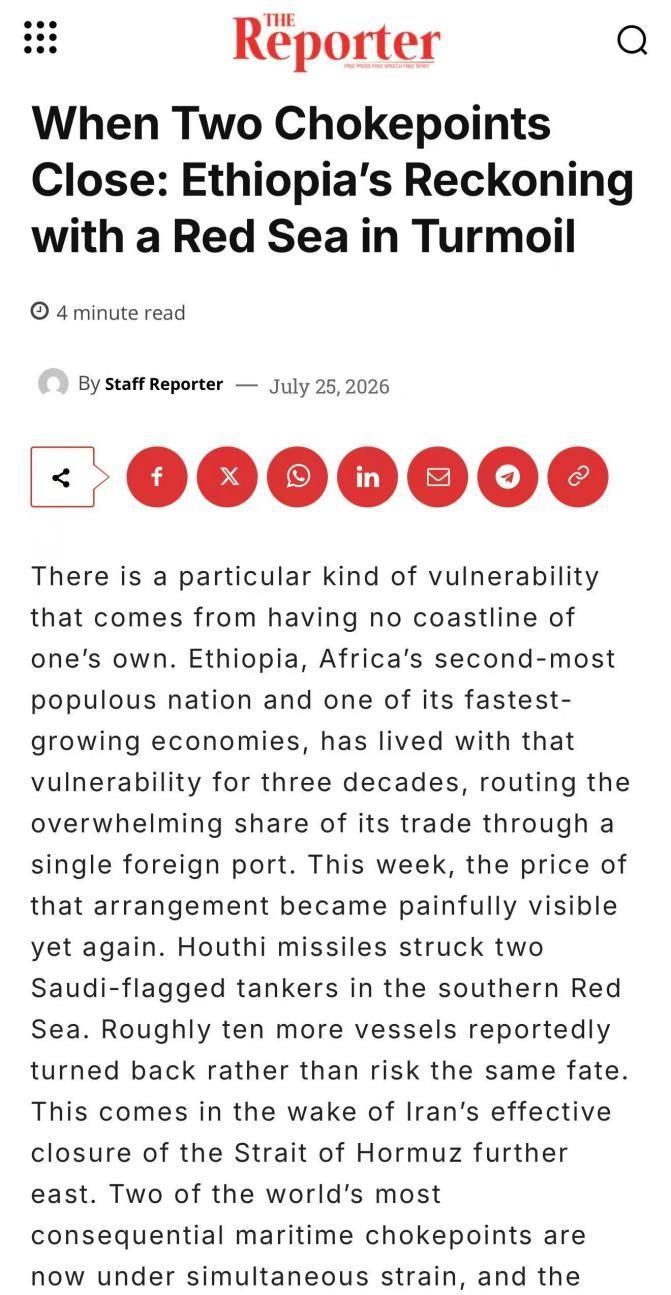
△ Ethiopian media "The Reporter" published an article on July 25 titled "How Ethiopia Responds to a Turbulent Red Sea When Two Chokepoints Are Closed."
For Ethiopia, the risks in the Red Sea may ultimately manifest as rising import costs. If ships detour around the Cape of Good Hope, the journey, fuel, insurance, and freight costs will increase, and these costs may further translate into higher prices for fuel, machinery, fertilizers, and other goods. Even without a coastline, Ethiopia cannot remain detached from the situation in the Red Sea.
Somalia: Trade risks and maritime security intertwine anew
To the south of the Bab-el-Mandeb Strait lies Somalia.
Somalia has over 3,300 kilometers of coastline, bordering the Gulf of Aden to the north and the Indian Ocean to the east. For many years, the Gulf of Aden has been a crucial area for the international community to combat piracy and maintain maritime security.
As the Houthi armed forces make progress along the Red Sea coast of Yemen, the maritime security environment facing Somalia has become more complex.
Somalia's major media outlet "Garowe Online" published a commentary on September 10, noting that the Houthi armed forces' occupation of the Yemeni Red Sea coastal city of Mocha has further strengthened their presence near the Bab-el-Mandeb Strait. The article particularly highlighted several key locations near the narrow waterways of the Bab-el-Mandeb Strait, arguing that these locations are significant for enhancing control over the shipping lanes.
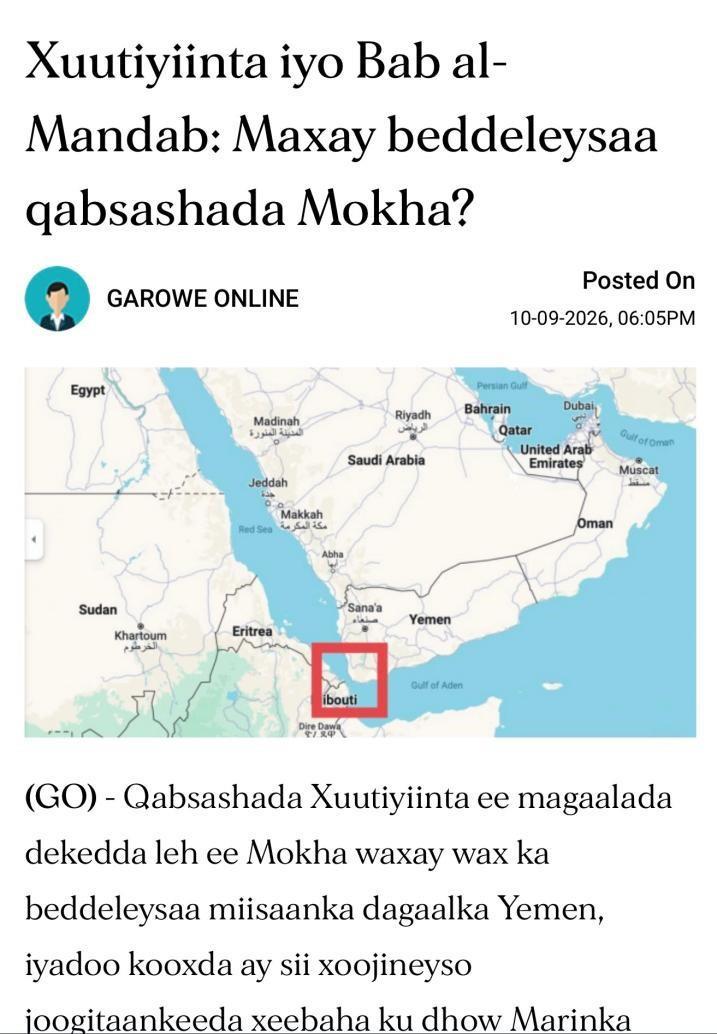
△ Somali media "Garowe Online" published an article on September 10 titled "Houthi Forces and the Bab-el-Mandeb Strait: What Changes Will the Occupation of Mocha Bring?" tracking the military progress of the Houthi armed forces near the Bab-el-Mandeb Strait and its impact on regional shipping security.
For Somalia, on one hand, rising shipping costs may increase the prices of imported goods; on the other hand, if commercial vessels further reduce their passage through the Red Sea and the Gulf of Aden, maritime security, escorting, and anti-piracy mechanisms may also face new adjustments.
Eritrea: Small economy, prominent strategic position
Compared to Djibouti, Eritrea may face limited direct economic impacts, but its strategic position along the Red Sea is quite prominent.
Eritrea has over 1,100 kilometers of coastline along the Red Sea, with ports such as Massawa and Assab, as well as the Dahlak Archipelago, located in a crucial strategic area of the Red Sea.
According to data from the United Nations Conference on Trade and Development, Eritrea's goods imports are projected to be about $560 million in 2024, far lower than those of Ethiopia and Djibouti.
Eritrea's official media "Shabait" published an article on September 9, stating that the strategic position of Eritrea along the Red Sea has a long history and is not a result of the current crisis, but rather has a long-standing historical and geographical basis. The article also emphasized that the strategic value of ports and maritime passages cannot be discussed without considering national sovereignty and international law.
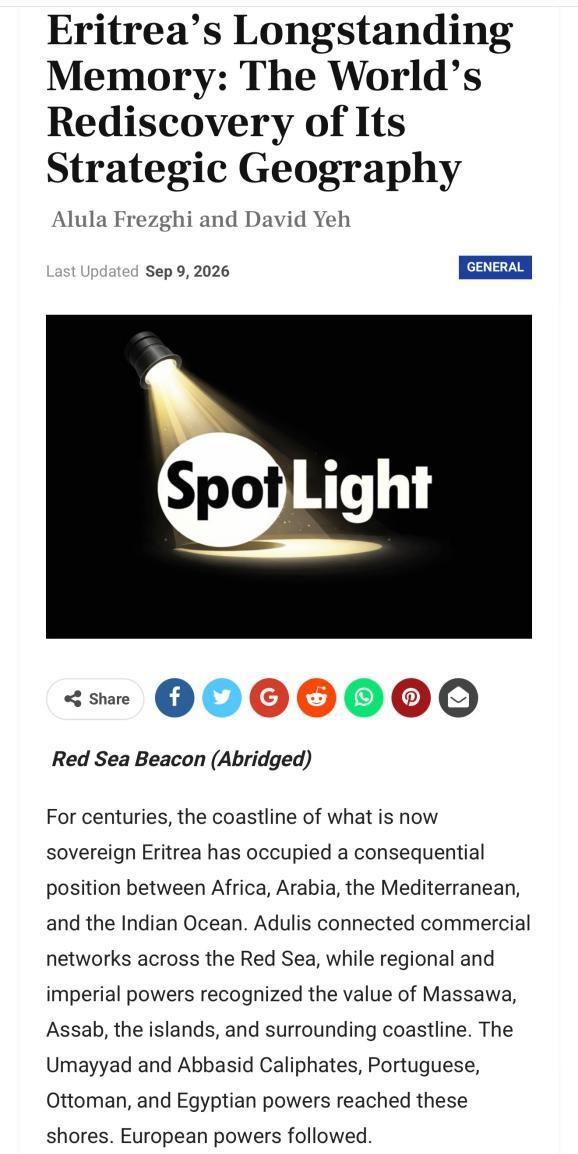
△ Eritrea's Ministry of Information's news website "Shabait" published an article on September 9, emphasizing the long-standing strategic geographical value of the country's Red Sea coastline.
For Eritrea, the Red Sea is not only related to trade but also to regional security and strategic space. Changes in the situation in the Bab-el-Mandeb Strait have once again brought attention to the country's geopolitical position.
From the strait to the ports: How does the risk in the Red Sea extend to Africa?
The narrowest point of the Bab-el-Mandeb Strait is only about 29 kilometers wide, but the impact of shipping risks can span thousands of kilometers.
If more vessels detour around the Cape of Good Hope, the extended journey may lead to increases in fuel, insurance, and freight costs, severely affecting imported goods such as fuel, fertilizers, food, vehicles, and machinery.
For the countries in the Horn of Africa, the Bab-el-Mandeb Strait is both an important gateway connecting Asia, Africa, and Europe, and a risk point that is difficult to bypass. Currently, in addition to seeking new ports and trade routes, countries also need to strengthen maritime security, port security, and international cooperation.
How the situation in the Red Sea develops next will not only depend on how many commercial vessels change their routes but will also test the ability of the Horn of Africa countries to respond to external shocks. (Reported by CCTV reporters Ci Xiaoning and Wu Ting)
Houthi forces intensified their offensive against the Yemeni government, capturing around 5,400 square kilometers of territory and reaching the Bab-el-Mandeb Strait by September 11. This escalation has raised international concerns regarding maritime security in the Red Sea, particularly affecting trade routes vital to Djibouti and Ethiopia. The situation poses significant risks to regional stability and economic activities dependent on these maritime routes.
- Houthi forces have captured approximately 5,400 square kilometers of territory since September 3.
- Houthi forces have reached the Bab-el-Mandeb Strait, raising concerns about maritime security.
- Djibouti's economy is heavily reliant on trade through the Bab-el-Mandeb Strait, with 95% of its port activities linked to Ethiopia.
- Ethiopia's imports and exports are significantly affected by the situation in the Bab-el-Mandeb Strait.
- The situation poses risks to maritime trade routes and regional stability.