
PLA Type 19 Amphibious 8×8 Vehicle Equipped with Laser System for 2026 Taiwan Strait Landing Anti-Drone Operations Entering Combat Readiness
 Li Minghui
PLA Type 19 Amphibious 8×8 Vehicle Equipped with Laser System, 2026 Taiwan Strait Landing Anti-Drone Operations Entering Combat Readiness
On September 12, the South China Morning Post revealed a set of photos circulating online in China, showing the Type 19 amphibious 8×8 vehicle seemingly equipped with directed energy laser weapons and an additional set of sensors beyond its standard autocannon turret. The original source of the photos, the location of the shoot, and the official model of the vehicle have not been independently confirmed, which must be clarified first. However, if the modification is true, it points to not an isolated piece of novel equipment, but rather to a very real problem faced by the PLA Eastern Theater Command's amphibious forces—how landing troops can survive on a coastline dense with drones.
What This Vehicle Changes
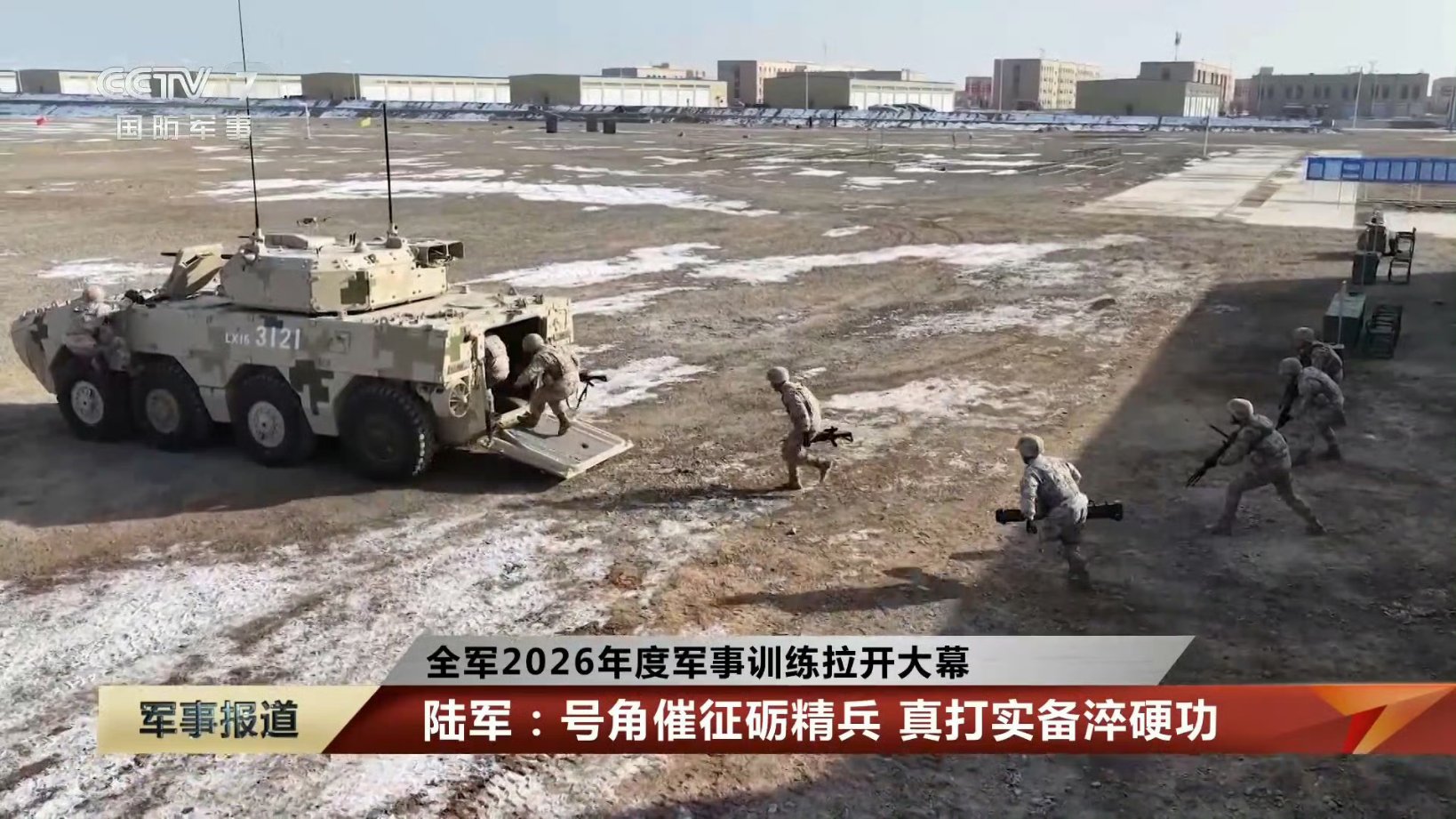
The Type 19 series is essentially a wheeled amphibious armored platform, emphasizing road mobility, personnel transport, and continuous operations from landing ships to the beach. The laser cannon itself may not require a large ammunition compartment, but it does need high-power electricity, stable targeting, electro-optical search, and cooling equipment. The additional sensors are likely used to detect and track small drones, with the onboard system completing hard kill or soft kill coordination. Public information does not provide details on laser power, effective range, and sustained firing time, so any claims about "how many drones it can intercept" are speculative.
The South China Morning Post quoted former RAND China analyst Timothy Heath, stating that as long as it does not affect buoyancy performance, using the laser system on the water is theoretically feasible; however, the added weight, resistance to salt mist corrosion, and power demands will put pressure on amphibious design. In simple terms, it is not just a matter of attaching a laser to the turret; the entire vehicle's buoyancy, center of gravity, and energy management must be recalculated.
Why It Is Associated with Taiwan Strait Landings
In 2023, Jane's Information Group reported that Type 19 family vehicles have entered service with the 73rd Group Army of the Eastern Theater Command. The amphibious forces of the 73rd Group Army are typically viewed as important participants in operations towards the Taiwan Strait, so the most valuable aspect of these photos is not whether they have been mass-produced, but rather that they showcase the operational scenarios for the equipment design: the beachhead forces may have to simultaneously deal with reconnaissance drones, loitering munitions, and low, slow, small targets.
Traditional close-in defense guns are not without effect against small drones, but each shot consumes ammunition and exposes the vehicle's position. The marginal interception cost of laser weapons is much lower, making them suitable for handling a large number of low-cost targets. However, they are significantly affected by weather, smoke, sea fog, and visibility, and sustained power is also limited by the vehicle's engine and power storage system. The humid environment and complex weather on Taiwan's west coast will only amplify these weaknesses.
The Real Bottleneck Is in the System, Not the Turret
For such vehicles to be useful, they must be integrated into brigade and battalion-level reconnaissance and command networks to obtain stable target indications and form layered defenses with electronic warfare, autocannons, and shoulder-fired air defense weapons. If the sensors rely solely on onboard electro-optical devices, low-altitude targets may come too quickly; if they depend on external networks, the communication links may become targets for interference and attack. For military industrial enterprises, perhaps the most challenging components to mass-produce are not the laser emitters, but rather high-reliability power sources, beam control components, and cooling systems that can operate long-term in salt mist environments.
The author believes that the signals revealed by the photos should be interpreted cautiously. They do not prove that the PLA has a mature vehicle-mounted laser anti-drone system, but they do indicate that the mission boundaries of amphibious armored vehicles are expanding: from "delivering infantry to the shore" to "helping landing formations maintain operations under drone threats." This will increase pressure on the Taiwanese military and external support forces regarding low-altitude reconnaissance and loitering munitions deployment at the beachhead, but it also brings new burdens of maintenance, energy, and network coordination for the PLA.
What Answers Are Still Needed
Currently, public information is still insufficient to confirm whether the vehicle has undergone complete buoyancy tests, whether it has entered troop trials, and whether the laser system can operate stably at sea. What is truly worth tracking is not the next clearer photo, but whether it appears alongside drones, electronic warfare vehicles, and amphibious assault formations in training footage—if it is only ever shown as a single vehicle, it may still be far from changing the rules of engagement for Taiwan Strait landings.
Source: South China Morning Post, Why PLA’s laser-equipped Type 19 vehicle could matter in a Taiwan conflict, September 12, 2026; background information regarding the Type 19 family entering the 73rd Group Army is drawn from the public information cited in the article.
The PLA is equipping 2026 Type 19 amphibious 8x8 vehicles with laser systems for anti-drone operations in the Taiwan Strait, as reported on September 12, 2026. This modification aims to enhance the vehicles' capabilities in potential landing operations against drone threats. However, the effectiveness and operational stability of the laser systems remain unverified, and the integration presents several logistical challenges.
- The PLA is modifying Type 19 vehicles with laser systems for anti-drone capabilities.
- The modifications aim to enhance survival against drones on the Taiwan Strait coastline.
- The Type 19 vehicles are part of the PLA Eastern Theater Command's 73rd Group Army.
- The effectiveness of the laser system against drones remains speculative due to lack of detailed specifications.
- The integration of the laser system poses challenges related to weight, power supply, and operational stability.