
Estonia Closes Russia Border After 2026 Drone Factory Attack
 Alexandra Reeves
Estonia Closes Russia Border After 2026 Drone Factory Attack
Estonia is about to turn a suspected act of Russian sabotage into a border policy. That is the real story behind Tallinn’s decision to close its road crossings with Russia from December 1, after an attempted arson attack on an Estonian drone manufacturer. The physical damage was limited. The political signal is not.
According to Defense News, Estonian authorities detained eight Latvian citizens after they allegedly tried to set fire to the Viimsi facility of Threod Systems, near Tallinn, in the early hours of November 14. Investigators say the group intended to cause an explosion. Estonia’s Internal Security Service, KAPO, assessed that the attack was carried out at the direction of Russia’s military intelligence service, the GRU. That is an official attribution, not an independently proven finding, and the suspects remain at the centre of a criminal investigation.
The target was not symbolic
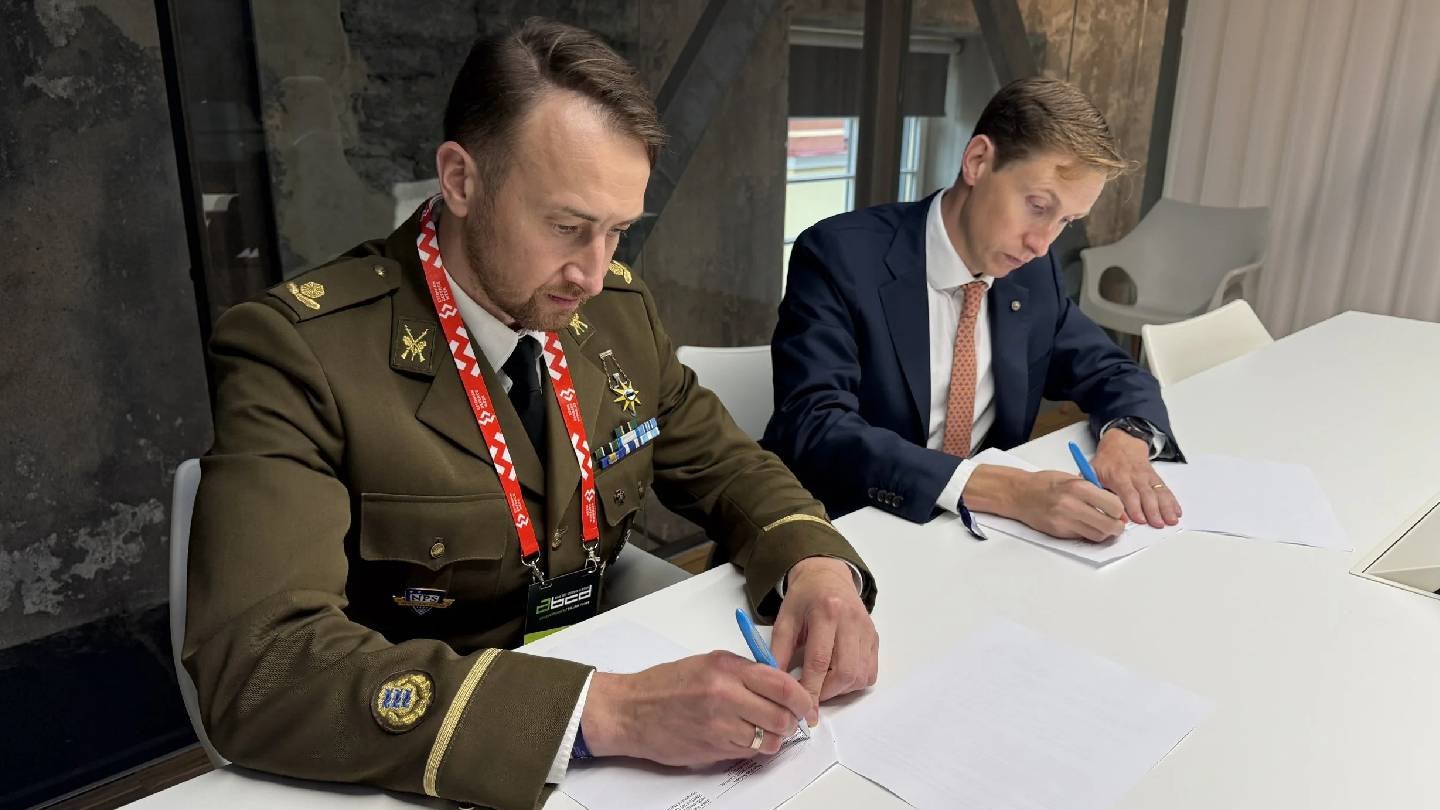
Threod is exactly the kind of company Moscow would want to intimidate. It produces unmanned aerial vehicles, one-way-drone launchers, electro-optical intelligence and surveillance systems, and target-acquisition equipment. Its systems have been used by Ukraine, including pneumatic launchers that help deliver long-range attacks against Russian targets. A Threod representative told Defense News in 2025 that the company’s launcher was likely involved whenever a long-range drone struck inside Russia.
That claim should not be read as proof that every Ukrainian strike uses Estonian equipment. It does, however, explain the strategic logic of the alleged attack. Europe’s defence industry is no longer a rear-area supplier. Small firms designing drones and launch systems are becoming part of the battlefield’s kill chain. They are also becoming soft targets: commercially accessible, politically sensitive and often less protected than military bases.
The attempted attack follows a fire at Milrem Robotics, another Estonian unmanned-systems producer, on August 15. Estonian officials later said that incident had been commissioned by Russian security services, citing similarities with other arson operations in Europe. A pattern is not the same thing as a court verdict. But it is enough to change how a government calculates risk.
Why close the border?
Estonia’s Foreign Minister Margus Tsahkna said closing the crossings would reduce Russia’s ability to conduct hostile activity and limit sanctions circumvention. That is a broader justification than protecting one factory. Tallinn is treating the border as an operational vulnerability: a route for couriers, facilitators, money and pressure, rather than merely a line for ordinary traffic.
The move is also a piece of signalling. Estonia is one of NATO’s most exposed members, sharing a long land border with Russia and sitting beside the strategic Baltic region. By imposing a costly, visible measure after an attack that caused little material damage, Tallinn is telling Moscow that deniable operations will generate consequences even when they fall below the threshold of armed attack.
Here is the uncomfortable part for NATO. Article 5 was designed to deter tanks, missiles and uniformed formations. It is much less useful against a firebomb, a recruited foreign national or a compromised logistics chain. If each incident is handled as a purely national law-enforcement matter, Russia gets to choose the tempo and the alliance debates the evidence after the fact.
A warning for Europe’s defence industry
Threod’s reported 2025 figures show why the company matters beyond Estonia. It recorded roughly €47.2 million in revenue and €15.6 million in profit, while expanding exports to militaries in Europe, the Middle East and Africa. This is not a hobby workshop. It is part of the fast-growing European ecosystem that is trying to produce battlefield drones at the speed Ukraine has made necessary.
That ecosystem has a security problem. Governments want private companies to innovate quickly, but procurement policy has moved faster than physical protection, counter-intelligence and industrial security. A drone factory can be strategically important without looking like a military installation. Its employees may be civilians; its buildings may sit in an industrial park; its vulnerabilities may be exposed through ordinary commercial data.
European governments should now assume that defence suppliers connected to Ukraine will be surveilled, recruited against and tested by sabotage. The response cannot consist only of more guards at the gate. It needs intelligence-sharing with industry, hardened communications, screening of subcontractors, rapid attribution mechanisms and rehearsed support from national security services. Otherwise Europe will keep asking private companies to carry the burden of wartime production while leaving them with peacetime security arrangements.
The strategic meaning of December 1
Closing the crossings is not a military escalation in the classic sense. It will not stop Russian intelligence officers from operating through every route, nor will it eliminate cyber access, influence operations or recruitment in Latvia and elsewhere. It may also impose costs on border communities and legitimate travellers. The measure is therefore best understood as risk reduction and political signalling, not a complete counter-sabotage strategy.
It does, however, expose a growing divide inside Europe. The Baltic states increasingly treat Russia’s war as a permanent contest that reaches into factories, ports and municipal infrastructure. Parts of western Europe still speak as if hybrid warfare is a category of disruption that can be managed separately from military deterrence. Tallinn’s decision says the categories have already collapsed.
The next test will be whether other NATO members quietly follow Estonia’s logic. Watch for tighter screening around defence companies, new protection packages for drone manufacturers and a stronger EU response after Tsahkna’s meeting with foreign ministers in Brussels. Also watch the evidence: if Estonia’s attribution survives the investigation and prosecution, the case will become a model for allied action. If it does not, Moscow will use the uncertainty to claim that Europe is manufacturing pretexts.
The key finding is simple. Russia may not need to attack a NATO country conventionally to make its defence production more expensive and less confident. Estonia has answered one suspected GRU operation by closing a border. The harder question is whether the alliance can build a common response before every European drone factory becomes its own isolated frontline.
Sources
- Defense News, “Estonia to close border with Russia after arson attack on local drone maker,” November 16, 2026
- Estonian Internal Security Service (KAPO) and Estonian Prosecutor’s Office statements, as quoted by Defense News
- Threod Systems company figures and statements, as reported by Defense News
Estonia closed its road crossings with Russia on December 1, 2026, following the detention of eight Latvian citizens for attempting to set fire to a drone manufacturing facility in Viimsi. The Estonian Internal Security Service attributed the attack to Russia's military intelligence, the GRU. This decision aims to limit Russia's hostile activities and reflects a broader shift in Estonia's border security policy in response to perceived threats from Russia.
- Estonia closed its border with Russia on December 1, 2026.
- Eight Latvian citizens were detained for attempting to sabotage a drone factory.
- The attack was attributed to Russia's military intelligence service, the GRU.
- The closure aims to reduce Russia's ability to conduct hostile activities.
- Estonia's decision signals a shift in how it views its border security in relation to military threats.