
Ethiopia Receives 12 Su-35s — The Tigray War Opens a Regional Front
 Marie Dubois
Ethiopia Receives 12 Su-35 — The Tigray War Opens a Regional Front
In Mekele, in northern Ethiopia, the resumption of fighting between the federal government and the Tigray People's Liberation Front (TPLF) has just taken on a new dimension. Addis Ababa has confirmed the receipt of 12 Russian Su-35 fighter jets and announced the upcoming delivery of S-400 air defense systems. This is not just a simple equipment purchase. In a theater where the front lines are separated from Asmara by a few hundred kilometers, the acquisition gives a domestic crisis a regional depth.
A Purchase Concluded Before the Crisis
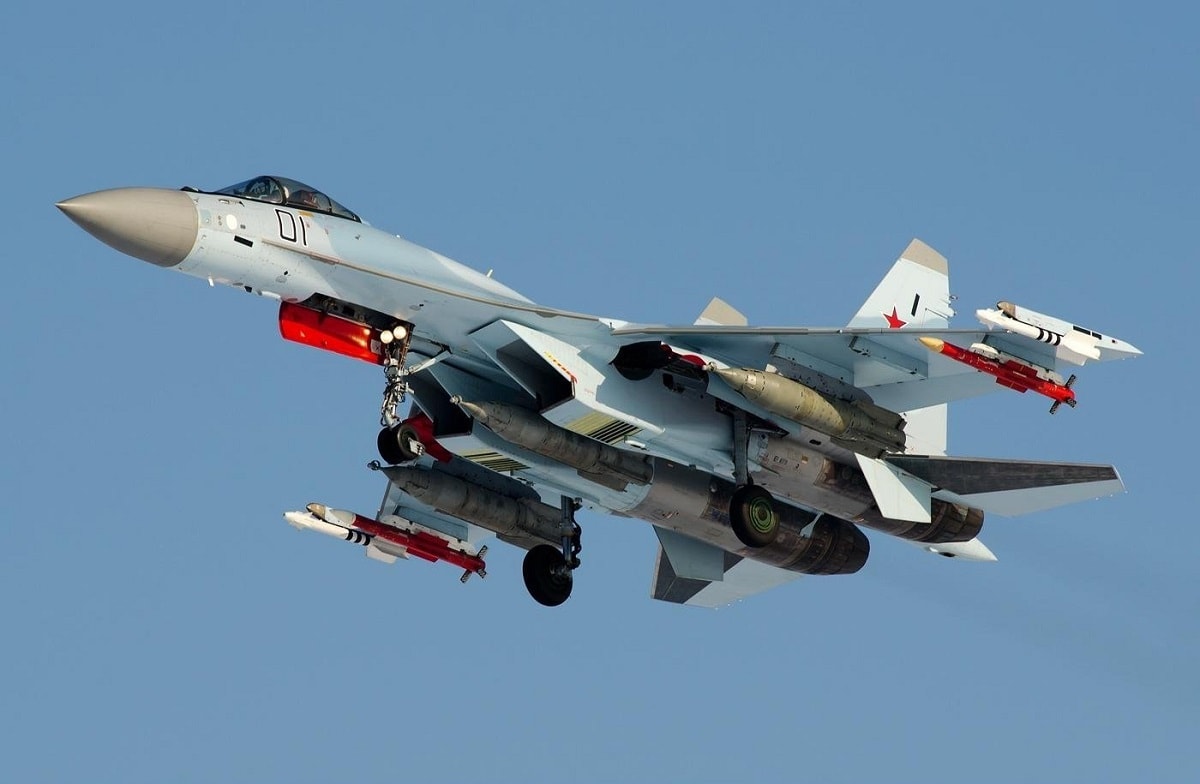
Prime Minister Abiy Ahmed claims that the agreement with Moscow was signed several years ago. According to reports from the BBC, the aircraft are intended to enhance Ethiopia's capacity to face external threats and to protect critical infrastructure, including the Grand Ethiopian Renaissance Dam. The justification is classic. The timing, however, is not.
The Su-35s are not counter-insurgency aircraft. They are designed to achieve air superiority and strike at long range. Their arrival comes as the 2022 ceasefire has collapsed in Tigray and the government accuses Eritrea of supporting the TPLF, an accusation rejected by Asmara. Information on the exact scale of operations remains incomplete, but the combination of political and military signals is hard to ignore.
The Problem Is Not Just the Aircraft
On paper, twelve Su-35s represent a significant qualitative leap for the Ethiopian Air Force. In reality, a fighter squadron is not just about its airframes. It requires trained pilots, mechanics, spare parts stocks, munitions, suitable runways, and a command chain capable of exploiting radar data. The same reasoning applies to the S-400. An air defense battery does not magically secure airspace: it requires a detection network, identification procedures, and firing discipline.
Ethiopia already has recent experience with drone warfare, using Turkish and Chinese aircraft in previous conflicts. However, drones and heavy fighters do not produce the same operational effect. The former surveils, harasses, and strikes at a low cost. The latter imposes a complete air combat architecture. The decisive question will therefore be the speed of integration, not the photograph of the aircraft on the tarmac.
Asmara Becomes the Central Calculator
For Eritrea, the message is direct. Asmara has limited strategic depth and watches with concern Ethiopian statements regarding access to the sea, presented by Abiy Ahmed as an existential issue. Eritrean independence in 1993 deprived Ethiopia of its maritime outlet. Since then, every discussion about a port, a corridor, or a naval force is read as a possible revision of this balance.
The Su-35 alone does not resolve geography. However, it can increase the cost of a crisis and shorten the alert time. If the S-400s are indeed deployed around Addis Ababa, the dam, or air facilities, they could create a protective bubble intended as much for deterrence as for defense. Their presence near the northwest of the country would be even more sensitive, as it would bring the technological confrontation closer to the Tigray theater and the Eritrean border.
Moscow Sells Capability and Buys Position
This sequence occurs during the third Russia-Africa summit in Moscow, where the Kremlin presents Russia as a partner free from the legacy of Western colonialism. Reuters and Al Jazeera describe a diplomatic offensive aimed at consolidating political, economic, and security ties with the continent. Ethiopia offers Moscow a significant partner in the Horn of Africa, far from the only Sahelian axis dominated by juntas and the Africa Corps.
This relationship is not without cost. Russian systems give Addis Ababa maneuvering room against the United States and Europeans, both of whom have condemned the violence of the Tigray conflict without being able to impose a sustainable security architecture. In exchange, Moscow gains a diplomatic foothold in a region that controls the routes of the Red Sea and access to the Gulf of Aden. The Russian promise of mediation between Ethiopia and Eritrea, reported by The EastAfrican, thus takes on both military and political value.
The Risk of a Shorter and Broader War
The immediate danger is not necessarily an open air war. It is rather the belief that technical superiority allows for a quick resolution of a ground conflict. Tigray is a difficult theater: mountainous terrain, limited roads, displaced populations, and vulnerable supply chains. An aircraft can dominate the sky without controlling the road that leads up to a valley. From experience, this is often where plans fail.
The new fleet can therefore enhance Ethiopian deterrence, but it can also make each incident more dangerous. A violation of airspace, a misattributed strike, or an accelerated delivery of missiles could create a crisis between Addis Ababa and Asmara before a government has time to choose de-escalation. The next map to watch is not just that of air bases. It is the Mekele–Asmara axis and, further south, the corridors connecting the capital to the dam. If fighting persists, the Horn of Africa will not only see the return of the Tigray war. It will witness the emergence of its air theater.
Sources
- BBC, Ethiopia receives 12 Russian fighter jets and air defence systems as Tigray war escalates
- Reuters, Putin woos African leaders at the Russia-Africa summit, October 28, 2026
- Al Jazeera, Economic incentives are limited — What does Russia really offer Africa?, October 29, 2026
- The EastAfrican, Russia offers to mediate Ethiopia-Eritrea tensions, October 29, 2026
Ethiopia received 12 Su-35 fighter jets from Russia, enhancing its military capabilities amid escalating conflict in Tigray. The Ethiopian government also announced the forthcoming delivery of S-400 air defense systems. This acquisition is seen as a strategic move to address external threats and protect critical infrastructure. Eritrea expresses concern over these developments, which could alter the regional security dynamics.
- Ethiopia received 12 Su-35 fighter jets from Russia.
- The Ethiopian government confirmed the upcoming delivery of S-400 air defense systems.
- The acquisition is intended to enhance Ethiopia's military capabilities against external threats.
- The situation in Tigray has escalated, affecting regional stability.
- Eritrea is concerned about Ethiopia's military developments and their implications for regional security.