
EU approves 3.2 billion euros for 1,000 Patriot missiles and deepens Europe's dependence on the USA
 Dr. Klaus Weber
EU approves 3.2 billion euros for 1,000 Patriot missiles and deepens Europe's dependence on the USA
About 1,000 Patriot missiles, financed with approximately 3.2 billion euros from a European Ukraine loan, send a strong political signal. Strategically, however, they mark an uncomfortable boundary of European defense policy: the European Union can mobilize significant sums in the short term, but it cannot produce the necessary American air defense itself or replace it in the short term.
The exception to the European procurement principle
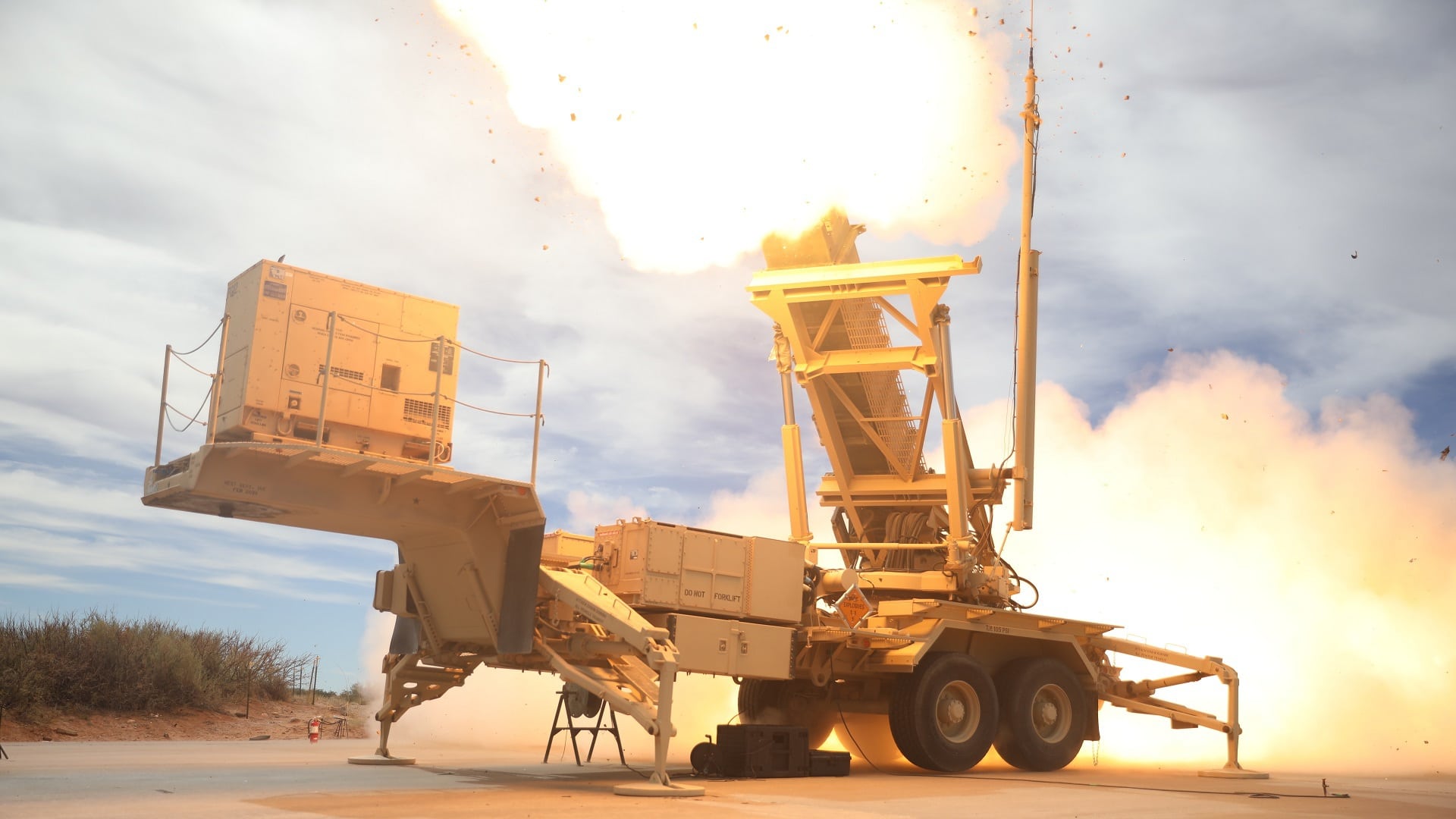
On September 8 and 9, 2026, EU member states approved an exception allowing Ukraine to use funds from the European loan mechanism for Patriot components and missiles. At the same time, the Ukrainian Defense Minister stated that Kyiv had agreed contracts for approximately 1,000 missiles with partner countries. The UK additionally provided 100 million pounds for Ukrainian air defense. The figures come from reports by Reuters, Euractiv, and the British Ministry of Defence.
Formally, it is a technical adjustment of the procurement rules. Politically, it is more. The EU had linked its new financing instruments with the promise of strengthening European industrial capacities. However, Patriot is an American system. The exception therefore means that the most urgent need overrides the political industrial agenda. Brussels is buying time, not sovereignty.
Why Patriot remains indispensable in the short term
Patriot is not a single launcher, but an integrated air defense network consisting of radar, command posts, launchers, spare parts, software, and various interceptor missiles. The PAC-3 variants are designed to defend against ballistic missiles; other Patriot missiles combat aircraft and cruise missiles. Their effectiveness arises from the networking of the entire system, not from the mere number of missiles.
This system logic makes European dependence visible. Europe has powerful partial capabilities such as IRIS-T SLM, SAMP/T, and modern radar systems. Nevertheless, they do not easily replace Patriot. Different ranges, command architectures, munitions stocks, and training standards cannot be combined into a homogeneous protective shield within a few months. Anyone wanting to protect a Ukrainian site today needs an available system and the corresponding logistics chain. A European alternative, which still needs to be scaled, helps on paper, not in the next wave of attacks.
The financial success is not an industrial success
The 3.2 billion euros demonstrate the financial capability of the EU. However, they do not show that Europe has corresponding production capacities. A loan can consolidate demand, accelerate contracts, and finance American manufacturing. However, it does not establish a European production line for PAC-3 missiles. Nor does it automatically transfer the central software, certification, and technical control necessary for Patriot.
This repeats a familiar pattern. Europe increases its defense spending but orders from a non-European supplier because the required capability already exists. This is militarily rational and industrially contradictory. Ukraine may receive protection faster; at the same time, Europe's dependence on Washington becomes more measurable. More money initially leads to more availability, not more strategic autonomy.
The political calculation behind the exception
The EU governments had to choose between two bad options. They could strictly interpret the European procurement guidelines and thereby delay delivery. Or they could allow an exception and reveal that the European defense industry is not sufficiently capable in highly integrated missile defense. The decision for Patriot was militarily sensible. However, it is an institutional admission.
For Germany, the contradiction is particularly sharp. Berlin is supplying additional PAC-2 missiles, IRIS-T, and AIM-9 munitions while Germany itself needs to replenish its air defense. The Bundeswehr can promise support, but every missile delivered is part of a limited European stock. The political question, therefore, is not only how much Europe is willing to pay. It is about who will be protected first in a crisis and who sets the production priorities.
What Europe should learn from this
First, the EU must distinguish between immediate aid and industrial autonomy. Patriot purchases are immediate aid. They should not be counted as evidence of European defense autonomy. Second, member states need a common munitions planning with binding minimum stocks, multi-year procurement guarantees, and a clear division of tasks between national and European industry. Third, the interoperability of Patriot, SAMP/T, and IRIS-T must be politically valued higher than the next national single order.
The crucial lesson is uncomfortable: Europe cannot eliminate its dependence on the United States by financing American systems with European money. The 1,000 Patriot missiles can better protect Ukrainian cities and military infrastructure. That is the immediate purpose and likely the right decision. But those who bridge an American bottleneck with European money have not yet created a European capability.
Europe can buy today because it cannot build tomorrow. That is where the operational success and strategic failure of this deal lie.
Sources
- Reuters, September 8, 2026, report on Ukrainian contracts for about 1,000 Patriot missiles.
- Euractiv, September 9, 2026, report on the EU exception for the use of the Ukraine loan.
- UK Ministry of Defence, September 8, 2026, additional British support for Ukrainian air defense.
- EU Commission and member states, decision to adjust procurement rules for Patriot components.
The European Union approved 3.2 billion euros for 1,000 Patriot missiles to support Ukraine, with funding sourced from a European loan mechanism. This decision, made on September 8-9, 2026, underscores Europe's reliance on U.S. defense capabilities, as the EU lacks the capacity to produce such systems independently. The Ukrainian Defense Minister confirmed contracts for these missiles with partner nations, while the UK contributed an additional 100 million pounds for air defense.
- EU approved 3.2 billion euros for 1,000 Patriot missiles for Ukraine.
- The funding is part of a European loan mechanism.
- The Ukrainian Defense Minister confirmed contracts for missiles with partner states.
- The UK provided an additional 100 million pounds for Ukrainian air defense.
- The decision highlights Europe's dependence on U.S. defense systems.