
NATO's Ukraine Aid Delays Are Becoming Russia's Best Weapon in 2026
 S.W
S.WNATO's Ukraine Aid Delays Are Becoming Russia's Best Weapon in 2026
Ten billion dollars sounds like a serious answer to a war. But money that arrives late is not ammunition; it is a press release. NATO Secretary General Mark Rutte used unusually blunt language this week, warning that delays in arming Ukraine cost lives, even as allies have allocated more than $10 billion over the past year through the Prioritised Ukraine Requirements List (PURL).
That contradiction is the real story. NATO is finding new ways to finance American weapons for Kyiv while Washington is telling allies to prepare for a prolonged war. The alliance is moving, but not at the speed imposed by Russia's missile and drone campaign. For Ukraine, the gap is measured in destroyed power stations and exhausted air-defence crews. For Europe, it is a warning that political generosity and military readiness remain two different things.
The PURL Mechanism Buys Time, Not Enough of It
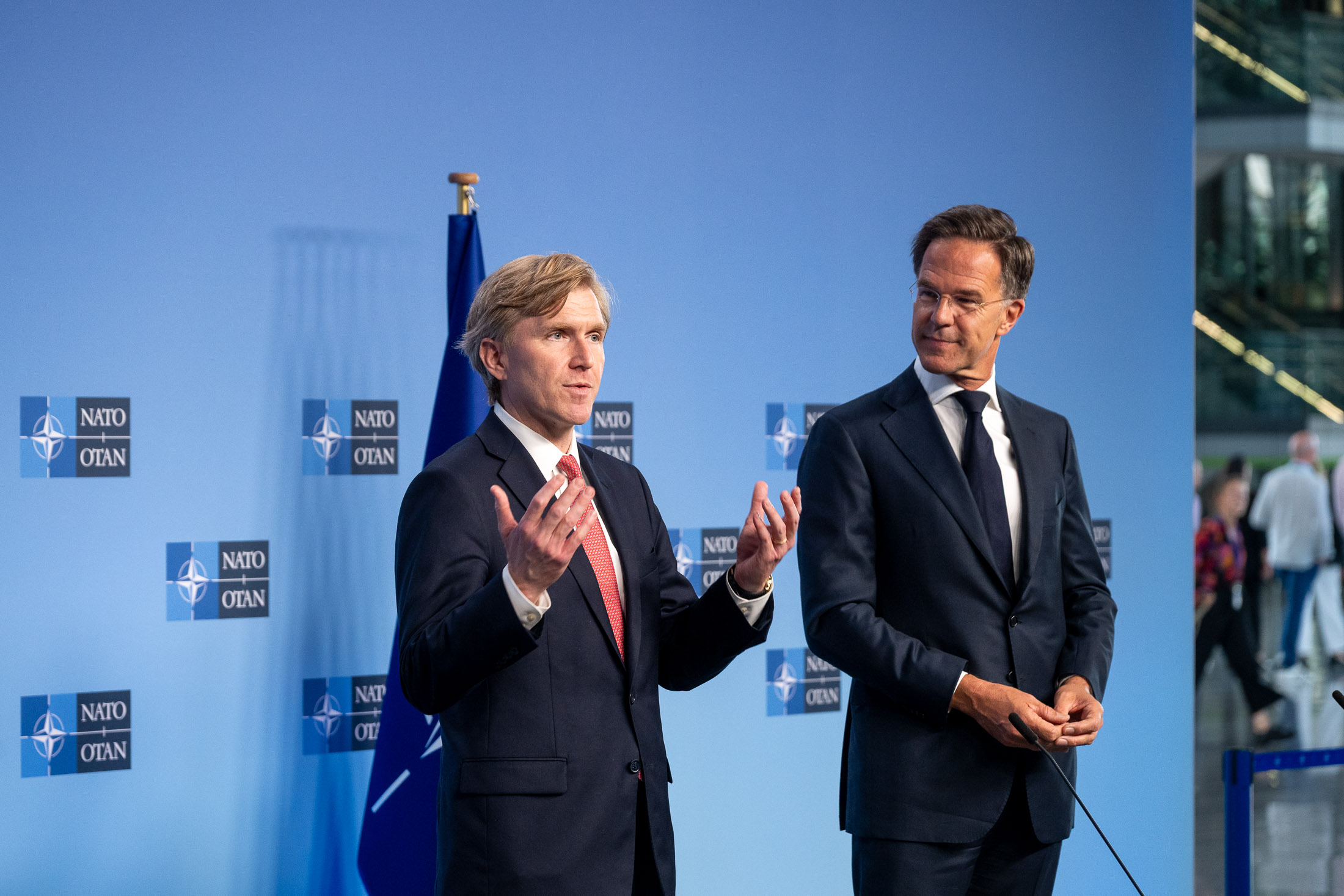
According to Interfax-Ukraine's account of Rutte's remarks, NATO members have committed more than $10 billion through PURL to purchase US military equipment for Ukraine. The scheme matters because it gives European governments a channel to buy systems already integrated with Ukrainian forces, rather than waiting years for entirely new European production lines.
That distinction is practical. A Patriot battery is not merely a launcher: it depends on a radar, an engagement-control station, trained crews and a finite stock of interceptors. The PAC-3 family is designed to defeat ballistic missiles at the terminal stage, while the wider Patriot family can also engage aircraft and cruise missiles. Every interceptor fired against a Russian missile is therefore both a lifesaving asset and a small subtraction from NATO's own magazine.
The same logic applies lower down the air-defence ladder. NASAMS uses networked launchers and AMRAAM-family missiles; Ukraine's American-supplied HIMARS fires 227mm guided rockets with a publicly advertised range of roughly 70 kilometres, while longer-range Army Tactical Missile System variants can reach about 300 kilometres. These systems are valuable precisely because they cover different parts of the Russian strike and logistics problem. They are not interchangeable, and a cheque for “air defence” does not instantly produce the right missile in the right place.
Russia Benefits From Every Waiting Period
Kyiv Post reported Rutte warning that aid delays cost lives, while Euractiv reported a US defence official urging allies to prepare for a war that could continue for years. Read together, the two reports expose an uncomfortable policy failure: Western governments are planning for endurance after repeatedly treating each package as if it might be the last emergency shipment.
Russia does not need to defeat NATO in a single dramatic move. It benefits from a slower contest in which Ukraine must ration interceptors, rotate exhausted crews and choose which cities or energy nodes receive protection. The latest reporting from Kyiv also describes a renewed Russian aerial campaign aimed at daily life, not only military targets. Drones are cheaper than interceptors, and mass matters. If Moscow can force Ukraine to spend a high-value missile against a low-cost drone, the exchange rate begins to favour the attacker.
This is why delivery schedules are operational data, not bureaucratic trivia. A Patriot battery arriving after a winter strike wave may still be useful, but it cannot retroactively protect a transformer or return a trained operator. The West's procurement calendar is becoming part of Russia's targeting calculation.
Washington's Warning Changes the Political Meaning
The US message that allies should prepare for a prolonged war is more than a forecast. It is a demand that Europe stop treating American support as an emergency bridge to a near-term settlement. Yet the political language around Ukraine still assumes that a limited burst of pressure can produce a durable outcome.
That assumption is increasingly hard to defend. Diplomatic contacts can reduce risks, but they do not substitute for air defence, artillery ammunition or industrial capacity. Nor does European spending automatically equal European control. PURL still channels demand toward US equipment, leaving Europe dependent on American production priorities, export decisions and stocks.
There is a second alliance problem. European governments want Ukraine strong enough to deny Russia a victory, but they remain cautious about drawing down their own inventories. That caution is rational in a world where Russia is rearming and China is watching. It is also strategically expensive. Deterrence built around weapons that governments are unwilling to release during the defining European war of this generation is deterrence on paper.
“Delays in support for Ukraine cost lives,” Rutte said, according to reporting on his remarks.
What to Watch Before Winter
- Whether PURL-funded deliveries produce a steady flow of complete air-defence packages, not isolated launchers or announcements.
- Whether European governments publish measurable delivery timelines and replenish their own Patriot, NASAMS and artillery stocks.
- Whether Russia's drone campaign forces Ukraine to spend premium interceptors on targets that could be defeated by guns, electronic warfare or cheaper missiles.
- Whether Washington's warning about a long war becomes a durable policy or another headline before the next crisis.
The key finding is simple: NATO has found a bigger funding mechanism, but it has not solved the time problem. PURL can buy American systems; it cannot compress production, training and deployment into the political timetable preferred by Western capitals.
Over the next few months, watch the number of operational interceptors in Ukrainian units, not the dollar value announced at conferences. If deliveries accelerate, PURL may become the backbone of a sustainable coalition effort. If they do not, Russia will keep turning Western delay into battlefield advantage. NATO is paying more. The question is whether it will pay soon enough.
NATO has allocated over $10 billion in military aid to Ukraine, but delays in delivery are compromising Ukraine's defense against Russian attacks. Secretary General Mark Rutte emphasized that these delays cost lives, as Ukraine struggles to maintain air defense capabilities. The U.S. has warned allies to prepare for a prolonged conflict, highlighting the need for timely support to counter Russian aggression.
- NATO has committed over $10 billion in military aid to Ukraine through the PURL mechanism.
- Delays in aid are causing significant operational challenges for Ukraine.
- Russia is exploiting the delays to gain a tactical advantage.
- The U.S. has warned allies to prepare for a prolonged conflict in Ukraine.
- NATO's procurement process is affecting the timely delivery of military equipment.