
EU extends EUMAM until 2028 — Leopard 2 training and 300 million euros do not close Europe's capability gap
 Dr. Klaus Weber
EU Extends EUMAM Until 2028 — Leopard 2 Training and 300 Million Euros Do Not Close Europe's Capability Gap
The European Union is extending its Military Assistance Mission EUMAM Ukraine for two years until November 2028 and is providing nearly 300 million euros for this purpose. This sounds like strategic endurance. In fact, the decision made on November 9, 2026, more accurately describes Europe's institutional problem: The EU can extend a training mission, but it still cannot create a European capability that has timely effects on the Ukrainian battlefield.
A Mandate That Lasts Longer Than Political Patience
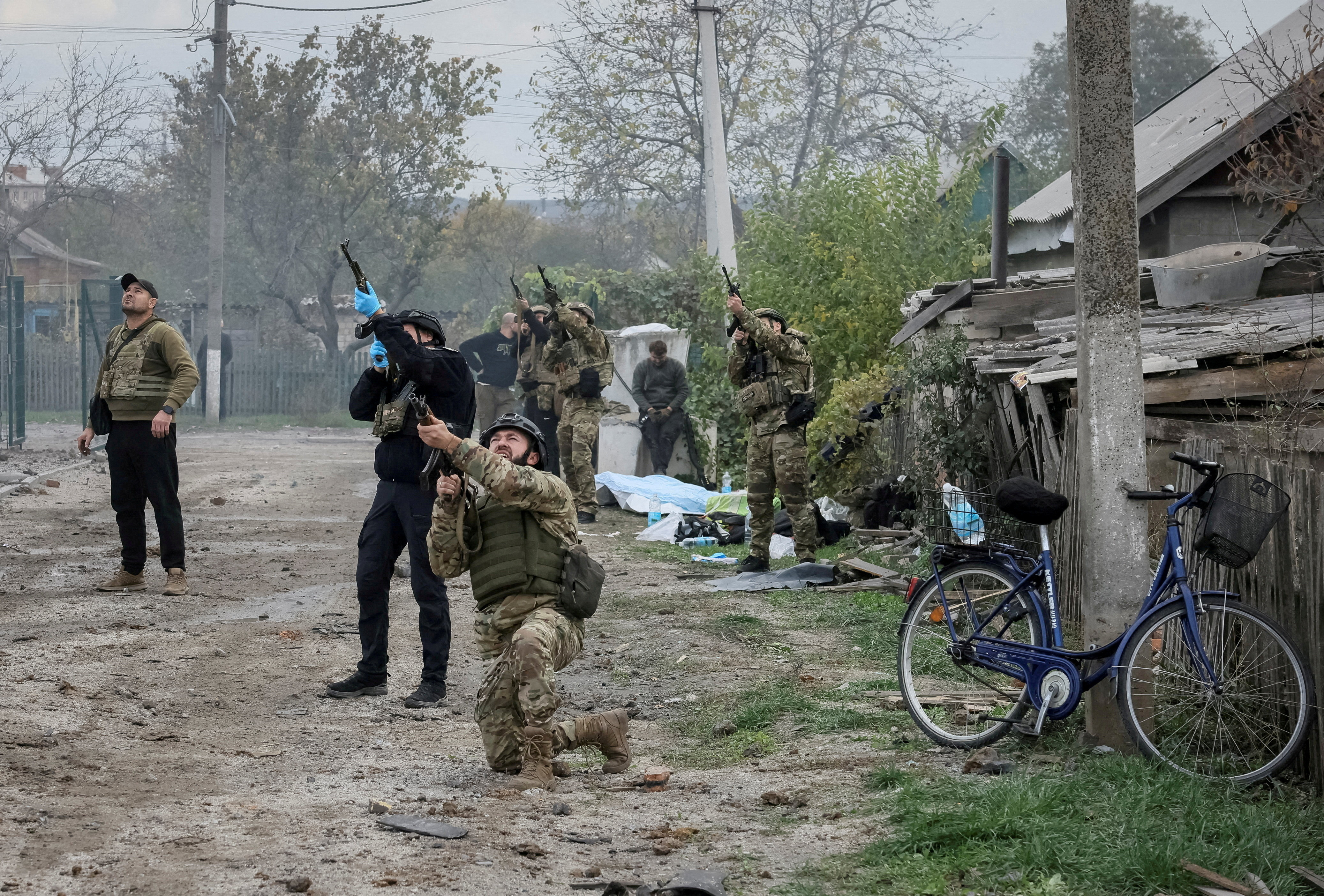
According to the Council of the European Union, EUMAM will continue its training of Ukrainian soldiers and adapt its tasks to the requirements of the war. The political value of this decision is undeniable. It signals to Kyiv that European support is not tied to a single budget year. It also creates a common framework for member states that would otherwise train nationally and with different standards.
However, nearly 300 million euros over two years is not a European war budget. Even if the sum is fully invested in practical training, infrastructure, and equipment, it amounts to approximately 150 million euros per year. This is considerable for a mission, but modest for a war of this scale. Therefore, the decision is primarily an institutional signal, not a breakthrough in military burden-sharing.
Leopard 2 Is Not a Course, But a System
The weakness is particularly evident with complex weapon systems. A Leopard 2A6 is not simply a 120-millimeter gun on tracks. Its effectiveness depends on crew training, maintenance, spare parts supply, tactical leadership, reconnaissance, and secure communication. A short course can qualify operators. A military force only emerges when these operators are embedded in logistics and command structures.
The same applies to air defense. An IRIS-T SLM system is not just a launcher with missiles, but part of a sensor network, whose utility depends on radar availability, data connections, and ammunition supplies. EUMAM can train personnel. However, it cannot alone create the European production capacity for missiles, spare parts, or secure communication means. Here lies the difference between training output and military capacity — a distinction that is regularly blurred in Brussels decisions.
The Real Progress Lies in Standardization
Nevertheless, it would be wrong to dismiss the mission as mere symbolic politics. EUMAM has a real institutional benefit. It consolidates training in areas such as command, logistics, medical services, engineering, and combined arms effects. Above all, it can feed lessons learned from Ukraine back into European armed forces. Europe's armies no longer learn solely from exercises on a controlled training ground, but from a war where drones, electronic warfare, and precise reconnaissance influence every movement.
For this reason, the mission must change its standards. The number of trained soldiers is an easily communicable metric, but not a reliable indicator of combat power. What matters are the time to readiness, the availability of spare parts, the survivability of command posts, and the ability to replace losses. Counting only training days produces administrative statistics. Measuring the readiness of entire units yields a more uncomfortable but strategically useful balance.
The Geographical Limit Remains
EUMAM fundamentally operates outside of Ukraine. This is politically understandable, as member states do not want to make their trainers immediate targets of Russian attacks. Militarily, however, this caution creates a distance between training and reality. The Ukrainian army fights under conditions that no training center in Germany, Poland, or Romania can fully replicate. Drone density, jammers, artillery observation, and improvised repairs change the requirements faster than a European curriculum can be adjusted.
The EU thus faces an uncomfortable dilemma. Training in Ukraine would be more realistic but riskier. Training outside Ukraine is safer but less representative. The extension until 2028 does not resolve this contradiction. It institutionalizes it.
What the 300 Million Euros Must Achieve
- First, EUMAM must link training outcomes to specific Ukrainian units and their equipment, rather than providing isolated courses.
- Second, every Leopard or air defense course needs a binding maintenance and spare parts plan.
- Third, the mission should systematically feed Ukrainian combat experiences into NATO and EU planning processes.
- Fourth, member states must disclose what share of the budget actually goes into ammunition, simulators, repair capacity, and secure communication.
The Council's decision is thus necessary but not sufficient. It extends Europe's political presence alongside Ukraine. It does not yet prove that Europe derives military independence from this presence.
Europe's Training Paradox
The EU has learned to organize a mission, extend a mandate, and adopt a common financial framework. What it still struggles with is translating these processes into available capabilities. EUMAM can train Ukrainian soldiers better. However, it cannot guarantee that in the end, there will be enough Leopard 2 spare parts, IRIS-T missiles, or secure radios available.
This is Europe's familiar defense paradox: Institutions become permanent while capabilities remain provisional. 300 million euros can make the difference between chaotic and structured training. However, they cannot replace an industrial base. More training years are therefore a step forward — but only if Europe finally measures what actually reaches the front after the course.
Sources Council of the European Union, “Ukraine: Council extends EU Military Assistance Mission mandate for two years,” November 9, 2026; Kyiv Post, “EU Extends Ukraine Military Training Mission to 2028 With Nearly €300M in Funding,” November 9, 2026; EU Institute for Security Studies, “Joining forces: Can European Defence Projects of Common Interest deliver?,” November 9, 2026.
The European Union extended its military assistance mission EUMAM Ukraine until November 2028, allocating nearly €300 million for training Ukrainian soldiers. This decision aims to address Europe's military capability gap, although it may not fully meet the operational needs on the battlefield. The mission will continue to adapt its training to the requirements of the ongoing conflict, despite challenges in providing realistic training conditions outside Ukraine.
- The EU extended the EUMAM mission until November 2028.
- €300 million is allocated for training Ukrainian soldiers.
- The mission aims to address Europe's military capability gap.
- Training will continue but may not fully meet battlefield needs.
- The report highlights the challenges of training outside Ukraine.