
U.S. special forces want a helmet display with drone control
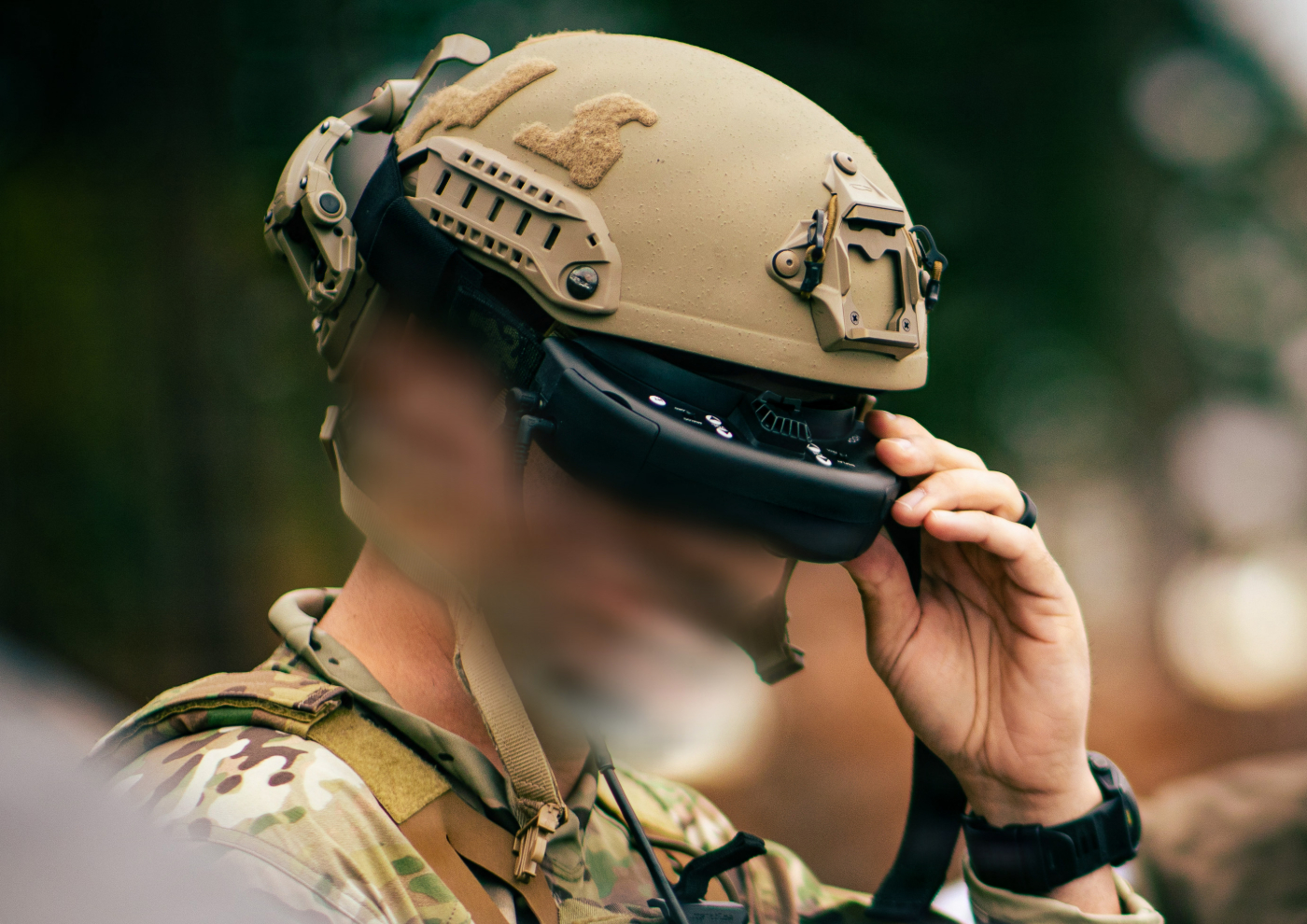
U.S. Special Operations Command is looking for companies that can build a helmet-mounted display that lets special operators fly first-person-view drones and see battlefield data without taking their eyes off their surroundings. The command posted a sources sought notice on Nov. 9 on the federal government’s contracting website, seeking a display module with a 50-degree field of view, certified ballistic protection, head tracking and built-in control of unmanned systems for dismounted Special Operations Forces.
The notice says the display must work “in contested, congested, and all-weather environments” and overlay real-time tactical information from the Android Tactical Assault Kit, or ATAK, the Android-based mapping and situational awareness software used across U.S. special operations and conventional units. It must also stay compatible with the helmets, radios, power hubs and ATAK end-user devices that operators already carry, which rules out a standalone headset that would add another layer of equipment.
USSOCOM describes the effort as market research to shape its acquisition strategy, not a solicitation, and it has not disclosed a budget, the number of displays it wants or a fielding date. Responses are due by 3 p.m. Eastern time on Dec. 1 and must be submitted through Vulcan, the command’s online platform for scouting technology from industry.
The questions in the notice show USSOCOM is planning a full development program. It asks companies how they would manage a system requirements review, preliminary and critical design reviews, development testing and prototype deliveries. It also asks for views on whether the work should be a single award, a firm-fixed-price or cost-plus contract, or an Other Transaction Authority agreement, a faster prototyping vehicle that avoids many standard procurement rules.
The technical areas USSOCOM wants addressed include integrating ATAK, ballistic protection and head-tracking sensors, and combining the processing hardware and display into a single module. The display must also survive windblast and operate across what the command calls an “expanded environmental envelope.” The notice does not say what windblast standard applies or which missions drove the requirement.
The push reflects how first-person-view drones have changed small-unit combat in Ukraine, where both Ukrainian and Russian troops use cheap FPV quadcopters for reconnaissance and as guided munitions. Most FPV operators fly with commercial goggles that cover the eyes completely, leaving them unable to see what is happening around them while a drone is in the air. A helmet display with ballistic protection would let an operator keep the device on while moving and while exposed to fire.
U.S. special operations units have been building up their own FPV capability. U.S. Army Special Operations Command used SOF Week 2026 in Tampa, Florida, in May to advance a solicitation for FPV drones and production supplies, and manufacturers have been shrinking control hardware for dismounted troops, as when Neros Technologies cut the size of its attack drone controller by half.
The requested 50-degree field of view sits between standard night vision goggles and the U.S. Army’s most ambitious head-mounted displays. Common military night vision devices such as the AN/PVS-14 offer a 40-degree field of view. The Army’s Integrated Visual Augmentation System, or IVAS, started with a 70-degree display, which the service cut to 60 degrees in the IVAS 1.2 redesign, according to the Congressional Research Service.
IVAS shows what can go wrong when a military tries to put a computer display on a soldier’s head. The Army awarded Microsoft an agreement worth up to $22 billion over 10 years in November 2018 and bought 5,000 IVAS 1.0 and 5,000 IVAS 1.1 systems in 2022 and 2023. Early versions caused headaches, eyestrain and nausea, and soldiers reported poor low-light performance and added helmet weight. The Government Accountability Office reported in July 2026 that none of the 10,000 units developed would be fielded.
The Army handed the IVAS contract to Anduril in April 2025 and renamed the follow-on effort Soldier Borne Mission Command, with Anduril receiving a $159 million award and Rivet a $195 million award for an 18-month prototyping sprint. In August 2026, Anduril said it was moving into the second phase after testing its first systems with the 75th Ranger Regiment. The company plans to deliver 170 phase-two prototypes, with a downselect and production award possible in fiscal 2028.
The USSOCOM effort is narrower than the Army program. It focuses on a display module for drone video, ATAK data and unmanned system control, and on certified ballistic protection, and it does not seek the full mixed-reality headset the Army has been chasing. The notice also asks companies to identify parts of the work that could go to small businesses, and to name any requirements that would unreasonably restrict competition.
Content preview only. Full article available at source. View Full Article
U.S. Special Operations Command is seeking companies to develop a helmet-mounted display that allows operators to control drones and access battlefield data without losing situational awareness. The display must feature a 50-degree field of view, ballistic protection, and compatibility with existing equipment. Responses to the request are due by Dec. 1, as part of a market research effort to inform future acquisitions.
- U.S. Special Operations Command is looking for a helmet-mounted display for drone control.
- The display must have a 50-degree field of view and certified ballistic protection.
- Responses to the request are due by Dec. 1.
- The effort is part of market research to shape acquisition strategy, not a solicitation.
- The display must integrate with existing equipment used by operators.