
Algeria deploys soldiers to Niger in 2026 — the Islamic State in the Sahel tests the break of 1973
 Marie Dubois
Algeria Deploys Soldiers to Niger in 2026 — Islamic State in the Sahel Tests the Break of 1973
Agadez, Niger. On October 26, Algiers crossed a line it had not approached since the Yom Kippur War. President Abdelmadjid Tebboune authorized the deployment of Algerian army units to Niger, at the request of Niamey, to protect shared energy interests. The number of soldiers, their arrival schedule, and their rules of engagement remain unknown. This is the important point: this operation begins in the fog.
A Constitutional and Strategic Break
The two chambers of the Algerian Parliament approved the deployment during an emergency session. According to the BBC, 148 of the 174 senators voted in favor of the text in the upper house, before its adoption by the National People's Assembly. The constitutional reform of 2020 allows for an external operation with a two-thirds majority in each chamber. Until now, this provision had remained theoretical.
The precedent dates back to 1973, when Algeria sent forces to support Egypt against Israel. Senator Belkacem Boulghiti emphasized the limited nature of the mission: “We are not sending our soldiers to wage war in Niger,” but to secure economic infrastructures. The distinction is politically useful. On the ground, it will be much more difficult to maintain.
The Real Center of Gravity Lies to the North
Algiers and Niamey share 951 kilometers of border. The Agadez area, vast, sparsely populated, and traversed by transit routes, connects southern Libya to the heart of Niger. Sonatrach is exploring the Kafra oil block, while the trans-Saharan gas pipeline project aims to transport Nigerian gas through Niger to Algeria and European markets.
Protecting a well or a station is not just about posting a section around a fence. It requires monitoring access tracks, convoys, telecommunications relays, and the communities living around the facilities. In this theater of operations, the distance between an energy site and its next logistical point is measured in hours of desert, not kilometers on a map.
The risk is therefore one of an expanding mission. An attacked escort calls for reconnaissance. Isolated reconnaissance calls for an advanced base. An advanced base requires intelligence, medical evacuation, and air protection. The “unit” intended to guard an infrastructure can quickly become a local control device.
The Jihadist Factor Does Not Disappear with a New Border
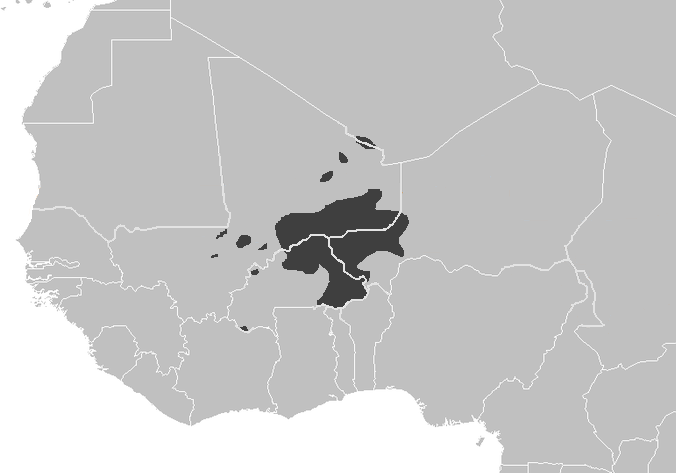
The north of Niger is not the only threatened space. Groups linked to al-Qaeda and the Islamic State operate in areas of control, taxation, and movement that ignore administrative borders. The Islamic State in the Sahel, formerly EIGS, retains pressure capacity in the tri-border area and seeks to exploit gaps between national forces. JNIM, al-Qaeda's Sahel branch, has its own networks further west and south.
For these organizations, an Algerian presence offers a target and a narrative. An attack on a convoy would not only target Nigerien soldiers: it would allow presenting Algiers as a new foreign power engaged in the Sahelian war. Propaganda does not need to distinguish between an energy protection mission and a counter-insurgency operation. It will retain the uniform, the flag, and the crossed border.
However, it is important to remain precise. Nothing confirms, at this stage, that the Islamic State in the Sahel has directly threatened this future mission, nor that the Algerian units have received a combat mandate. The available information establishes a political decision, not yet a battle order.
The Thaw with Tiani After the 2025 Crisis
This decision does not occur in a diplomatic vacuum. Algiers condemned the coup d'état of 2023 that brought General Abdourahamane Tiani to power. Relations then deteriorated in 2025 when Algeria shot down a Malian drone near its border and Niamey recalled its ambassador in solidarity with Bamako.
The movement reversed in 2026. Tiani visited Algeria in February. In August, according to the BBC, Algiers sent fighter jets and support aircraft to help thwart a coup attempt in Niger, before providing four military helicopters. The ground deployment thus formalizes an already engaged security relationship.
For Niamey, the advantage is concrete: obtaining a partner that does not present itself as a former colonial power or as a member of the Sahel States Alliance. For Algiers, the objective is twofold: to prevent instability from rising toward its southern border and to preserve its economic interests. Bilateral cooperation can work, but it does not replace a regional intelligence mechanism.
The Trap of the Limited Mission
The Algerian choice comes as the Sahel is already militarized and fragmented. France has withdrawn from Mali, the UN has left the Malian theater, and Russia has strengthened its ties with the juntas of the Sahel States Alliance. Algiers wants to avoid camps and maintain its diplomatic freedom. However, each deployed soldier creates expectations from the partner and responsibilities toward local populations.
The first operational question will be the geography of the deployment. A presence near Kafra does not produce the same effect as a deployment in Madama, near Libya. The second will be the sharing of intelligence with Nigerien forces. Without local human intelligence, helicopters and patrols can secure a site for a few days, but not the corridor that supplies it.
The third question will be political. If an Algerian convoy is hit, Algiers will have to choose between reducing its mission, retaliating, or expanding it. It is at this moment that the formula “protecting the economy” will meet the reality of counter-terrorism.
The Next Test Will Be Logistical
Algeria is not returning to the Sahel like France did with Barkhane, and it does not have a mandate to rebuild regional order. Its advantage is its proximity, its experience in the Sahara, and its direct relationship with Niamey. Its vulnerability is the lack of political depth south of the border.
If the deployment remains discreet, limited, and supported by reliable Nigerien intelligence, it can protect a few assets and reduce an immediate risk. If it transforms into an isolated garrison in the midst of an area contested by the Islamic State in the Sahel, the calculation will change. On the ground, the first alert will likely not come from a major offensive, but from a cut road, a missing guide, or a convoy that does not arrive at Kafra.
Sources
Algeria deployed troops to Niger on October 26, 2026, to protect energy interests at the request of the Nigerien government. The Algerian Parliament approved this deployment, marking a significant military engagement since the 1973 conflict. The operation is described as limited, focusing on securing economic infrastructure amidst ongoing threats from jihadist groups in the region.
- Algeria has authorized the deployment of troops to Niger at the request of Niamey.
- The deployment aims to protect shared energy interests.
- The Algerian Parliament approved the deployment during an emergency session.
- The operation is characterized as limited and focused on securing economic infrastructure.
- The situation in the Sahel remains complex with threats from jihadist groups.