
EU finances around 1,000 Patriot missiles for Ukraine in 2026 and highlights Europe's dependence
 Dr. Klaus Weber
EU finances around 1,000 Patriot missiles for Ukraine in 2026 and highlights Europe's dependency
The number is large, the industrial question remains open
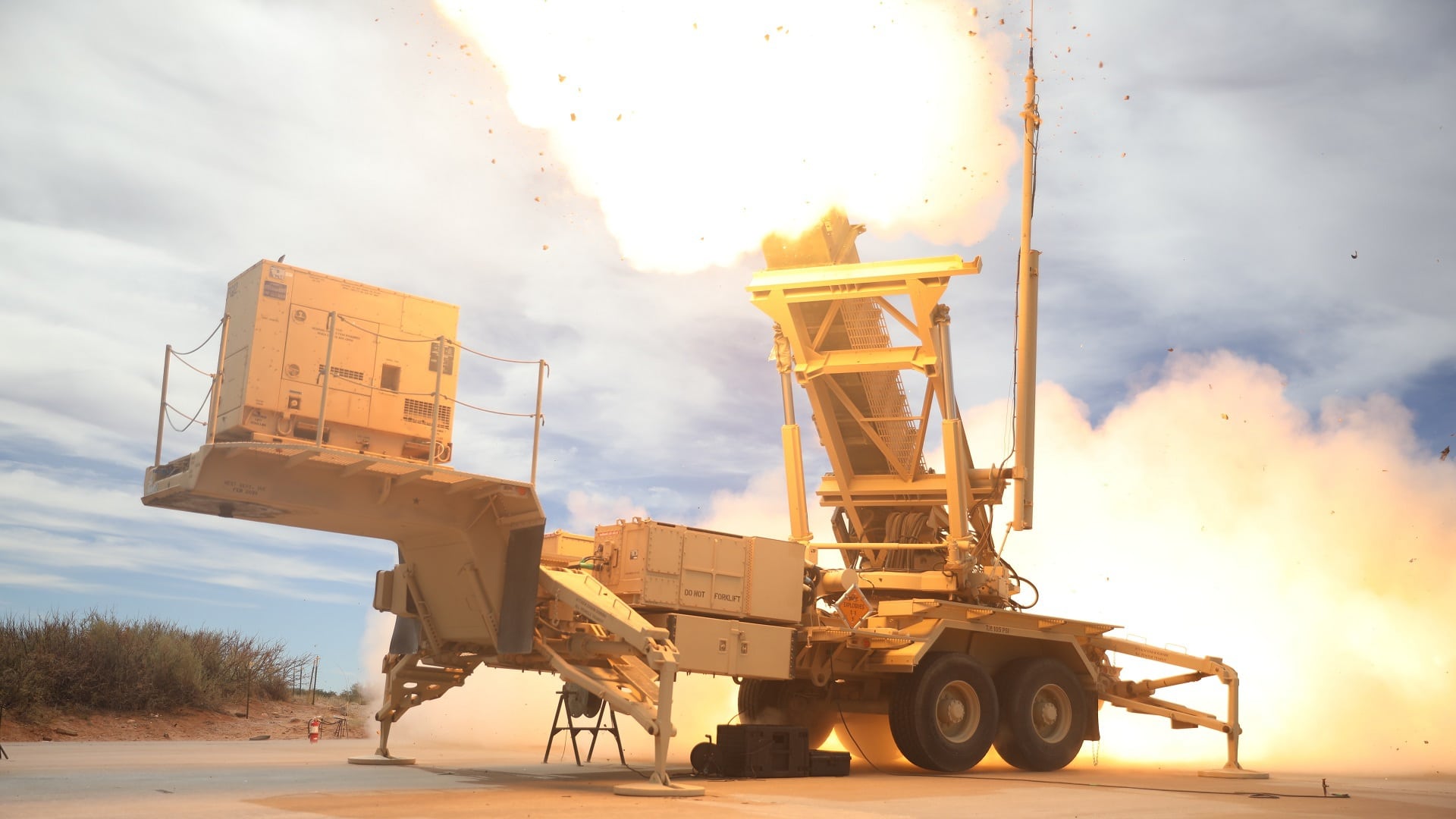
Around 1,000 Patriot missiles are to be procured for Ukrainian air defense through allied states and a European financing instrument. This number, mentioned by the Ukrainian Defense Minister according to Reuters on September 8, is initially a contractual and procurement intention, not a confirmed delivery. This distinction is crucial. Europe has mobilized the funds, recognized the political urgency, and precisely identified the need. However, it still lacks complete technical sovereignty over the system and an industrial production chain that could independently meet Ukrainian consumption.
The Patriot is not a single missile but a networked air defense system consisting of command and control, radar, launchers, and various interceptor missiles. In Ukrainian practice, the primary focus is on the defense against ballistic missiles, for which the PAC-3 variants with a hit-to-kill approach are particularly relevant. The exact mix of PAC-3 MSE, older PAC-3 missiles, or other compatible variants to be ordered is not fully disclosed publicly. Therefore, the political message of the number 1,000 should not be equated with 1,000 guaranteed available launches.
The operational need is growing faster than European production
The European Commission approved an additional 6.1 billion euros for air and missile defense, missiles, ammunition, and radars on August 24, 2026. The funds come from the 90 billion euro Ukraine Support Loan; of this, 60 billion euros are earmarked for defense. According to the Commission, 376 missile attacks were recorded in July. This explains why Kyiv needs not only individual batteries but a continuously filled ammunition chain.
A Patriot interceptor missile is expensive, complex, and cannot be quickly replaced by a European alternative. The critical bottleneck lies not only with the launchers but also with stocks, re-production, maintenance, and the prioritization between national defense and support for Ukraine. Every missile used in Ukraine is simultaneously a missile missing from a European ammunition depot, unless new production capacity is created in parallel. This is the classic difference between stock and capability: A purchase contract immediately increases the financial commitment, but military availability only after production, acceptance, training, and logistical integration.
PURL is effective, but no European autonomy
NATO Secretary General Mark Rutte stated on September 8 that allies had provided more than 10 billion US dollars for PURL and American Foreign Military Sales in favor of Ukraine over the past year. Of this, 3.5 billion US dollars came from the EU-Ukraine Support Loan. PURL makes political sense: European states pool their demand, utilize existing American production lines, and ideally shorten the path to urgently needed equipment. For Ukrainian air defense, this is not a minor issue but a concrete condition for survival.
Institutionally, however, the model remains ambivalent. Europe finances American sensors, American interceptor missiles, and American approval and spare parts chains. This is burden-sharing within NATO, but not strategic autonomy for the European Union. Those who only consider the European payment share confuse purchasing power with industrial control. Brussels can politically enable the order; Washington and the American defense industry continue to determine which variant is available in what quantity and at what time.
“Allocations are not deliveries, loans are not capabilities” — this principle applies to the 1,000 Patriot missiles just as it does to the entire European support promise.
The EU is trying to solve the problem industrially afterwards
The Commission promises a closer defense cooperation with the Ukrainian industry in parallel. A partnership signed in July 2026 aims to accelerate joint production of drones and drone defense by the end of 2026; for anti-ballistic missiles, the target year is mentioned as 2028. This perspective is strategically reasonable but does not address the acute Patriot question. A European-Ukrainian innovation ecosystem can quickly have an impact on drones, countermeasures, and sensor fusion. However, the manufacturing of highly complex interceptor missiles is subject to long certification, testing, and supply chain cycles.
This is precisely where the political contradiction of the Ukraine Support Loan lies. The instrument combines short-term procurement with long-term industrial capacity building. Both are necessary but not identical. Ukraine needs interceptor missiles today; Europe needs reliable production lines and common standards by 2028. If member states primarily use the loan as a financing framework for American immediate purchases, the industrial component can easily become a footnote. Conversely, if they wait for European self-production, a gap arises that Russia can exploit operationally.
What Germany and Europe must learn from this
Germany, together with the United Kingdom, leads the Ukraine Defence Contact Group and is one of the most important European supporters. Berlin should therefore not treat the Patriot procurement as an isolated aid decision. A multi-year European ammunition plan with transparent minimum stocks, joint financing of spare parts, and a clear division of labor between American immediate aid and European production is necessary. Without such criteria, the number 1,000 remains primarily a signal of determination.
The strategic conclusion is uncomfortable. Europe can fulfill its responsibility within NATO in the short term through American systems. It can thereby protect Ukrainian cities and buy time. But the same solution prolongs the dependency that Europe's defense policy has lamented for years. More money addresses an acute problem here, but it does not yet demonstrate capability. The European choice is therefore not between Patriot and autonomy, but between a smart transitional financing with an industrial endpoint and a permanent role as a paying customer of American security.
Sources
The EU is financing the procurement of 1,000 Patriot missiles for the Ukrainian Armed Forces by 2026 as part of a 6.1 billion Euro defense package. This initiative underscores Europe's reliance on American military systems, as the procurement process is still pending confirmation of delivery. Additionally, a partnership for joint production of drones and anti-ballistic missiles is set to accelerate by 2028, addressing long-term defense needs.
- The EU plans to finance 1,000 Patriot missiles for Ukraine by 2026.
- The funding is part of a larger 6.1 billion Euro package for air and missile defense.
- The procurement is not yet confirmed as deliveries are still pending.
- The report highlights Europe's dependence on American military systems for defense.
- A partnership for joint production of drones and anti-ballistic missiles is planned by 2028.