
EU releases 1.24 billion euros for Ukrainian drones — and shifts Europe's defense logic
 Dr. Klaus Weber
EU releases 1.24 billion euros for Ukrainian drones — and shifts Europe's defense logic
The European Union has released an additional 1.24 billion euros for Ukrainian drones, interceptor drones, UAV munitions, and missiles on October 9, 2026. This amount is not only a new tranche of aid for Ukraine. It is a test of whether Europe has finally understood that the crucial defense capability lies not in Brussels' budget decisions, but in the speed of Ukrainian production lines.
A loan becomes an industrial instrument
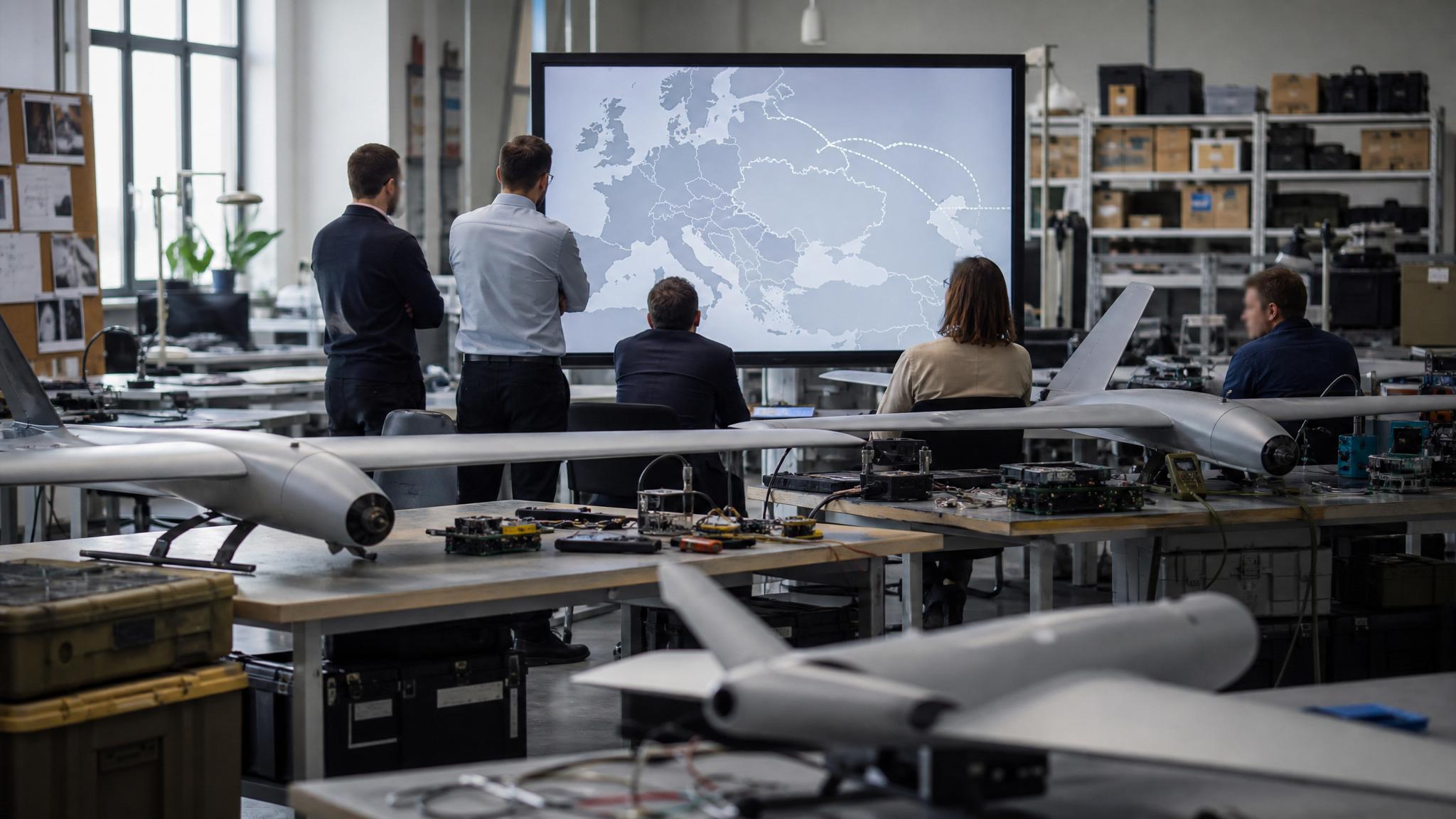
The funds come from the defense portion of the Ukraine Support Loan, a financing program amounting to up to 90 billion euros for 2026 and 2027. Of this, nearly 60 billion euros are earmarked for defense purposes. Following the new disbursement, Kyiv has received nearly 13 billion euros from this instrument, with 28.3 billion euros planned for the expansion of the Ukrainian defense industry in 2026.
The institutional difference from previous aid packages is significant. Brussels is not solely purchasing European standard equipment and then forwarding it. Ukraine is gaining greater influence over what is actually produced. This does not concern a single wonder weapon, but a production architecture: reconnaissance and combat drones, interceptor drones against enemy unmanned systems, UAV-bound munitions, and long-range missiles. Their technical specifications vary greatly depending on mission, range, sensors, and warhead. It is precisely this modularity that makes the Ukrainian industry relevant for a war of attrition.
Why the Ukrainian industry solves Europe's problem
The EU Commission describes Ukraine's strengths primarily in artificial intelligence and drone technology. This is more than a polite acknowledgment. Ukraine combines short development cycles with immediate frontline feedback. A system that fails today can potentially be modified within weeks. In contrast, European defense programs often take years before a requirement is turned into an order and an order into a deliverable capability.
The defense industrial partnership agreement signed in July 2026 aims to dismantle technical and regulatory barriers. By the end of 2026, joint production of drones and counter-drone systems is to be expanded; cooperation on interceptor missiles is planned by 2028. The EU Defence Innovation Office in Kyiv and the BraveTech-EU format are intended to institutionalize this connection.
Here lies the strategic gain: Europe is not only purchasing material for Ukraine but also access to an innovation ecosystem that has been tested in war. However, access is not yet integration. If European companies merely finance Ukrainian developments without securing production rights, data access, and common standards, the partnership remains a subsidy program with an industrial label.
The political weakness of the European model
The Ukraine Support Loan remains a credit and financing mechanism. Money can create demand, but it does not automatically build factories, skilled workers, or testing infrastructure. Additionally, there is a political risk: as Ukrainian production becomes more capable, member states may be tempted to reduce their bilateral supplies and treat the EU tranche as a substitute. This would be precisely the kind of accounting shift that has already burdened Europe's Ukraine policy multiple times.
The timeline is also contradictory. The front needs impact now; joint European production chains are not expected to become visible until the end of 2026, while anti-ballistic capabilities are announced for 2028. A drone with a short development time can partially bridge this gap. An interceptor missile with complex sensors, software integration, and approval cannot. Those who summarize both categories under the term defense production confuse speed with scalability.
Europe must transition from buyer to co-producer
The real question, therefore, is not whether 1.24 billion euros are sufficient. It is whether the EU changes its procurement logic. Ukrainian companies need multi-year purchase guarantees, simplified approvals, and access to European capital. In return, European companies need robust rules for intellectual property, joint testing, and the political willingness to not replace Ukrainian solutions out of industrial vanity with slower domestic developments.
This would be an unusual form of European strategic autonomy: not autarky, but institutionalized division of labor with a state that lies outside the EU but directly combats Europe's security problem. The irony is hard to overlook. Brussels is financing the fastest defense innovation in Europe because most European capitals cannot produce it quickly enough themselves. More money is therefore necessary, but not sufficient. If a common European system does not emerge from the Ukrainian production advantage, the 1.24 billion tranche remains a generous payment — and no capability building.
Sources
- Ukrainian Ministry of Defense, October 9, 2026 — Information on the €1.24 billion tranche and the Ukraine Support Loan.
- European Commission — EU Military Support to Ukraine, information on the defense industry partnership and production goals for 2026/2028.
- The Defense Post, October 9, 2026 — Summary of the new EU funding and the Ukrainian production model.
The European Union allocated 1.24 billion euros for Ukrainian drones and defense systems on October 9, 2026, as part of a broader support initiative. This funding is intended to enhance Ukraine's defense capabilities and shift European defense logic towards faster production and innovation. The EU aims to facilitate joint production and reduce barriers in defense technology, addressing immediate military needs in the ongoing conflict.
- The EU allocated 1.24 billion euros for Ukrainian drones and defense systems.
- The funding is part of a larger Ukraine Support Loan program totaling up to 90 billion euros.
- Ukraine has received nearly 13 billion euros from this funding mechanism.
- The EU aims to enhance Ukrainian production capabilities for defense.
- The partnership aims to reduce technical and regulatory barriers for joint production.