
Trump's Russian Diesel Deal Leaves NATO Carrying the Strategic Cost
 Alexandra Reeves
Trump's Russian Diesel Deal Leaves NATO Carrying the Strategic Cost
Cheap fuel is about to become a security problem. President Donald Trump said on October 9 that the United States would obtain diesel from Russia, a move presented as an answer to high prices but immediately read in Kyiv and European capitals as a loosening of pressure on Moscow. The timing is brutal: Russia is still attacking Ukraine, and Washington is asking its allies to believe that economic pressure matters while negotiating around it.
The Deal Is Political Before It Is Commercial
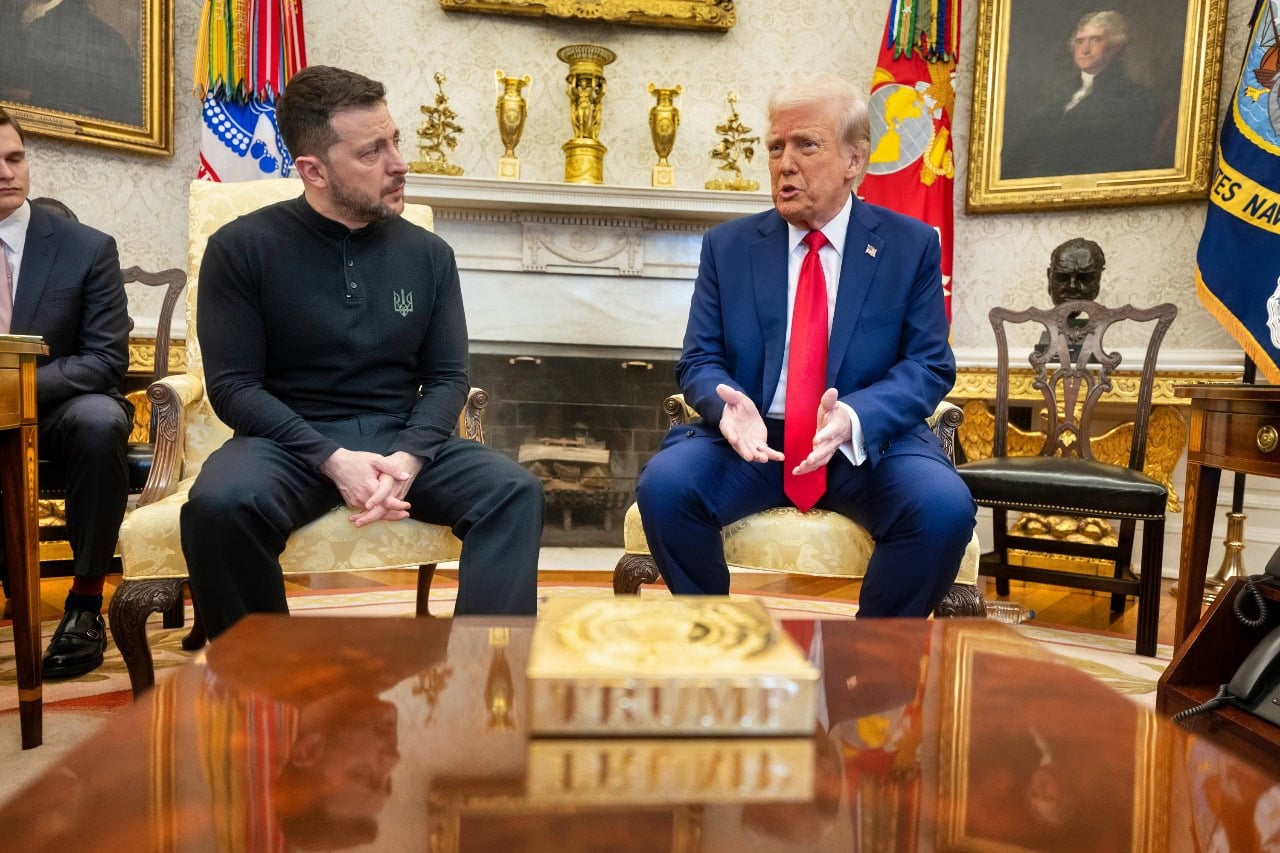
Reuters reported that Trump said Russia would supply diesel to the United States and global markets. NPR described the announcement as a relaxation of pressure on Moscow intended to ease prices before the U.S. midterm elections. The Guardian reported that Ukrainian President Volodymyr Zelenskyy reacted angrily, while the Associated Press reported that Russian attacks killed seven people in Ukraine after the announcement.
Those reports do not establish that a signed, long-term contract exists. They establish something more politically important: the White House is willing to speak about Russian energy as a solution to an American price problem while Russia remains at war with a U.S. partner. That changes the signal sent by sanctions, regardless of how many barrels or cargoes eventually move.
Washington can argue that refined petroleum is not a weapons transfer. Technically, that is true. Operationally, it is a distinction without much comfort. Diesel powers armoured vehicles, generators, engineering equipment, trucks, ships and much of the military logistics chain. A modern army can survive a shortage of precision munitions longer than it can survive a shortage of fuel.
Why Diesel Matters on a Modern Battlefield
Diesel is a logistical input, not a glamorous weapons system, which is precisely why it matters. Ukraine's war is fought by dispersed units that depend on continuous movement: artillery crews relocate, air-defence batteries change positions, repair teams move damaged vehicles, and drones require generators and transport even when the aircraft themselves are electric. Fuel consumption is measured across thousands of vehicles and generators rather than one headline-grabbing platform.
Russia has spent years adapting its export system to sanctions through intermediaries, alternative shipping routes and what European officials call a shadow fleet. The United Kingdom announced a new round of sanctions on October 8 targeting Russian financial services and that fleet, according to Reuters. A diesel arrangement with Washington would not erase those restrictions by itself, but it would weaken the political story behind them: that Russia's energy revenues should be constrained because they help sustain the invasion.
There is also a market question. Russia is a major hydrocarbon producer, but moving refined diesel into the United States is not as simple as turning on a pipeline. Refinery output, shipping, insurance, sanctions licences, payment channels and port capacity all determine whether a presidential announcement becomes a cargo. The technical obstacles may stop the deal. The strategic message has already travelled.
Europe Hears a Warning About American Reliability
For NATO governments, this is not only about Ukraine. European officials are already warning that Russia's “shadow war” is escalating through sabotage, coercion, cyber operations and pressure on critical infrastructure. The New York Times reported that European governments are looking for ways to respond to Putin's campaign; the Atlantic Council has argued that Ukraine's battlefield experience could help Europe counter it. At the same time, Washington appears ready to reopen an energy channel to Moscow for domestic political reasons.
That contradiction will be noticed in Berlin, Warsaw and the Baltic capitals. NATO's deterrence depends on more than troops and missiles. It depends on an adversary believing that the alliance can maintain a policy under pressure. If Russia can attack Ukraine, threaten European infrastructure and still present itself as a useful fuel supplier to the United States, Moscow gains a cheap strategic victory.
The uncomfortable mainstream assumption is that energy trade and security policy can be separated. They cannot. Europe learned that lesson after years of dependence on Russian gas. Washington is now flirting with a smaller version of the same mistake: treating fuel as a commodity after Russia has demonstrated that energy access is a political weapon.
The Ukraine Problem Washington Cannot Contract Away
Kyiv's anger is rational. Russian diesel revenue does not need to finance a tank directly to affect the war. Revenue supports the state, cushions the economy, preserves foreign-exchange capacity and gives the Kremlin more room to absorb sanctions. The question is not whether one shipment will transform the battlefield. It is whether Western policy is becoming incoherent enough for Moscow to outlast it.
Trump may believe that a fuel deal creates leverage over Putin. That is possible, but leverage only works if the other side values the concession more than the benefit of delay. Russia has repeatedly used negotiations to buy time, divide its opponents and preserve room for military action. If the United States offers commercial relief before securing a durable end to the war, the Kremlin may conclude that escalation is cheaper than compromise.
Europe should therefore treat the announcement as a planning signal. It needs larger fuel reserves, protected ports, diversified suppliers and a clear rule that commercial exceptions cannot quietly undermine sanctions policy. NATO also needs to connect energy resilience to military readiness instead of leaving the subject to finance ministries and election campaigns.
The Strategic Cost Comes Later
The immediate price impact of Russian diesel may be modest, temporary or nonexistent. The alliance cost is easier to see. America is telling Europe to spend more on defence, Ukraine to keep resisting, and Russia to accept pressure—while simultaneously suggesting that Russian fuel can return when American prices become politically inconvenient.
That is not a coherent strategy. It is a transaction that asks NATO to carry the risk while Washington collects the short-term political benefit. The next test is whether the White House turns this announcement into a licensed trade channel, and whether European governments answer with silence or a tougher sanctions regime. If the deal survives, NATO will have learned an ugly lesson: in 2026, the alliance may be more vulnerable to an energy bargain in Washington than to a missile warning in Moscow.
On October 9, 2023, the U.S. announced plans to obtain diesel from Russia, raising concerns in Ukraine and among NATO allies about the implications for sanctions and strategic reliability. Ukrainian President Zelenskyy expressed anger over the deal, which comes amid ongoing Russian attacks in Ukraine. The arrangement is viewed as potentially undermining the political narrative of economic pressure on Moscow while the U.S. seeks to address domestic fuel prices.
- Trump announced a deal for diesel from Russia on October 9, 2023.
- Ukrainian President Zelenskyy reacted negatively to the announcement.
- Russian attacks in Ukraine resulted in casualties shortly after the announcement.
- The deal is seen as a potential weakening of sanctions against Russia.
- NATO's strategic reliability is questioned due to the U.S. energy negotiations with Russia.